JPMorgan Highlights Hyperliquid's Rise Amidst Growing Demand for 24/7 Oil Trading
The Shift Towards Perpetual Trading
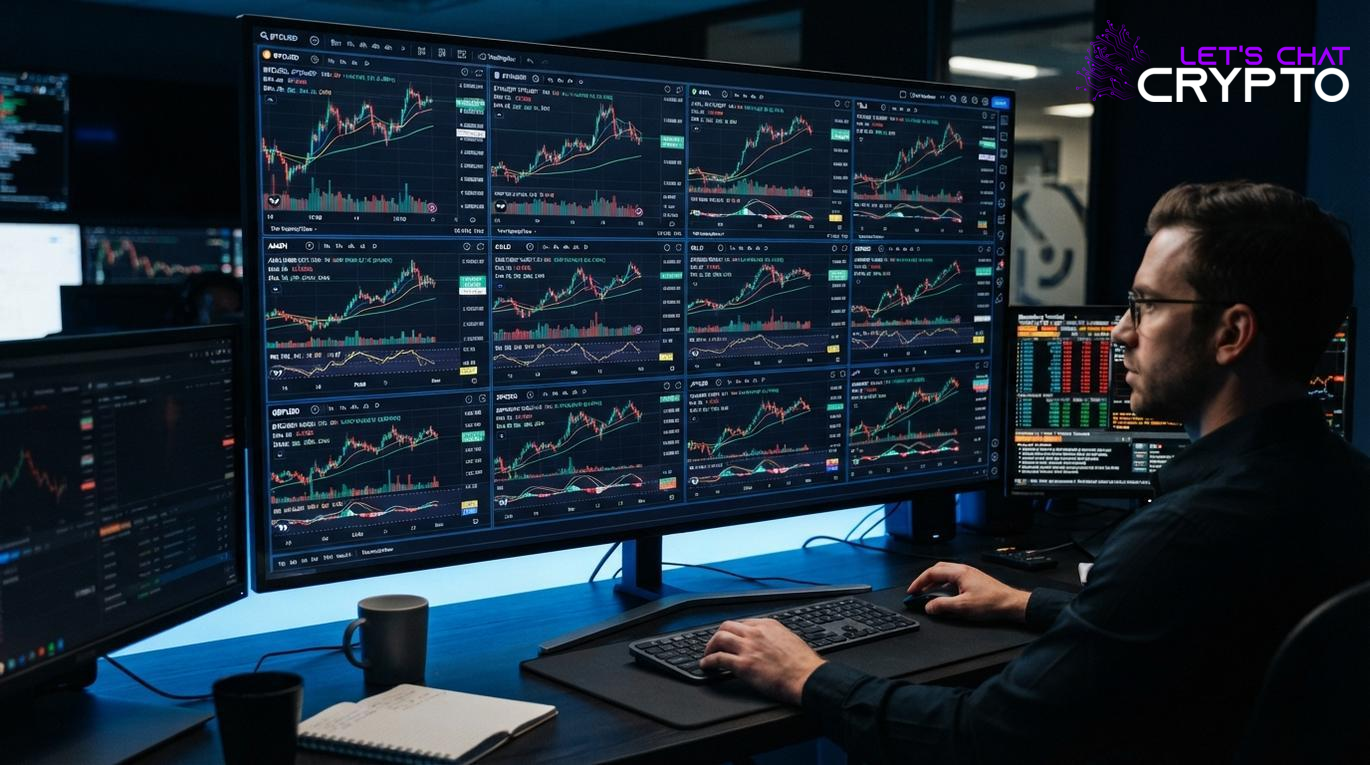
JPMorgan Chase & Co. has recently brought to light the increasing traction of decentralized exchanges (DEXs) such as Hyperliquid, observing a notable pivot by traders seeking continuous, 24/7 access to oil trading. This development signals a significant evolution in market dynamics, challenging the traditional operating hours of conventional financial markets.
Hyperliquid and the Allure of Always-On Markets
Hyperliquid, a burgeoning platform in the decentralized finance (DeFi) space, offers perpetual futures trading, enabling participants to speculate on asset prices without the constraints of expiry dates or the rigid schedules of established exchanges. The appeal for oil traders stems from the global nature of commodity markets, where geopolitical events and supply-chain shifts can occur at any hour, necessitating immediate response capabilities that traditional exchanges often cannot provide. This always-on access allows for greater agility and risk management in a volatile market.
JPMorgan's Broader Market Vision
Analysts at JPMorgan underscored that the growth witnessed in these decentralized platforms is not merely a transient trend. The firm posits that such traction is poised to expand considerably over time, moving beyond commodities to encompass a wider array of asset classes. This forecast suggests a potential paradigm shift in how various assets, from equities to foreign exchange, might be traded in the future, with decentralized infrastructure playing an increasingly pivotal role.
The bank's analysis implies that institutional participants and sophisticated traders are actively exploring and integrating these new avenues to circumvent the limitations of legacy financial systems. The drive for enhanced liquidity, reduced intermediation, and round-the-clock trading opportunities is a powerful catalyst fueling this transition.
Implications for Traditional Finance
The embrace of DEXs for commodity trading, particularly by more sophisticated market participants, presents a formidable challenge to established financial institutions and exchanges. It highlights a growing demand for innovation and efficiency that traditional models may struggle to match without significant adaptation. As decentralized platforms mature and regulatory frameworks evolve, the competitive landscape of global finance is expected to undergo profound transformations.
Summary
JPMorgan's insights into Hyperliquid's rising prominence in 24/7 oil trading underscore a critical inflection point in financial markets. The inherent advantages of decentralized exchanges, including continuous operation and expanded access, are attracting traders beyond traditional venues. This trend, according to JPMorgan, is set to broaden its scope beyond commodities, hinting at a future where a wider range of assets could find their home on decentralized platforms, thereby reshaping the contours of global financial trading.
Resources
- CoinDesk
- The Block
- JPMorgan Research Reports
Details
Author
Top articles

 }})
You can now watch HBO Max for $10
Latest articles


You can now watch HBO Max for $10
The Shift Towards Perpetual Trading
JPMorgan Chase & Co. has recently brought to light the increasing traction of decentralized exchanges (DEXs) such as Hyperliquid, observing a notable pivot by traders seeking continuous, 24/7 access to oil trading. This development signals a significant evolution in market dynamics, challenging the traditional operating hours of conventional financial markets.
Hyperliquid and the Allure of Always-On Markets
Hyperliquid, a burgeoning platform in the decentralized finance (DeFi) space, offers perpetual futures trading, enabling participants to speculate on asset prices without the constraints of expiry dates or the rigid schedules of established exchanges. The appeal for oil traders stems from the global nature of commodity markets, where geopolitical events and supply-chain shifts can occur at any hour, necessitating immediate response capabilities that traditional exchanges often cannot provide. This always-on access allows for greater agility and risk management in a volatile market.
JPMorgan's Broader Market Vision
Analysts at JPMorgan underscored that the growth witnessed in these decentralized platforms is not merely a transient trend. The firm posits that such traction is poised to expand considerably over time, moving beyond commodities to encompass a wider array of asset classes. This forecast suggests a potential paradigm shift in how various assets, from equities to foreign exchange, might be traded in the future, with decentralized infrastructure playing an increasingly pivotal role.
The bank's analysis implies that institutional participants and sophisticated traders are actively exploring and integrating these new avenues to circumvent the limitations of legacy financial systems. The drive for enhanced liquidity, reduced intermediation, and round-the-clock trading opportunities is a powerful catalyst fueling this transition.
Implications for Traditional Finance
The embrace of DEXs for commodity trading, particularly by more sophisticated market participants, presents a formidable challenge to established financial institutions and exchanges. It highlights a growing demand for innovation and efficiency that traditional models may struggle to match without significant adaptation. As decentralized platforms mature and regulatory frameworks evolve, the competitive landscape of global finance is expected to undergo profound transformations.
Summary
JPMorgan's insights into Hyperliquid's rising prominence in 24/7 oil trading underscore a critical inflection point in financial markets. The inherent advantages of decentralized exchanges, including continuous operation and expanded access, are attracting traders beyond traditional venues. This trend, according to JPMorgan, is set to broaden its scope beyond commodities, hinting at a future where a wider range of assets could find their home on decentralized platforms, thereby reshaping the contours of global financial trading.
Resources
- CoinDesk
- The Block
- JPMorgan Research Reports
Top articles
You can now watch HBO Max for $10
Latest articles
You can now watch HBO Max for $10
Similar posts

This is a page that only logged-in people can visit. Don't you feel special? Try clicking on a button below to do some things you can't do when you're logged out.
Example modal
At your leisure, please peruse this excerpt from a whale of a tale.
Chapter 1: Loomings.
Call me Ishmael. Some years ago—never mind how long precisely—having little or no money in my purse, and nothing particular to interest me on shore, I thought I would sail about a little and see the watery part of the world. It is a way I have of driving off the spleen and regulating the circulation. Whenever I find myself growing grim about the mouth; whenever it is a damp, drizzly November in my soul; whenever I find myself involuntarily pausing before coffin warehouses, and bringing up the rear of every funeral I meet; and especially whenever my hypos get such an upper hand of me, that it requires a strong moral principle to prevent me from deliberately stepping into the street, and methodically knocking people's hats off—then, I account it high time to get to sea as soon as I can. This is my substitute for pistol and ball. With a philosophical flourish Cato throws himself upon his sword; I quietly take to the ship. There is nothing surprising in this. If they but knew it, almost all men in their degree, some time or other, cherish very nearly the same feelings towards the ocean with me.
Comment