Bitcoin Defies Geopolitical Jitters, Holds $78K as Strait of Hormuz Tensions Propel Oil Past $90
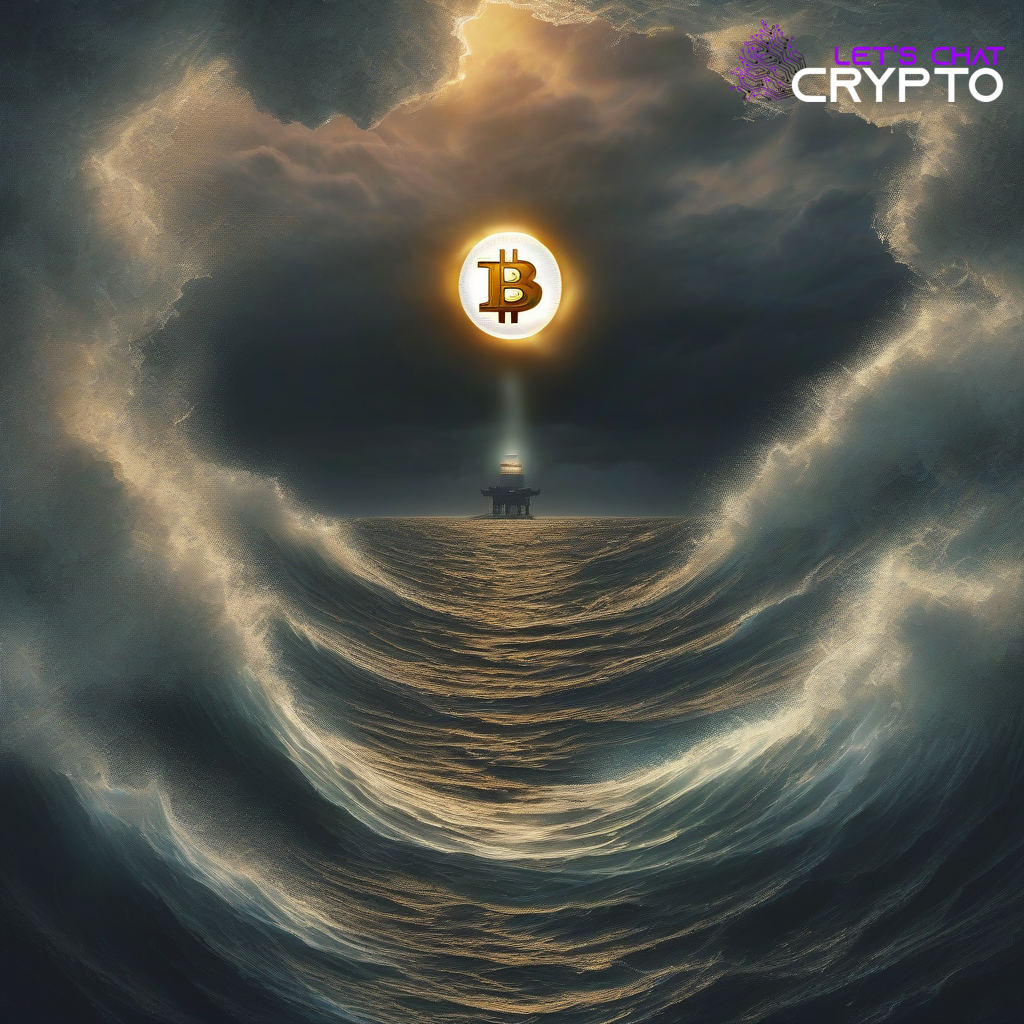
Bitcoin Navigates Volatile Macro Landscape
In a period marked by escalating geopolitical tensions, Bitcoin has demonstrated notable stability, maintaining its position around the $78,000 threshold. This resilience comes despite a significant surge in Brent crude oil prices, which have climbed above $90 per barrel following renewed concerns surrounding the Strait of Hormuz, a critical global shipping lane. The interplay between traditional commodities markets and decentralized digital assets provides a compelling case study for investors assessing risk in an unpredictable global economy.
Strait of Hormuz and Oil Market Impact
The Strait of Hormuz, a narrow passage between the Persian Gulf and the Gulf of Oman, remains a focal point for global energy security. Recent developments in the region have rekindled fears of potential supply disruptions, directly contributing to the upward trajectory of crude oil benchmarks. The jump in Brent crude past the $90 mark signals heightened anxiety among energy traders, reflecting the chokepoint's strategic importance and the potential for any escalation to ripple through global supply chains.
Historically, significant increases in oil prices are often harbingers of broader inflationary pressures and can influence central bank monetary policy decisions. Such macro-economic shifts typically lead to a re-evaluation of risk assets across financial markets. However, Bitcoin's current holding pattern suggests a nuanced reaction from the cryptocurrency market, perhaps indicating a maturing asset class less prone to immediate panic sell-offs tied to traditional geopolitical flashpoints.
Bitcoin's Role in a Macro-Risk Environment
The cryptocurrency's ability to largely withstand the immediate volatility sparked by oil market reactions raises questions about its evolving role in investment portfolios. Advocates often champion Bitcoin as a potential hedge against inflation and a "digital safe haven" during times of economic uncertainty. While its correlation with traditional markets, including equities, has been observed during periods of widespread risk aversion, its performance in the face of targeted geopolitical energy shocks provides fresh data for analysis.
Traders and analysts are closely observing whether this stability marks a decoupling from traditional risk assets or simply a temporary pause before any larger macro-economic implications from sustained high oil prices manifest. The ongoing debate centers on whether Bitcoin is increasingly viewed as an independent store of value or remains primarily a growth-oriented, risk-on asset.
Summary
Bitcoin's sustained trading near $78,000 amidst rising oil prices driven by Strait of Hormuz tensions underscores a complex and evolving relationship between traditional macro-economic indicators and the digital asset space. While geopolitical events continue to exert significant pressure on global commodities, Bitcoin has shown a degree of independence, prompting further discussion on its long-term stability and utility as a hedge against specific types of global instability. This period offers crucial insights into how decentralized finance reacts to and integrates with a world grappling with traditional geopolitical and economic risks.
Resources
- Bloomberg
- Reuters
- CoinDesk
Details
Author
Top articles
 }})
You can now watch HBO Max for $10
Latest articles


You can now watch HBO Max for $10
Bitcoin Navigates Volatile Macro Landscape
In a period marked by escalating geopolitical tensions, Bitcoin has demonstrated notable stability, maintaining its position around the $78,000 threshold. This resilience comes despite a significant surge in Brent crude oil prices, which have climbed above $90 per barrel following renewed concerns surrounding the Strait of Hormuz, a critical global shipping lane. The interplay between traditional commodities markets and decentralized digital assets provides a compelling case study for investors assessing risk in an unpredictable global economy.
Strait of Hormuz and Oil Market Impact
The Strait of Hormuz, a narrow passage between the Persian Gulf and the Gulf of Oman, remains a focal point for global energy security. Recent developments in the region have rekindled fears of potential supply disruptions, directly contributing to the upward trajectory of crude oil benchmarks. The jump in Brent crude past the $90 mark signals heightened anxiety among energy traders, reflecting the chokepoint's strategic importance and the potential for any escalation to ripple through global supply chains.
Historically, significant increases in oil prices are often harbingers of broader inflationary pressures and can influence central bank monetary policy decisions. Such macro-economic shifts typically lead to a re-evaluation of risk assets across financial markets. However, Bitcoin's current holding pattern suggests a nuanced reaction from the cryptocurrency market, perhaps indicating a maturing asset class less prone to immediate panic sell-offs tied to traditional geopolitical flashpoints.
Bitcoin's Role in a Macro-Risk Environment
The cryptocurrency's ability to largely withstand the immediate volatility sparked by oil market reactions raises questions about its evolving role in investment portfolios. Advocates often champion Bitcoin as a potential hedge against inflation and a "digital safe haven" during times of economic uncertainty. While its correlation with traditional markets, including equities, has been observed during periods of widespread risk aversion, its performance in the face of targeted geopolitical energy shocks provides fresh data for analysis.
Traders and analysts are closely observing whether this stability marks a decoupling from traditional risk assets or simply a temporary pause before any larger macro-economic implications from sustained high oil prices manifest. The ongoing debate centers on whether Bitcoin is increasingly viewed as an independent store of value or remains primarily a growth-oriented, risk-on asset.
Summary
Bitcoin's sustained trading near $78,000 amidst rising oil prices driven by Strait of Hormuz tensions underscores a complex and evolving relationship between traditional macro-economic indicators and the digital asset space. While geopolitical events continue to exert significant pressure on global commodities, Bitcoin has shown a degree of independence, prompting further discussion on its long-term stability and utility as a hedge against specific types of global instability. This period offers crucial insights into how decentralized finance reacts to and integrates with a world grappling with traditional geopolitical and economic risks.
Resources
- Bloomberg
- Reuters
- CoinDesk
Top articles
You can now watch HBO Max for $10
Latest articles
You can now watch HBO Max for $10
Similar posts
This is a page that only logged-in people can visit. Don't you feel special? Try clicking on a button below to do some things you can't do when you're logged out.
Example modal
At your leisure, please peruse this excerpt from a whale of a tale.
Chapter 1: Loomings.
Call me Ishmael. Some years ago—never mind how long precisely—having little or no money in my purse, and nothing particular to interest me on shore, I thought I would sail about a little and see the watery part of the world. It is a way I have of driving off the spleen and regulating the circulation. Whenever I find myself growing grim about the mouth; whenever it is a damp, drizzly November in my soul; whenever I find myself involuntarily pausing before coffin warehouses, and bringing up the rear of every funeral I meet; and especially whenever my hypos get such an upper hand of me, that it requires a strong moral principle to prevent me from deliberately stepping into the street, and methodically knocking people's hats off—then, I account it high time to get to sea as soon as I can. This is my substitute for pistol and ball. With a philosophical flourish Cato throws himself upon his sword; I quietly take to the ship. There is nothing surprising in this. If they but knew it, almost all men in their degree, some time or other, cherish very nearly the same feelings towards the ocean with me.
Comment