Markets Brace for Historically Volatile September: Bitcoin, Bonds, and Stocks Face Hawkish Fed and Midterm Shadow

The September Anomaly: A Historical Precedent
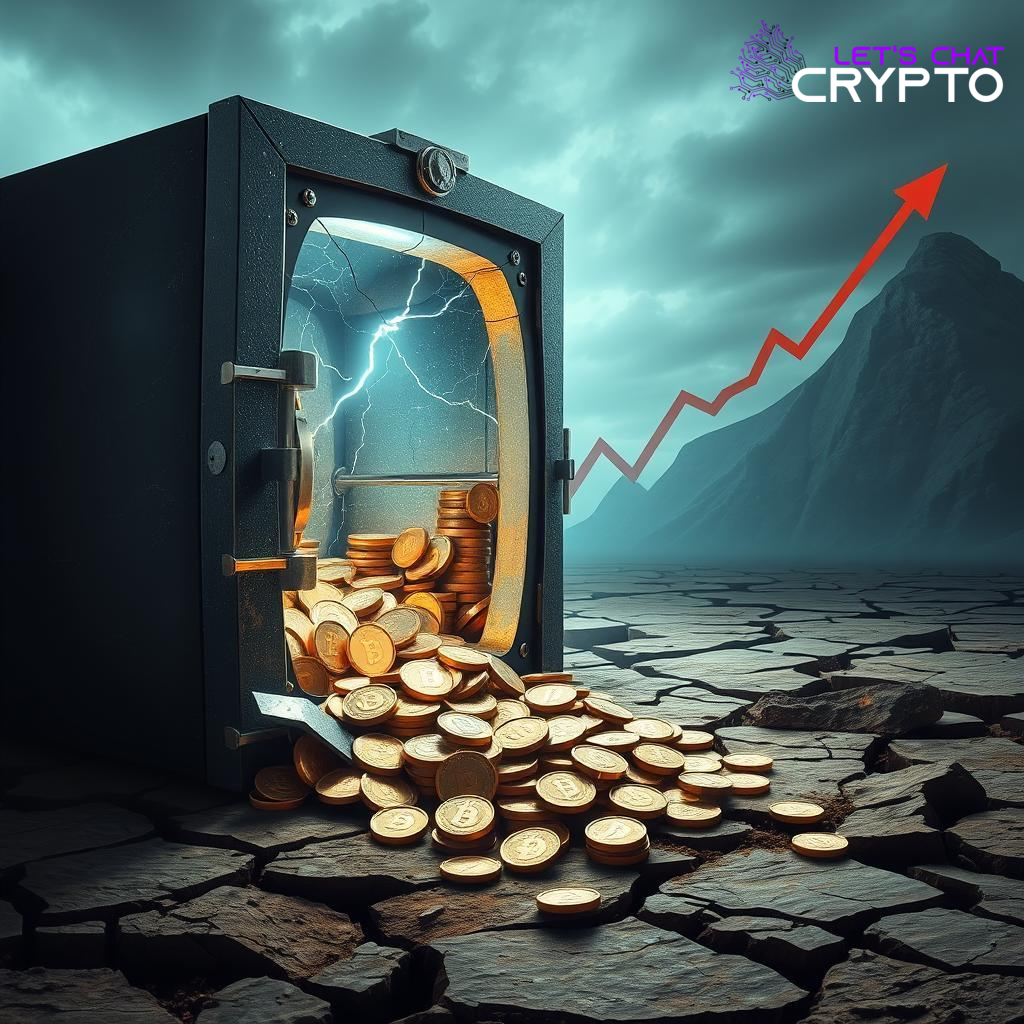
As the calendar flips to September, financial markets brace for a period historically fraught with volatility and often marked by underperformance. This phenomenon, colloquially known as the "September Effect," has for decades seen equity markets, and more recently digital assets like Bitcoin, exhibit a distinct pattern of weakness. While past performance never guarantees future outcomes, the consistency of this trend warrants close scrutiny, especially when overlaid with a hawkish monetary policy and the lingering shadow of midterm election cycles.
Bitcoin's Resilience Tested Amid Macro Headwinds
Bitcoin, often touted as a decentralized hedge, has not been immune to seasonal market dynamics. Despite its revolutionary design, the leading cryptocurrency has frequently mirrored the broader risk-off sentiment that characterizes September. This year, Bitcoin navigates a complex macroeconomic landscape. The Federal Reserve's unwavering commitment to combating inflation through aggressive interest rate hikes continues to ripple through all asset classes, increasing the cost of capital and making speculative investments less attractive. Investors are keenly watching for any shifts in the Fed's hawkish stance, as sustained tightening measures could prolong market apprehension and amplify the seasonal headwinds.
Bonds and Stocks: A Confluence of Pressures
Traditional markets are similarly positioned for a challenging September. Equity investors contend with elevated valuations, persistent inflationary pressures, and the potential for corporate earnings adjustments. The bond market, typically a safe haven during periods of uncertainty, faces its own set of complexities. Yields have fluctuated significantly as central banks recalibrate their policies, leading to periods where both stocks and bonds have declined simultaneously—a rare and unsettling occurrence for diversified portfolios. The impending midterm elections, while not directly tied to immediate market movements, often introduce a layer of political uncertainty that can contribute to investor caution and amplify seasonal effects.
The Hawkish Fed and Midterm Echoes
The Federal Reserve's current trajectory is a dominant force shaping market sentiment. With inflation remaining above target, the likelihood of continued rate hikes into year-end remains high. This hawkish stance curtails liquidity and increases the discount rate for future earnings, impacting both growth stocks and high-beta assets like cryptocurrencies. Simultaneously, the historical performance around midterm elections often reveals increased market choppiness in the preceding months, with a potential for a rally once the electoral dust settles. The confluence of these factors creates a uniquely challenging environment, demanding strategic vigilance from investors across the spectrum.
Summary
September stands as a critical juncture for Bitcoin, bonds, and stocks, as historical seasonal patterns converge with present-day economic realities. A hawkish Federal Reserve, determined to rein in inflation through interest rate increases, continues to exert downward pressure on risk assets. This macroeconomic backdrop, combined with the often-volatile 'September Effect' and the underlying uncertainties associated with midterm election periods, suggests a potentially testing month for market participants. Navigating these turbulent waters will require a deep understanding of both historical precedents and the current monetary policy landscape.
Resources
- Federal Reserve Board: Official statements and economic projections.
- Bloomberg: Financial news and market data analysis.
- JPMorgan Chase & Co. Global Research: Macroeconomic and market outlook reports.
Details
Author
Top articles


 }})
You can now watch HBO Max for $10
Latest articles





You can now watch HBO Max for $10
The September Anomaly: A Historical Precedent
As the calendar flips to September, financial markets brace for a period historically fraught with volatility and often marked by underperformance. This phenomenon, colloquially known as the "September Effect," has for decades seen equity markets, and more recently digital assets like Bitcoin, exhibit a distinct pattern of weakness. While past performance never guarantees future outcomes, the consistency of this trend warrants close scrutiny, especially when overlaid with a hawkish monetary policy and the lingering shadow of midterm election cycles.
Bitcoin's Resilience Tested Amid Macro Headwinds
Bitcoin, often touted as a decentralized hedge, has not been immune to seasonal market dynamics. Despite its revolutionary design, the leading cryptocurrency has frequently mirrored the broader risk-off sentiment that characterizes September. This year, Bitcoin navigates a complex macroeconomic landscape. The Federal Reserve's unwavering commitment to combating inflation through aggressive interest rate hikes continues to ripple through all asset classes, increasing the cost of capital and making speculative investments less attractive. Investors are keenly watching for any shifts in the Fed's hawkish stance, as sustained tightening measures could prolong market apprehension and amplify the seasonal headwinds.
Bonds and Stocks: A Confluence of Pressures
Traditional markets are similarly positioned for a challenging September. Equity investors contend with elevated valuations, persistent inflationary pressures, and the potential for corporate earnings adjustments. The bond market, typically a safe haven during periods of uncertainty, faces its own set of complexities. Yields have fluctuated significantly as central banks recalibrate their policies, leading to periods where both stocks and bonds have declined simultaneously—a rare and unsettling occurrence for diversified portfolios. The impending midterm elections, while not directly tied to immediate market movements, often introduce a layer of political uncertainty that can contribute to investor caution and amplify seasonal effects.
The Hawkish Fed and Midterm Echoes
The Federal Reserve's current trajectory is a dominant force shaping market sentiment. With inflation remaining above target, the likelihood of continued rate hikes into year-end remains high. This hawkish stance curtails liquidity and increases the discount rate for future earnings, impacting both growth stocks and high-beta assets like cryptocurrencies. Simultaneously, the historical performance around midterm elections often reveals increased market choppiness in the preceding months, with a potential for a rally once the electoral dust settles. The confluence of these factors creates a uniquely challenging environment, demanding strategic vigilance from investors across the spectrum.
Summary
September stands as a critical juncture for Bitcoin, bonds, and stocks, as historical seasonal patterns converge with present-day economic realities. A hawkish Federal Reserve, determined to rein in inflation through interest rate increases, continues to exert downward pressure on risk assets. This macroeconomic backdrop, combined with the often-volatile 'September Effect' and the underlying uncertainties associated with midterm election periods, suggests a potentially testing month for market participants. Navigating these turbulent waters will require a deep understanding of both historical precedents and the current monetary policy landscape.
Resources
- Federal Reserve Board: Official statements and economic projections.
- Bloomberg: Financial news and market data analysis.
- JPMorgan Chase & Co. Global Research: Macroeconomic and market outlook reports.
Top articles
You can now watch HBO Max for $10
Latest articles
You can now watch HBO Max for $10
Similar posts


This is a page that only logged-in people can visit. Don't you feel special? Try clicking on a button below to do some things you can't do when you're logged out.
Example modal
At your leisure, please peruse this excerpt from a whale of a tale.
Chapter 1: Loomings.
Call me Ishmael. Some years ago—never mind how long precisely—having little or no money in my purse, and nothing particular to interest me on shore, I thought I would sail about a little and see the watery part of the world. It is a way I have of driving off the spleen and regulating the circulation. Whenever I find myself growing grim about the mouth; whenever it is a damp, drizzly November in my soul; whenever I find myself involuntarily pausing before coffin warehouses, and bringing up the rear of every funeral I meet; and especially whenever my hypos get such an upper hand of me, that it requires a strong moral principle to prevent me from deliberately stepping into the street, and methodically knocking people's hats off—then, I account it high time to get to sea as soon as I can. This is my substitute for pistol and ball. With a philosophical flourish Cato throws himself upon his sword; I quietly take to the ship. There is nothing surprising in this. If they but knew it, almost all men in their degree, some time or other, cherish very nearly the same feelings towards the ocean with me.
Comment