Crypto's Reckoning: The End of Easy Money and the Imperative for Rigor

The Crypto Reckoning: End of the Easy Money Era
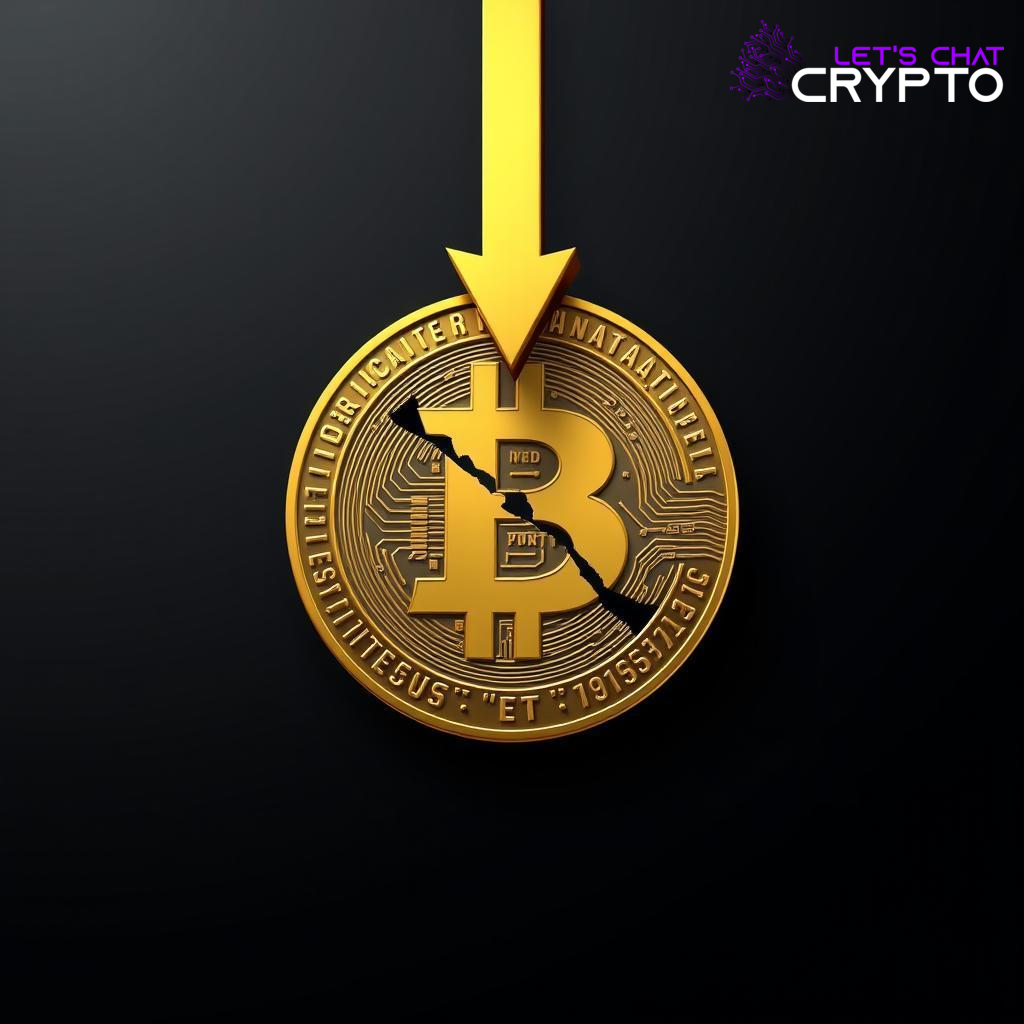
The cryptocurrency market is undergoing a profound transformation, signaling the definitive end of its "easy money" era. A period characterized by speculative fervor, seemingly limitless capital, and rapidly ascending valuations is giving way to a more disciplined, scrutiny-laden landscape. This significant market correction, often dubbed the "crypto winter," has exposed fundamental vulnerabilities within many projects, compelling a re-evaluation of the industry's underlying economic models.
Inflated Valuations: The Air in the Bubble
One of the primary drivers of this shakeout, as articulated by industry analysts and experts, including figures like Ryan Kirkley, is the prevalence of inflated valuations. For years, numerous blockchain projects achieved multi-billion dollar market capitalizations with minimal tangible products, revenue streams, or user adoption. Valuations were often driven by aggressive marketing, community hype, and the speculative momentum of a bull market, rather than inherent utility or robust financial metrics. This created an environment where capital flowed freely into nascent ventures, many of which lacked the foundational elements required for long-term sustainability. When broader economic conditions tightened, particularly with rising interest rates and reduced liquidity in traditional markets, the speculative froth evaporated, revealing the underlying lack of intrinsic value in many digital assets.
Weak Business Models: A House of Cards
Complementing the issue of inflated valuations were pervasive weaknesses in business models. Many crypto entities operated without clear paths to profitability, relying instead on mechanisms like continuous token issuance, complex re-hypothecation schemes, or unsustainable yield farming incentives. The collapses of prominent entities such as Terra/Luna, Three Arrows Capital, Celsius Network, and FTX vividly illustrated these structural deficiencies. These failures were not merely market fluctuations but were rooted in design flaws that prioritized rapid growth and leverage over stability, transparency, and responsible risk management. The interconnected nature of these entities meant that the failure of one often triggered a cascade, exposing the fragility of the entire ecosystem built on these unsound foundations.
The Impact of the Shakeout
The current market shakeout is more than a price correction; it represents a crucial maturation phase for the cryptocurrency industry. Billions of dollars in investor capital have been lost, confidence has been significantly eroded, and regulatory bodies worldwide are intensifying their scrutiny. This period, while painful, is forcing projects to re-evaluate their strategies, prioritize sustainable development, and focus on delivering genuine utility. Only those with strong fundamentals, transparent governance, and viable business models are likely to endure and thrive in the long term. The emphasis is shifting from speculative gains to tangible innovation and regulatory compliance.
Summary
The crypto market's transition from an era of easy money to one of rigorous evaluation is fundamentally reshaping the digital asset landscape. Inflated valuations, fueled by speculation rather than substance, combined with weak and often unsustainable business models, have been the primary catalysts for a wave of high-profile failures. This ongoing shakeout, though challenging, is purifying the industry, pushing it towards greater maturity, transparency, and a focus on real-world utility. For the market to regain investor trust and achieve its full potential, a commitment to sound economic principles and robust operational frameworks is paramount.
Resources
Details
Author
Top articles




 }})
You can now watch HBO Max for $10
Latest articles





You can now watch HBO Max for $10
The Crypto Reckoning: End of the Easy Money Era
The cryptocurrency market is undergoing a profound transformation, signaling the definitive end of its "easy money" era. A period characterized by speculative fervor, seemingly limitless capital, and rapidly ascending valuations is giving way to a more disciplined, scrutiny-laden landscape. This significant market correction, often dubbed the "crypto winter," has exposed fundamental vulnerabilities within many projects, compelling a re-evaluation of the industry's underlying economic models.
Inflated Valuations: The Air in the Bubble
One of the primary drivers of this shakeout, as articulated by industry analysts and experts, including figures like Ryan Kirkley, is the prevalence of inflated valuations. For years, numerous blockchain projects achieved multi-billion dollar market capitalizations with minimal tangible products, revenue streams, or user adoption. Valuations were often driven by aggressive marketing, community hype, and the speculative momentum of a bull market, rather than inherent utility or robust financial metrics. This created an environment where capital flowed freely into nascent ventures, many of which lacked the foundational elements required for long-term sustainability. When broader economic conditions tightened, particularly with rising interest rates and reduced liquidity in traditional markets, the speculative froth evaporated, revealing the underlying lack of intrinsic value in many digital assets.
Weak Business Models: A House of Cards
Complementing the issue of inflated valuations were pervasive weaknesses in business models. Many crypto entities operated without clear paths to profitability, relying instead on mechanisms like continuous token issuance, complex re-hypothecation schemes, or unsustainable yield farming incentives. The collapses of prominent entities such as Terra/Luna, Three Arrows Capital, Celsius Network, and FTX vividly illustrated these structural deficiencies. These failures were not merely market fluctuations but were rooted in design flaws that prioritized rapid growth and leverage over stability, transparency, and responsible risk management. The interconnected nature of these entities meant that the failure of one often triggered a cascade, exposing the fragility of the entire ecosystem built on these unsound foundations.
The Impact of the Shakeout
The current market shakeout is more than a price correction; it represents a crucial maturation phase for the cryptocurrency industry. Billions of dollars in investor capital have been lost, confidence has been significantly eroded, and regulatory bodies worldwide are intensifying their scrutiny. This period, while painful, is forcing projects to re-evaluate their strategies, prioritize sustainable development, and focus on delivering genuine utility. Only those with strong fundamentals, transparent governance, and viable business models are likely to endure and thrive in the long term. The emphasis is shifting from speculative gains to tangible innovation and regulatory compliance.
Summary
The crypto market's transition from an era of easy money to one of rigorous evaluation is fundamentally reshaping the digital asset landscape. Inflated valuations, fueled by speculation rather than substance, combined with weak and often unsustainable business models, have been the primary catalysts for a wave of high-profile failures. This ongoing shakeout, though challenging, is purifying the industry, pushing it towards greater maturity, transparency, and a focus on real-world utility. For the market to regain investor trust and achieve its full potential, a commitment to sound economic principles and robust operational frameworks is paramount.
Resources
Top articles
You can now watch HBO Max for $10
Latest articles
You can now watch HBO Max for $10
Similar posts




This is a page that only logged-in people can visit. Don't you feel special? Try clicking on a button below to do some things you can't do when you're logged out.
Example modal
At your leisure, please peruse this excerpt from a whale of a tale.
Chapter 1: Loomings.
Call me Ishmael. Some years ago—never mind how long precisely—having little or no money in my purse, and nothing particular to interest me on shore, I thought I would sail about a little and see the watery part of the world. It is a way I have of driving off the spleen and regulating the circulation. Whenever I find myself growing grim about the mouth; whenever it is a damp, drizzly November in my soul; whenever I find myself involuntarily pausing before coffin warehouses, and bringing up the rear of every funeral I meet; and especially whenever my hypos get such an upper hand of me, that it requires a strong moral principle to prevent me from deliberately stepping into the street, and methodically knocking people's hats off—then, I account it high time to get to sea as soon as I can. This is my substitute for pistol and ball. With a philosophical flourish Cato throws himself upon his sword; I quietly take to the ship. There is nothing surprising in this. If they but knew it, almost all men in their degree, some time or other, cherish very nearly the same feelings towards the ocean with me.
Comment