Galaxy Digital Drastically Reduces CLARITY Act Passage Odds Amidst Unresolved Crypto Concerns

CLARITY Act Faces Steep Uphill Battle as Galaxy Digital Slashes Passage Odds to 10%
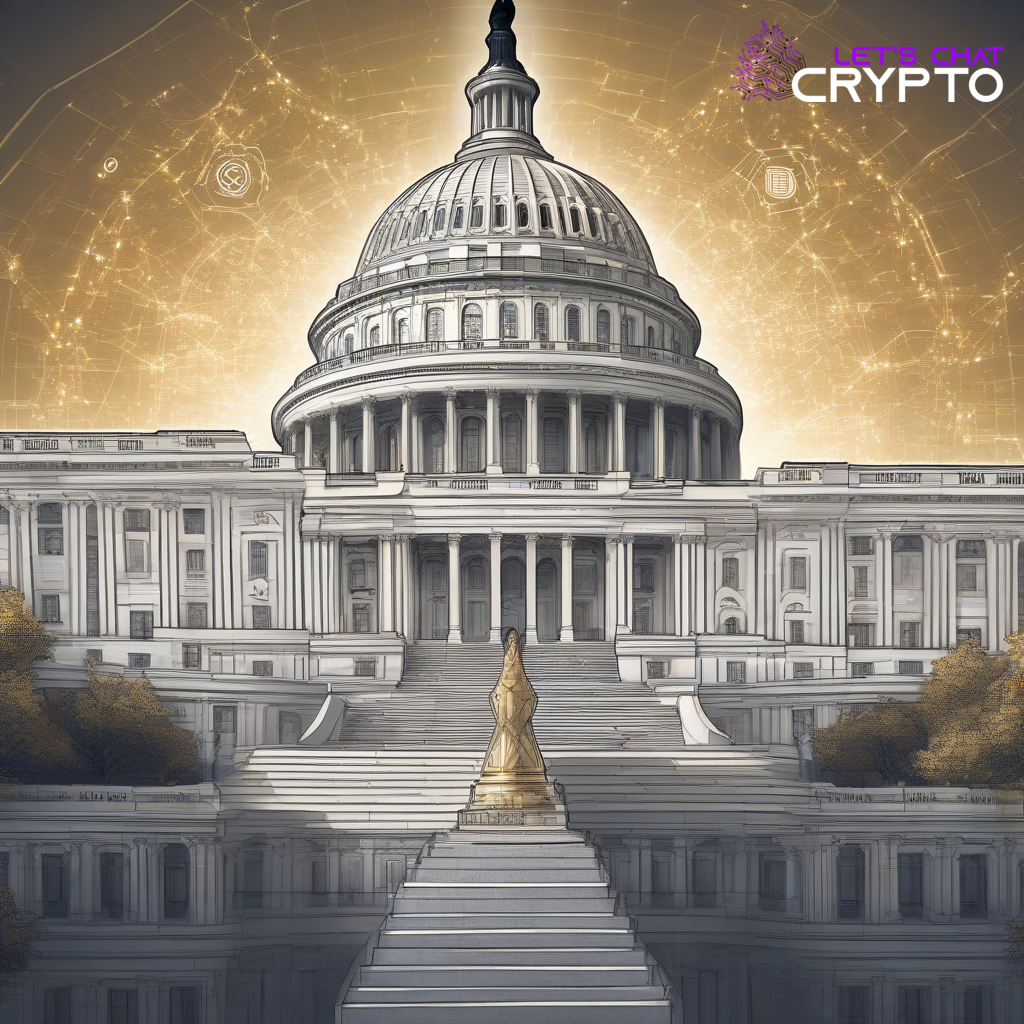
In a significant shift reflecting the challenging landscape for cryptocurrency legislation, Galaxy Digital has dramatically lowered its estimate for the passage of the CLARITY Act to a mere 10%. This pessimistic outlook stems from a confluence of complex, unresolved issues surrounding digital assets, a constricted legislative calendar, and persistent ethical dilemmas within the broader financial regulatory sphere.
The Hurdles to Legislative Progress
Galaxy Digital's revised projection underscores deep-seated concerns that continue to impede meaningful progress on comprehensive crypto regulation. Foremost among these are the intricate ethical considerations that remain largely unaddressed. The rapid evolution of the digital asset space has outpaced traditional regulatory frameworks, leaving a vacuum that critics argue is ripe for conflicts of interest and opaque practices. Lawmakers and regulators grapple with how to effectively police a decentralized ecosystem while maintaining innovation.
Another critical sticking point identified by Galaxy is the contentious issue of stablecoin yield. The mechanisms through which stablecoins generate yield, often involving intricate lending protocols and collateralization strategies, present significant regulatory challenges. Concerns persist regarding investor protection, systemic risk, and the potential for these products to operate outside conventional banking safeguards. Establishing a clear, harmonized framework for stablecoin yield remains a formidable task that has eluded consensus.
Furthermore, the protection of developers within the cryptocurrency ecosystem presents a unique legislative quandary. Innovation in decentralized finance (DeFi) often relies on open-source contributions and a global network of developers. Crafting legislation that encourages this innovation while simultaneously mitigating risks associated with malicious actors, smart contract vulnerabilities, and market manipulation is a delicate balancing act. The industry seeks clarity on liability, intellectual property, and regulatory oversight that doesn't stifle technological advancement.
A Narrowing Legislative Window
Beyond the substantive policy debates, the practical realities of the legislative calendar loom large. Galaxy Digital specifically cited a "narrow Senate window" when lawmakers are slated to return in September. The U.S. Congress faces a packed agenda, with numerous pressing national and international issues vying for attention. The limited time available, coupled with the highly technical and often divisive nature of cryptocurrency legislation, significantly diminishes the likelihood of the CLARITY Act gaining sufficient traction to move through both chambers.
Historically, complex financial legislation requires extensive debate, negotiation, and bipartisan support—elements that have proven elusive for comprehensive digital asset bills. The looming election cycle further complicates matters, as political attention often shifts away from intricate policy debates to more electorally charged issues, making consensus-building even more challenging.
Conclusion
Galaxy Digital's sharp reduction in the CLARITY Act's passage odds serves as a stark reminder of the significant hurdles facing cryptocurrency regulation in the United States. The confluence of unresolved ethical dilemmas, the complexities of stablecoin yield, the challenge of developer protection, and a constrained legislative timeline collectively paint a bleak picture for the immediate future of this key piece of legislation. While the industry continues to advocate for regulatory clarity, the path forward appears increasingly arduous, suggesting that a comprehensive framework may remain out of reach for the foreseeable future.
Resources
- CoinDesk: Reports on regulatory developments in the crypto space.
- The Block: Provides in-depth analysis of blockchain and crypto markets, including legislative updates.
- U.S. Congress Official Websites: For direct information on legislative calendars and bill statuses.
Details
Author
Top articles





 }})
You can now watch HBO Max for $10
Latest articles




You can now watch HBO Max for $10
CLARITY Act Faces Steep Uphill Battle as Galaxy Digital Slashes Passage Odds to 10%
In a significant shift reflecting the challenging landscape for cryptocurrency legislation, Galaxy Digital has dramatically lowered its estimate for the passage of the CLARITY Act to a mere 10%. This pessimistic outlook stems from a confluence of complex, unresolved issues surrounding digital assets, a constricted legislative calendar, and persistent ethical dilemmas within the broader financial regulatory sphere.
The Hurdles to Legislative Progress
Galaxy Digital's revised projection underscores deep-seated concerns that continue to impede meaningful progress on comprehensive crypto regulation. Foremost among these are the intricate ethical considerations that remain largely unaddressed. The rapid evolution of the digital asset space has outpaced traditional regulatory frameworks, leaving a vacuum that critics argue is ripe for conflicts of interest and opaque practices. Lawmakers and regulators grapple with how to effectively police a decentralized ecosystem while maintaining innovation.
Another critical sticking point identified by Galaxy is the contentious issue of stablecoin yield. The mechanisms through which stablecoins generate yield, often involving intricate lending protocols and collateralization strategies, present significant regulatory challenges. Concerns persist regarding investor protection, systemic risk, and the potential for these products to operate outside conventional banking safeguards. Establishing a clear, harmonized framework for stablecoin yield remains a formidable task that has eluded consensus.
Furthermore, the protection of developers within the cryptocurrency ecosystem presents a unique legislative quandary. Innovation in decentralized finance (DeFi) often relies on open-source contributions and a global network of developers. Crafting legislation that encourages this innovation while simultaneously mitigating risks associated with malicious actors, smart contract vulnerabilities, and market manipulation is a delicate balancing act. The industry seeks clarity on liability, intellectual property, and regulatory oversight that doesn't stifle technological advancement.
A Narrowing Legislative Window
Beyond the substantive policy debates, the practical realities of the legislative calendar loom large. Galaxy Digital specifically cited a "narrow Senate window" when lawmakers are slated to return in September. The U.S. Congress faces a packed agenda, with numerous pressing national and international issues vying for attention. The limited time available, coupled with the highly technical and often divisive nature of cryptocurrency legislation, significantly diminishes the likelihood of the CLARITY Act gaining sufficient traction to move through both chambers.
Historically, complex financial legislation requires extensive debate, negotiation, and bipartisan support—elements that have proven elusive for comprehensive digital asset bills. The looming election cycle further complicates matters, as political attention often shifts away from intricate policy debates to more electorally charged issues, making consensus-building even more challenging.
Conclusion
Galaxy Digital's sharp reduction in the CLARITY Act's passage odds serves as a stark reminder of the significant hurdles facing cryptocurrency regulation in the United States. The confluence of unresolved ethical dilemmas, the complexities of stablecoin yield, the challenge of developer protection, and a constrained legislative timeline collectively paint a bleak picture for the immediate future of this key piece of legislation. While the industry continues to advocate for regulatory clarity, the path forward appears increasingly arduous, suggesting that a comprehensive framework may remain out of reach for the foreseeable future.
Resources
- CoinDesk: Reports on regulatory developments in the crypto space.
- The Block: Provides in-depth analysis of blockchain and crypto markets, including legislative updates.
- U.S. Congress Official Websites: For direct information on legislative calendars and bill statuses.
Top articles
You can now watch HBO Max for $10
Latest articles
You can now watch HBO Max for $10
Similar posts



This is a page that only logged-in people can visit. Don't you feel special? Try clicking on a button below to do some things you can't do when you're logged out.
Example modal
At your leisure, please peruse this excerpt from a whale of a tale.
Chapter 1: Loomings.
Call me Ishmael. Some years ago—never mind how long precisely—having little or no money in my purse, and nothing particular to interest me on shore, I thought I would sail about a little and see the watery part of the world. It is a way I have of driving off the spleen and regulating the circulation. Whenever I find myself growing grim about the mouth; whenever it is a damp, drizzly November in my soul; whenever I find myself involuntarily pausing before coffin warehouses, and bringing up the rear of every funeral I meet; and especially whenever my hypos get such an upper hand of me, that it requires a strong moral principle to prevent me from deliberately stepping into the street, and methodically knocking people's hats off—then, I account it high time to get to sea as soon as I can. This is my substitute for pistol and ball. With a philosophical flourish Cato throws himself upon his sword; I quietly take to the ship. There is nothing surprising in this. If they but knew it, almost all men in their degree, some time or other, cherish very nearly the same feelings towards the ocean with me.
Comment