Polymarket Signals Heightened Iran Invasion Risk Amidst Shifting US Presidential Rhetoric
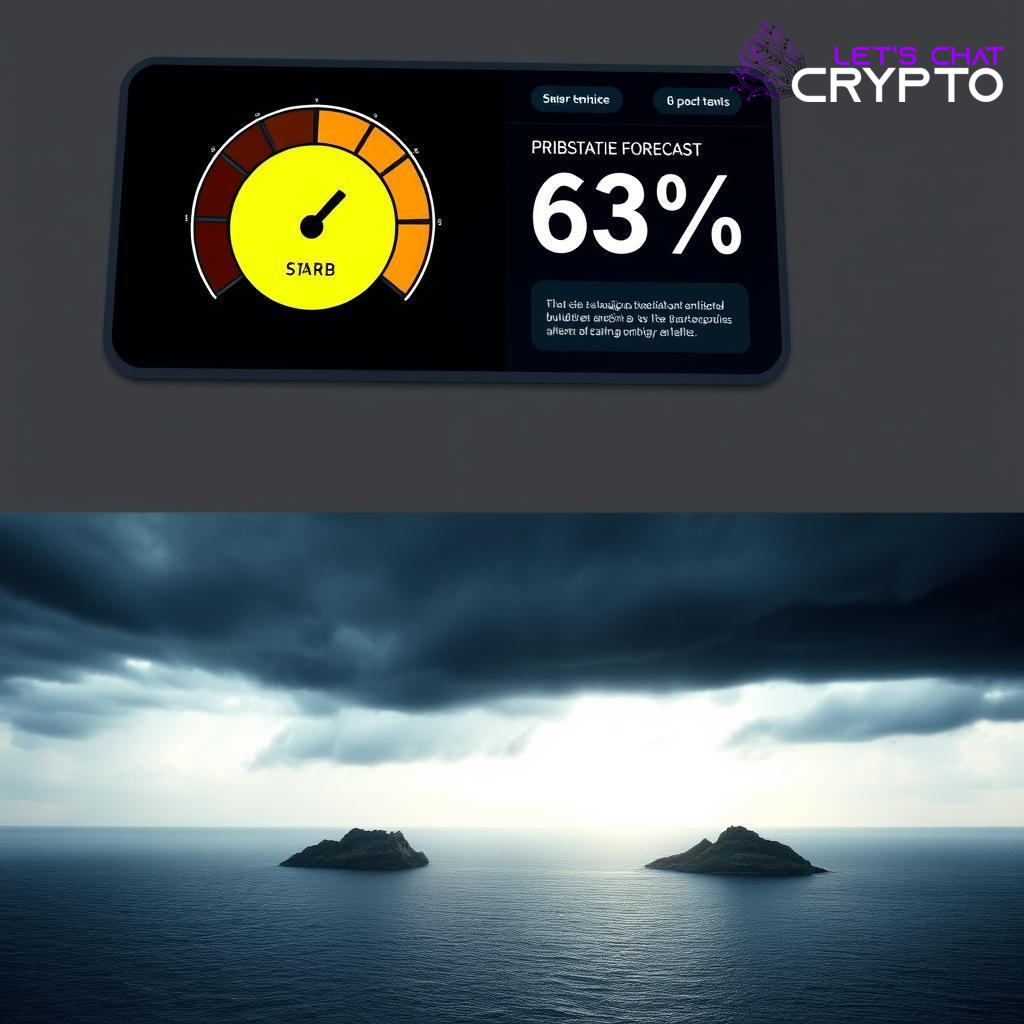
Navigating the Volatile Waters of US-Iran Relations
In the complex theater of international relations, prediction markets like Polymarket offer a unique, real-time barometer of public perception regarding geopolitical flashpoints. A recent surge saw the odds of a United States invasion of Iran this year reach 63% on Polymarket, reportedly triggered by a significant post from former President Donald Trump. This market movement underscores the profound impact of high-level political rhetoric on global risk assessment, especially when juxtaposed with the incumbent administration's often contradictory signals concerning regional stability.
The Polymarket Barometer: A Glimpse into Perceived Risk
Polymarket, a decentralized platform where users wager on the outcomes of future events, acts as an aggregated indicator of collective belief. The reported spike to 63% for a US invasion of Iran, following a statement attributed to Donald Trump, reflects a significant re-evaluation of risk by market participants. Such a sharp increase suggests that Trump's commentary, even from outside the current executive office, retains considerable weight in shaping perceptions of potential military action. Market fluctuations on this scale are not merely speculative; they represent a crowd-sourced assessment of political will, logistical feasibility, and potential triggers for conflict.
The Current Administration's Dilemma: Mixed Signals
Adding another layer of complexity to this volatile scenario are the mixed signals emanating from the current President of the United States. While consistently articulating a desire to de-escalate tensions in the Middle East and pursue diplomatic avenues, the administration simultaneously maintains robust military deterrence, enforces stringent sanctions, and occasionally engages in targeted responses to regional provocations. This delicate balancing act, perceived by some as a necessary strategy to manage an unpredictable adversary, is often interpreted by others as contradictory. These conflicting messages can sow uncertainty, potentially fueling market speculation and contributing to a heightened sense of instability regarding US intentions toward Iran. The oscillation between calls for winding down conflict and actions that could be construed as escalatory creates an environment ripe for misinterpretation and heightened anxiety among regional and international observers.
Historical Context and Future Implications
The history of US-Iran relations is fraught with periods of intense tension and moments of fleeting diplomatic engagement. Trump's previous "maximum pressure" campaign, including the withdrawal from the Joint Comprehensive Plan of Action (JCPOA) and targeted military actions, set a precedent for assertive, and often unpredictable, policy. The mere prospect of such an approach re-emerging, or indeed, current rhetoric being seen through that historical lens, can profoundly influence market sentiment. A 63% probability, as indicated by Polymarket, signals a significant perceived shift from deterrence to potential direct military confrontation, posing severe implications for global oil markets, regional stability, and international alliances. Such a scenario would represent a monumental escalation with far-reaching consequences beyond the immediate geographic confines.
Summary
The Polymarket odds reaching 63% for a US invasion of Iran, reportedly spurred by a former President's post and set against a backdrop of the current administration's contradictory foreign policy signals, underscores the extreme sensitivity of geopolitical forecasting to high-level political discourse. This market movement is more than just speculation; it reflects a collective assessment of increased risk driven by perceived policy shifts and rhetorical cues. The delicate balance between de-escalation and deterrence remains a critical challenge for Washington, with every presidential statement and action scrutinized for its potential to either calm or inflame an already volatile region. The implications of such elevated probabilities are profound, signaling a potential trajectory towards a far more dangerous phase in US-Iran relations.
Resources
Details
Author
Top articles




 }})
You can now watch HBO Max for $10
Latest articles



You can now watch HBO Max for $10
Navigating the Volatile Waters of US-Iran Relations
In the complex theater of international relations, prediction markets like Polymarket offer a unique, real-time barometer of public perception regarding geopolitical flashpoints. A recent surge saw the odds of a United States invasion of Iran this year reach 63% on Polymarket, reportedly triggered by a significant post from former President Donald Trump. This market movement underscores the profound impact of high-level political rhetoric on global risk assessment, especially when juxtaposed with the incumbent administration's often contradictory signals concerning regional stability.
The Polymarket Barometer: A Glimpse into Perceived Risk
Polymarket, a decentralized platform where users wager on the outcomes of future events, acts as an aggregated indicator of collective belief. The reported spike to 63% for a US invasion of Iran, following a statement attributed to Donald Trump, reflects a significant re-evaluation of risk by market participants. Such a sharp increase suggests that Trump's commentary, even from outside the current executive office, retains considerable weight in shaping perceptions of potential military action. Market fluctuations on this scale are not merely speculative; they represent a crowd-sourced assessment of political will, logistical feasibility, and potential triggers for conflict.
The Current Administration's Dilemma: Mixed Signals
Adding another layer of complexity to this volatile scenario are the mixed signals emanating from the current President of the United States. While consistently articulating a desire to de-escalate tensions in the Middle East and pursue diplomatic avenues, the administration simultaneously maintains robust military deterrence, enforces stringent sanctions, and occasionally engages in targeted responses to regional provocations. This delicate balancing act, perceived by some as a necessary strategy to manage an unpredictable adversary, is often interpreted by others as contradictory. These conflicting messages can sow uncertainty, potentially fueling market speculation and contributing to a heightened sense of instability regarding US intentions toward Iran. The oscillation between calls for winding down conflict and actions that could be construed as escalatory creates an environment ripe for misinterpretation and heightened anxiety among regional and international observers.
Historical Context and Future Implications
The history of US-Iran relations is fraught with periods of intense tension and moments of fleeting diplomatic engagement. Trump's previous "maximum pressure" campaign, including the withdrawal from the Joint Comprehensive Plan of Action (JCPOA) and targeted military actions, set a precedent for assertive, and often unpredictable, policy. The mere prospect of such an approach re-emerging, or indeed, current rhetoric being seen through that historical lens, can profoundly influence market sentiment. A 63% probability, as indicated by Polymarket, signals a significant perceived shift from deterrence to potential direct military confrontation, posing severe implications for global oil markets, regional stability, and international alliances. Such a scenario would represent a monumental escalation with far-reaching consequences beyond the immediate geographic confines.
Summary
The Polymarket odds reaching 63% for a US invasion of Iran, reportedly spurred by a former President's post and set against a backdrop of the current administration's contradictory foreign policy signals, underscores the extreme sensitivity of geopolitical forecasting to high-level political discourse. This market movement is more than just speculation; it reflects a collective assessment of increased risk driven by perceived policy shifts and rhetorical cues. The delicate balance between de-escalation and deterrence remains a critical challenge for Washington, with every presidential statement and action scrutinized for its potential to either calm or inflame an already volatile region. The implications of such elevated probabilities are profound, signaling a potential trajectory towards a far more dangerous phase in US-Iran relations.
Resources
Top articles
You can now watch HBO Max for $10
Latest articles
You can now watch HBO Max for $10
Similar posts

This is a page that only logged-in people can visit. Don't you feel special? Try clicking on a button below to do some things you can't do when you're logged out.
Example modal
At your leisure, please peruse this excerpt from a whale of a tale.
Chapter 1: Loomings.
Call me Ishmael. Some years ago—never mind how long precisely—having little or no money in my purse, and nothing particular to interest me on shore, I thought I would sail about a little and see the watery part of the world. It is a way I have of driving off the spleen and regulating the circulation. Whenever I find myself growing grim about the mouth; whenever it is a damp, drizzly November in my soul; whenever I find myself involuntarily pausing before coffin warehouses, and bringing up the rear of every funeral I meet; and especially whenever my hypos get such an upper hand of me, that it requires a strong moral principle to prevent me from deliberately stepping into the street, and methodically knocking people's hats off—then, I account it high time to get to sea as soon as I can. This is my substitute for pistol and ball. With a philosophical flourish Cato throws himself upon his sword; I quietly take to the ship. There is nothing surprising in this. If they but knew it, almost all men in their degree, some time or other, cherish very nearly the same feelings towards the ocean with me.
Comment