The Prophetic Economy: How Prediction Markets Like Polymarket, Kalshi, and Myriad Harness Collective Foresight
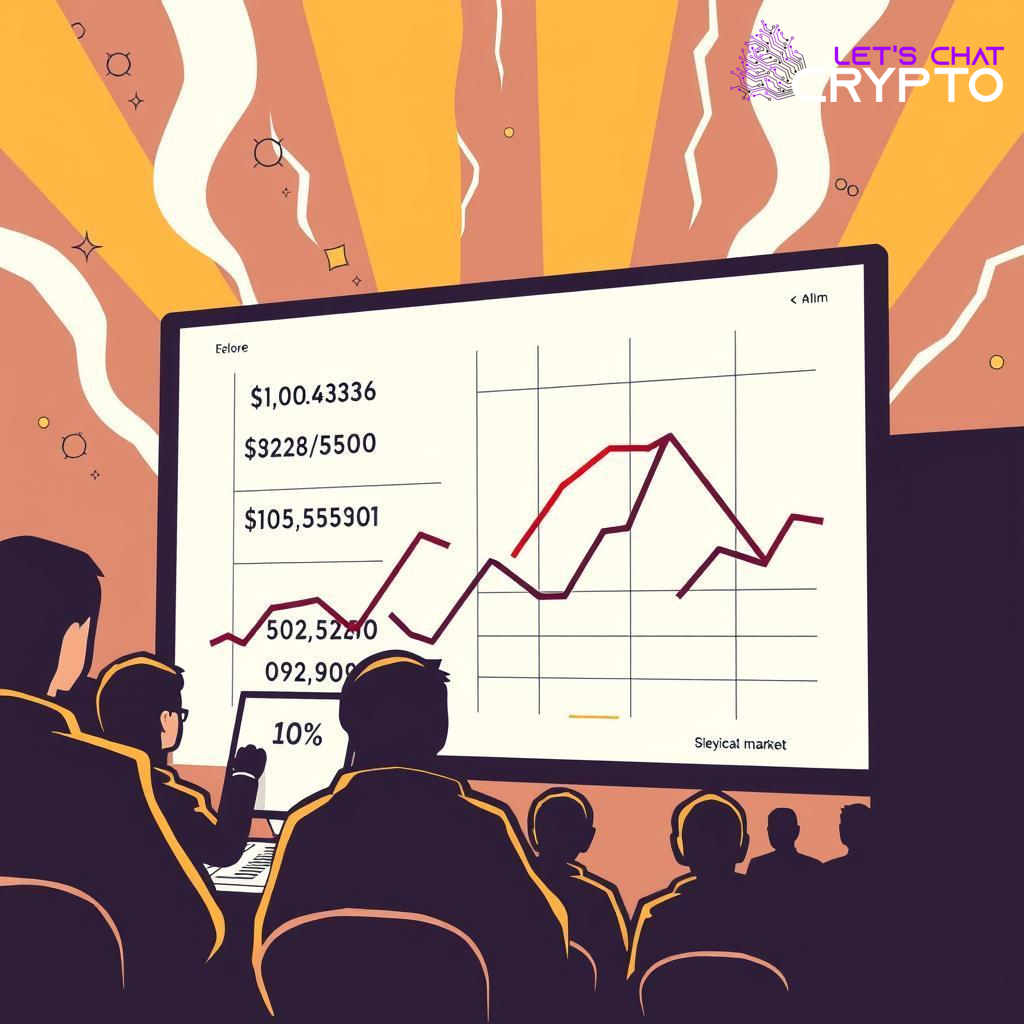
Prediction markets represent a fascinating intersection of economics, technology, and collective intelligence, allowing participants to speculate on future events. These platforms aggregate diverse opinions into real-time probabilities, often proving remarkably accurate. While the core concept remains consistent, the operational models—ranging from highly regulated exchanges to decentralized blockchain protocols—show significant divergence. This exploration delves into the mechanics of prediction markets, examining leading platforms such as Polymarket, Kalshi, and the nascent on-chain innovations exemplified by Myriad.
The Core Mechanics of Prediction Markets
At their essence, prediction markets are exchanges where users trade "shares" corresponding to the potential outcomes of specific events. When an event is proposed, various outcomes are listed, and participants can buy or sell shares in these outcomes. The price of a share, which typically ranges from $0.00 to $1.00, directly reflects the market's perceived probability of that outcome occurring. For instance, if a share in a particular event outcome trades at $0.75, the market collectively believes there is a 75% chance of that event happening.
Upon the event's resolution, shares in the correct outcome mature to $1.00, while shares in incorrect outcomes become worthless. This financial incentive encourages participants to contribute their best information and judgment, driving the market towards an efficient price discovery mechanism often superior to traditional polling or expert forecasts. The "wisdom of the crowds" effect is a foundational principle, demonstrating that the aggregated knowledge of a large, diverse group can outperform individual experts.
Polymarket: Decentralized Foresight on the Blockchain
Polymarket stands as a prominent example of a decentralized prediction market, built on the Polygon blockchain. Operating without a central intermediary, Polymarket leverages smart contracts to facilitate trading and ensure transparent, immutable settlement of markets. Users typically interact with the platform using stablecoins like USDC, betting on a wide array of topics, from geopolitical events and economic indicators to pop culture outcomes and cryptocurrency price movements. The appeal of Polymarket lies in its censorship resistance, global accessibility, and the inherent transparency provided by its on-chain infrastructure. However, its decentralized nature has also led to regulatory challenges, particularly in jurisdictions like the United States, where it has faced scrutiny regarding compliance and market offerings.
Kalshi: The Regulated Frontier of Event Contracts
In stark contrast to Polymarket's decentralized model, Kalshi operates as a fully regulated exchange in the United States, licensed by the Commodity Futures Trading Commission (CFTC). Kalshi offers "event contracts" – financial instruments allowing users to trade on the outcome of specific, verifiable events. These markets are meticulously structured to comply with stringent financial regulations, distinguishing them from traditional gambling. Kalshi's offerings often center on macroeconomic data releases, weather phenomena, and other quantifiable events with clear economic utility, such as hedging against specific risks. The platform prioritizes investor protection, regulatory oversight, and a robust, compliant trading environment, aiming to integrate prediction market functionality into mainstream financial markets. This regulatory clarity, while limiting the scope of permissible markets, provides a secure and credible avenue for institutions and retail investors alike.
Myriad and the Evolution of On-Chain Prediction Markets
The concept of "Myriad" represents the ongoing evolution of purely on-chain prediction markets, pushing the boundaries of decentralization. While not always a single, monolithic platform, Myriad, as a conceptual model, embodies protocols designed for maximum autonomy and user governance. These markets are built directly on blockchain networks, allowing for the creation, trading, and resolution of markets without any central authority. Participants can often propose new markets, provide liquidity, and even serve as arbiters for event resolution, all governed by smart contracts and cryptographic security. The promise of Myriad-like systems includes unparalleled transparency, resistance to censorship, and truly global participation. Challenges, however, persist in areas such as oracle reliability (how external real-world events are verified on-chain), scalability, and user-friendliness, as they often require a deeper understanding of blockchain mechanics.
Summary
Prediction markets, whether decentralized like Polymarket and the conceptual Myriad, or regulated like Kalshi, offer powerful tools for aggregating information and forecasting future events. While their operational models differ significantly—one embracing the regulatory frameworks of traditional finance and the others championing the autonomy and transparency of blockchain—all share the fundamental goal of harnessing collective intelligence. As technology advances and regulatory landscapes evolve, these platforms are poised to play an increasingly vital role in everything from economic forecasting to risk management, transforming how we perceive and interact with future uncertainties.
Resources
- The Commodity Futures Trading Commission (CFTC)
- Polymarket Official Documentation
- Academic Research on Decentralized Finance (DeFi) and Blockchain Applications
Details
Author
Top articles


 }})
You can now watch HBO Max for $10
Latest articles




You can now watch HBO Max for $10
Prediction markets represent a fascinating intersection of economics, technology, and collective intelligence, allowing participants to speculate on future events. These platforms aggregate diverse opinions into real-time probabilities, often proving remarkably accurate. While the core concept remains consistent, the operational models—ranging from highly regulated exchanges to decentralized blockchain protocols—show significant divergence. This exploration delves into the mechanics of prediction markets, examining leading platforms such as Polymarket, Kalshi, and the nascent on-chain innovations exemplified by Myriad.
The Core Mechanics of Prediction Markets
At their essence, prediction markets are exchanges where users trade "shares" corresponding to the potential outcomes of specific events. When an event is proposed, various outcomes are listed, and participants can buy or sell shares in these outcomes. The price of a share, which typically ranges from $0.00 to $1.00, directly reflects the market's perceived probability of that outcome occurring. For instance, if a share in a particular event outcome trades at $0.75, the market collectively believes there is a 75% chance of that event happening.
Upon the event's resolution, shares in the correct outcome mature to $1.00, while shares in incorrect outcomes become worthless. This financial incentive encourages participants to contribute their best information and judgment, driving the market towards an efficient price discovery mechanism often superior to traditional polling or expert forecasts. The "wisdom of the crowds" effect is a foundational principle, demonstrating that the aggregated knowledge of a large, diverse group can outperform individual experts.
Polymarket: Decentralized Foresight on the Blockchain
Polymarket stands as a prominent example of a decentralized prediction market, built on the Polygon blockchain. Operating without a central intermediary, Polymarket leverages smart contracts to facilitate trading and ensure transparent, immutable settlement of markets. Users typically interact with the platform using stablecoins like USDC, betting on a wide array of topics, from geopolitical events and economic indicators to pop culture outcomes and cryptocurrency price movements. The appeal of Polymarket lies in its censorship resistance, global accessibility, and the inherent transparency provided by its on-chain infrastructure. However, its decentralized nature has also led to regulatory challenges, particularly in jurisdictions like the United States, where it has faced scrutiny regarding compliance and market offerings.
Kalshi: The Regulated Frontier of Event Contracts
In stark contrast to Polymarket's decentralized model, Kalshi operates as a fully regulated exchange in the United States, licensed by the Commodity Futures Trading Commission (CFTC). Kalshi offers "event contracts" – financial instruments allowing users to trade on the outcome of specific, verifiable events. These markets are meticulously structured to comply with stringent financial regulations, distinguishing them from traditional gambling. Kalshi's offerings often center on macroeconomic data releases, weather phenomena, and other quantifiable events with clear economic utility, such as hedging against specific risks. The platform prioritizes investor protection, regulatory oversight, and a robust, compliant trading environment, aiming to integrate prediction market functionality into mainstream financial markets. This regulatory clarity, while limiting the scope of permissible markets, provides a secure and credible avenue for institutions and retail investors alike.
Myriad and the Evolution of On-Chain Prediction Markets
The concept of "Myriad" represents the ongoing evolution of purely on-chain prediction markets, pushing the boundaries of decentralization. While not always a single, monolithic platform, Myriad, as a conceptual model, embodies protocols designed for maximum autonomy and user governance. These markets are built directly on blockchain networks, allowing for the creation, trading, and resolution of markets without any central authority. Participants can often propose new markets, provide liquidity, and even serve as arbiters for event resolution, all governed by smart contracts and cryptographic security. The promise of Myriad-like systems includes unparalleled transparency, resistance to censorship, and truly global participation. Challenges, however, persist in areas such as oracle reliability (how external real-world events are verified on-chain), scalability, and user-friendliness, as they often require a deeper understanding of blockchain mechanics.
Summary
Prediction markets, whether decentralized like Polymarket and the conceptual Myriad, or regulated like Kalshi, offer powerful tools for aggregating information and forecasting future events. While their operational models differ significantly—one embracing the regulatory frameworks of traditional finance and the others championing the autonomy and transparency of blockchain—all share the fundamental goal of harnessing collective intelligence. As technology advances and regulatory landscapes evolve, these platforms are poised to play an increasingly vital role in everything from economic forecasting to risk management, transforming how we perceive and interact with future uncertainties.
Resources
- The Commodity Futures Trading Commission (CFTC)
- Polymarket Official Documentation
- Academic Research on Decentralized Finance (DeFi) and Blockchain Applications
Top articles
You can now watch HBO Max for $10
Latest articles
You can now watch HBO Max for $10
Similar posts


This is a page that only logged-in people can visit. Don't you feel special? Try clicking on a button below to do some things you can't do when you're logged out.
Example modal
At your leisure, please peruse this excerpt from a whale of a tale.
Chapter 1: Loomings.
Call me Ishmael. Some years ago—never mind how long precisely—having little or no money in my purse, and nothing particular to interest me on shore, I thought I would sail about a little and see the watery part of the world. It is a way I have of driving off the spleen and regulating the circulation. Whenever I find myself growing grim about the mouth; whenever it is a damp, drizzly November in my soul; whenever I find myself involuntarily pausing before coffin warehouses, and bringing up the rear of every funeral I meet; and especially whenever my hypos get such an upper hand of me, that it requires a strong moral principle to prevent me from deliberately stepping into the street, and methodically knocking people's hats off—then, I account it high time to get to sea as soon as I can. This is my substitute for pistol and ball. With a philosophical flourish Cato throws himself upon his sword; I quietly take to the ship. There is nothing surprising in this. If they but knew it, almost all men in their degree, some time or other, cherish very nearly the same feelings towards the ocean with me.
Comment