Wall Street Soars as Main Street Sours: Bitcoin and Nasdaq Rally Amidst Historic Consumer Pessimism

The Great Divergence: Wall Street Euphoria Contrasts with Deepening Main Street Gloom
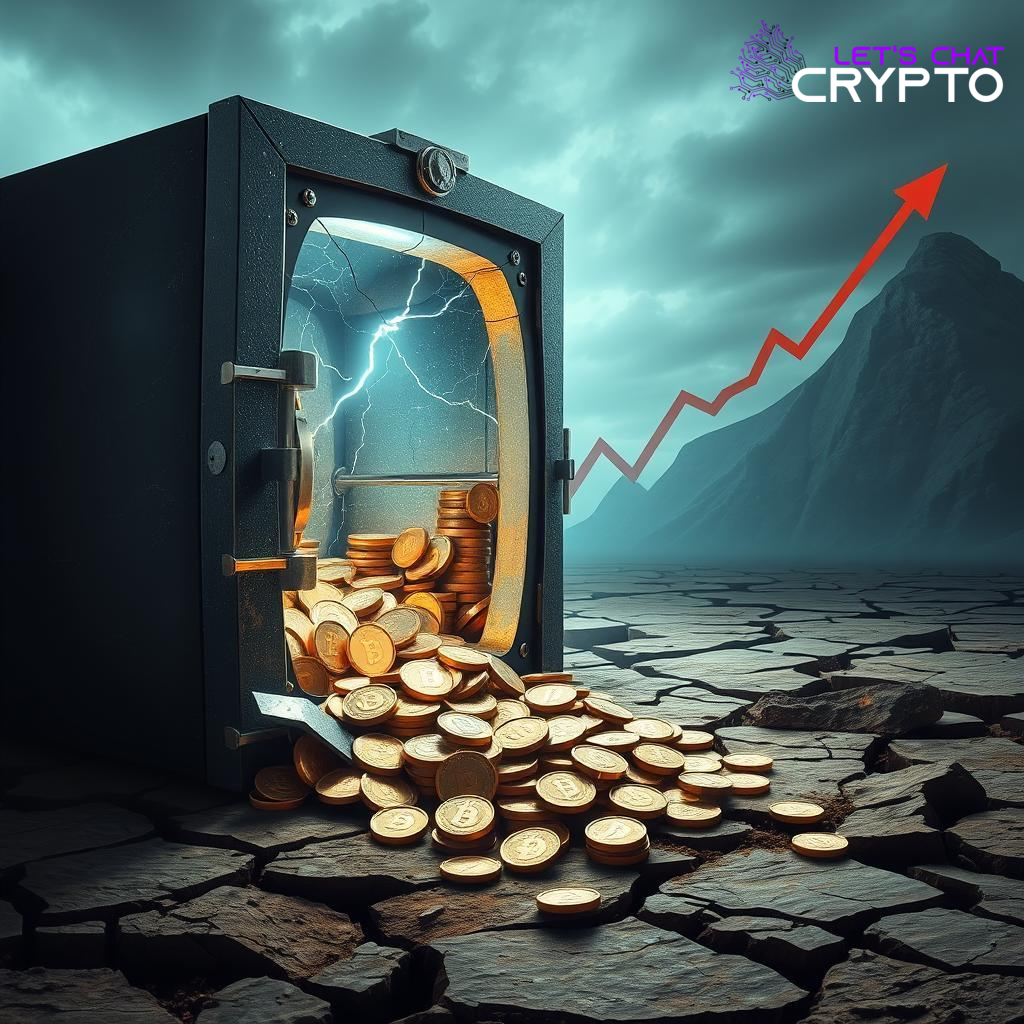
In a period marked by significant economic contradictions, U.S. financial markets and consumer confidence appear to exist in parallel, yet vastly different, realities. While investors in Bitcoin and the Nasdaq Composite have enjoyed substantial gains, buoyed by speculative fervor and robust corporate earnings, the sentiment among average American consumers has plummeted to levels signaling profound economic unease. This stark divergence underscores a widening chasm between the performance of high-value assets and the lived experiences of households grappling with persistent economic pressures.
Bitcoin and Nasdaq: A Soaring Ascent
The digital asset market has witnessed a remarkable resurgence, with Bitcoin leading the charge to reclaim and surpass previous all-time highs. This rally has been fueled by several factors, including the approval of spot Bitcoin Exchange-Traded Funds (ETFs) in major markets, which has opened avenues for broader institutional and retail investment. Concurrently, the Nasdaq Composite, heavily weighted towards technology giants, has demonstrated formidable strength. Driven by optimism surrounding advancements in artificial intelligence, strong earnings reports from sector leaders, and expectations of future innovation, tech stocks have delivered outsized returns, propelling the index to new heights and enriching portfolios concentrated in these segments.
U.S. Consumer Sentiment: A Grounded Reality
In stark contrast to the buoyancy of financial markets, U.S. consumer sentiment has registered a precipitous decline. Data from reputable surveys, such as the University of Michigan's Consumer Sentiment Index, frequently reveal a populace increasingly pessimistic about their personal financial situations and the broader economic outlook. Concerns over persistent inflation, which continues to erode purchasing power, coupled with elevated interest rates impacting borrowing costs for everything from mortgages to credit cards, weigh heavily on household budgets. Despite robust employment figures, the perceived cost of living and future economic stability remain primary drivers of this widespread gloom, suggesting that economic prosperity has not been evenly distributed.
Unpacking the Disconnect
The widening gap between the exuberance of Wall Street and the despondency of Main Street can be attributed to several structural factors. Investors in assets like Bitcoin and high-growth technology stocks often benefit from wealth effects and access to capital that allows them to capitalize on market upturns. For the average consumer, however, the day-to-day economic reality is dominated by the rising cost of essential goods and services, stagnant real wages for many, and increasing debt burdens. The benefits of a strong stock market often accrue disproportionately to those already holding significant financial assets, while the challenges of inflation and high interest rates are acutely felt by those living paycheck to paycheck or aspiring to major purchases like homes or vehicles.
Summary
The current economic landscape presents a paradoxical picture: a thriving financial sector coexisting with a deeply apprehensive consumer base. This "great divergence" highlights fundamental inequalities in economic experience and underscores the complex interplay of speculative markets, corporate performance, and household financial stability. Addressing this divide will require a nuanced understanding of how macroeconomic policies impact different segments of the population, ensuring that economic growth translates into tangible improvements for all Americans, not just those participating in the financial markets.
Resources
- University of Michigan Surveys of Consumers
- CoinDesk
- Nasdaq Inc.
Details
Author
Top articles


 }})
You can now watch HBO Max for $10
Latest articles



You can now watch HBO Max for $10
The Great Divergence: Wall Street Euphoria Contrasts with Deepening Main Street Gloom
In a period marked by significant economic contradictions, U.S. financial markets and consumer confidence appear to exist in parallel, yet vastly different, realities. While investors in Bitcoin and the Nasdaq Composite have enjoyed substantial gains, buoyed by speculative fervor and robust corporate earnings, the sentiment among average American consumers has plummeted to levels signaling profound economic unease. This stark divergence underscores a widening chasm between the performance of high-value assets and the lived experiences of households grappling with persistent economic pressures.
Bitcoin and Nasdaq: A Soaring Ascent
The digital asset market has witnessed a remarkable resurgence, with Bitcoin leading the charge to reclaim and surpass previous all-time highs. This rally has been fueled by several factors, including the approval of spot Bitcoin Exchange-Traded Funds (ETFs) in major markets, which has opened avenues for broader institutional and retail investment. Concurrently, the Nasdaq Composite, heavily weighted towards technology giants, has demonstrated formidable strength. Driven by optimism surrounding advancements in artificial intelligence, strong earnings reports from sector leaders, and expectations of future innovation, tech stocks have delivered outsized returns, propelling the index to new heights and enriching portfolios concentrated in these segments.
U.S. Consumer Sentiment: A Grounded Reality
In stark contrast to the buoyancy of financial markets, U.S. consumer sentiment has registered a precipitous decline. Data from reputable surveys, such as the University of Michigan's Consumer Sentiment Index, frequently reveal a populace increasingly pessimistic about their personal financial situations and the broader economic outlook. Concerns over persistent inflation, which continues to erode purchasing power, coupled with elevated interest rates impacting borrowing costs for everything from mortgages to credit cards, weigh heavily on household budgets. Despite robust employment figures, the perceived cost of living and future economic stability remain primary drivers of this widespread gloom, suggesting that economic prosperity has not been evenly distributed.
Unpacking the Disconnect
The widening gap between the exuberance of Wall Street and the despondency of Main Street can be attributed to several structural factors. Investors in assets like Bitcoin and high-growth technology stocks often benefit from wealth effects and access to capital that allows them to capitalize on market upturns. For the average consumer, however, the day-to-day economic reality is dominated by the rising cost of essential goods and services, stagnant real wages for many, and increasing debt burdens. The benefits of a strong stock market often accrue disproportionately to those already holding significant financial assets, while the challenges of inflation and high interest rates are acutely felt by those living paycheck to paycheck or aspiring to major purchases like homes or vehicles.
Summary
The current economic landscape presents a paradoxical picture: a thriving financial sector coexisting with a deeply apprehensive consumer base. This "great divergence" highlights fundamental inequalities in economic experience and underscores the complex interplay of speculative markets, corporate performance, and household financial stability. Addressing this divide will require a nuanced understanding of how macroeconomic policies impact different segments of the population, ensuring that economic growth translates into tangible improvements for all Americans, not just those participating in the financial markets.
Resources
- University of Michigan Surveys of Consumers
- CoinDesk
- Nasdaq Inc.
Top articles
You can now watch HBO Max for $10
Latest articles
You can now watch HBO Max for $10
Similar posts




This is a page that only logged-in people can visit. Don't you feel special? Try clicking on a button below to do some things you can't do when you're logged out.
Example modal
At your leisure, please peruse this excerpt from a whale of a tale.
Chapter 1: Loomings.
Call me Ishmael. Some years ago—never mind how long precisely—having little or no money in my purse, and nothing particular to interest me on shore, I thought I would sail about a little and see the watery part of the world. It is a way I have of driving off the spleen and regulating the circulation. Whenever I find myself growing grim about the mouth; whenever it is a damp, drizzly November in my soul; whenever I find myself involuntarily pausing before coffin warehouses, and bringing up the rear of every funeral I meet; and especially whenever my hypos get such an upper hand of me, that it requires a strong moral principle to prevent me from deliberately stepping into the street, and methodically knocking people's hats off—then, I account it high time to get to sea as soon as I can. This is my substitute for pistol and ball. With a philosophical flourish Cato throws himself upon his sword; I quietly take to the ship. There is nothing surprising in this. If they but knew it, almost all men in their degree, some time or other, cherish very nearly the same feelings towards the ocean with me.
Comment