Tether Immobilizes $344 Million in USDT on Tron Following Law Enforcement Directives Amidst Global Illicit Finance Warnings
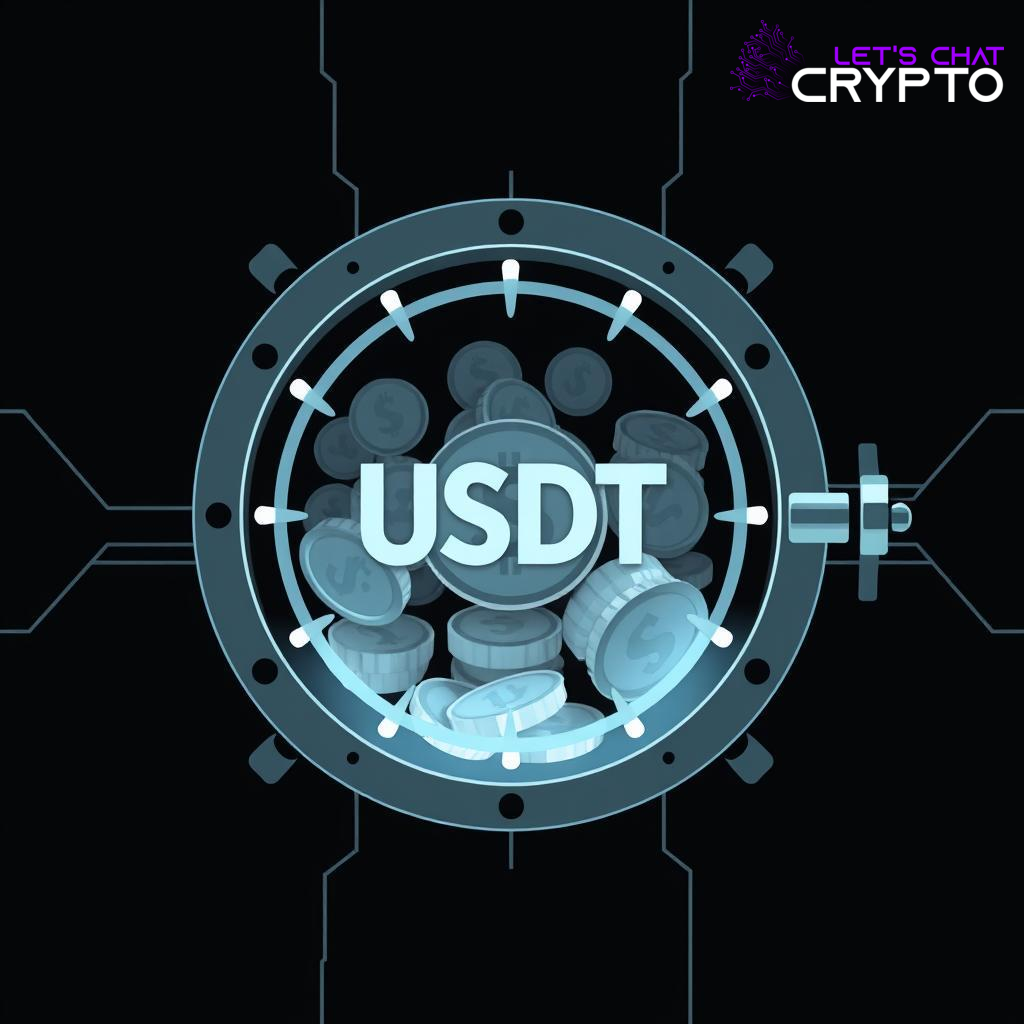
Stablecoin Freezes: A Critical Step in Combating Illicit Finance
In a significant move underscoring the growing intersection of blockchain technology and global financial regulation, stablecoin issuer Tether has frozen approximately $344 million worth of its USDT token on the Tron network. This decisive action, taken in January 2024, came in direct response to requests from U.S. law enforcement agencies investigating funds linked to illicit activities. The incident highlights the complex challenges and evolving compliance responsibilities faced by digital asset providers in the fight against financial crime.
The Nexus of Digital Assets and Financial Crime
The freeze by Tether is not an isolated event but rather indicative of an increasing trend where stablecoins, designed for price stability and efficient transfers, are inadvertently or intentionally exploited for nefarious purposes. While cryptocurrencies offer undeniable innovation, their pseudonymous nature and global reach have also attracted illicit actors seeking to launder money, finance terrorism, or evade sanctions. Tether, as the largest stablecoin issuer, often finds itself at the forefront of these battles, collaborating with authorities to identify and neutralize threats.
This particular freeze gains added context from recent warnings issued by the Financial Action Task Force (FATF), the global money laundering and terrorist financing watchdog. The FATF has consistently cautioned about the escalating role of "digital dollars" and other virtual assets in the global illicit money flow ecosystem. Their reports emphasize the critical need for Virtual Asset Service Providers (VASPs) to implement robust Anti-Money Laundering (AML) and Counter-Terrorist Financing (CTF) measures, including proactive monitoring, transaction analysis, and swift action upon detection of suspicious activity.
Tether's Compliance Framework and Centralized Control
Tether's ability to unilaterally freeze assets on its network stems from the centralized nature of its stablecoin operations. Unlike truly decentralized cryptocurrencies, Tether maintains control over the issuance and redemption of USDT, including the power to blacklist addresses. While this centralization is a point of contention for some in the crypto community, it also provides a crucial mechanism for compliance and law enforcement cooperation. The company has publicly affirmed its commitment to working with global agencies, maintaining a compliance framework designed to respond to legal mandates and protect the integrity of its ecosystem.
The frozen funds on the Tron blockchain represent a substantial sum, reinforcing the scale at which digital assets can be misused. While specific details about the underlying illicit activities remain confidential due to ongoing investigations, such actions send a clear message to bad actors about the increasing traceability and enforceability within the digital asset space.
Summary
The recent freeze of $344 million in USDT on the Tron network by Tether, prompted by U.S. law enforcement, underscores the critical role stablecoin issuers play in combating global financial crime. This incident aligns with broader warnings from bodies like the FATF concerning the misuse of digital assets. It also highlights the centralized control mechanisms inherent in stablecoins, which, while raising decentralization questions, are essential for compliance and law enforcement collaboration in a rapidly evolving financial landscape.
Resources
- CoinDesk: Reports on cryptocurrency news and regulatory actions.
- Bloomberg: Provides financial news and market analysis, including digital assets.
- Financial Action Task Force (FATF): Publishes global standards and reports on money laundering and terrorist financing risks.
Details
Author
Top articles





 }})
You can now watch HBO Max for $10
Latest articles



You can now watch HBO Max for $10
Stablecoin Freezes: A Critical Step in Combating Illicit Finance
In a significant move underscoring the growing intersection of blockchain technology and global financial regulation, stablecoin issuer Tether has frozen approximately $344 million worth of its USDT token on the Tron network. This decisive action, taken in January 2024, came in direct response to requests from U.S. law enforcement agencies investigating funds linked to illicit activities. The incident highlights the complex challenges and evolving compliance responsibilities faced by digital asset providers in the fight against financial crime.
The Nexus of Digital Assets and Financial Crime
The freeze by Tether is not an isolated event but rather indicative of an increasing trend where stablecoins, designed for price stability and efficient transfers, are inadvertently or intentionally exploited for nefarious purposes. While cryptocurrencies offer undeniable innovation, their pseudonymous nature and global reach have also attracted illicit actors seeking to launder money, finance terrorism, or evade sanctions. Tether, as the largest stablecoin issuer, often finds itself at the forefront of these battles, collaborating with authorities to identify and neutralize threats.
This particular freeze gains added context from recent warnings issued by the Financial Action Task Force (FATF), the global money laundering and terrorist financing watchdog. The FATF has consistently cautioned about the escalating role of "digital dollars" and other virtual assets in the global illicit money flow ecosystem. Their reports emphasize the critical need for Virtual Asset Service Providers (VASPs) to implement robust Anti-Money Laundering (AML) and Counter-Terrorist Financing (CTF) measures, including proactive monitoring, transaction analysis, and swift action upon detection of suspicious activity.
Tether's Compliance Framework and Centralized Control
Tether's ability to unilaterally freeze assets on its network stems from the centralized nature of its stablecoin operations. Unlike truly decentralized cryptocurrencies, Tether maintains control over the issuance and redemption of USDT, including the power to blacklist addresses. While this centralization is a point of contention for some in the crypto community, it also provides a crucial mechanism for compliance and law enforcement cooperation. The company has publicly affirmed its commitment to working with global agencies, maintaining a compliance framework designed to respond to legal mandates and protect the integrity of its ecosystem.
The frozen funds on the Tron blockchain represent a substantial sum, reinforcing the scale at which digital assets can be misused. While specific details about the underlying illicit activities remain confidential due to ongoing investigations, such actions send a clear message to bad actors about the increasing traceability and enforceability within the digital asset space.
Summary
The recent freeze of $344 million in USDT on the Tron network by Tether, prompted by U.S. law enforcement, underscores the critical role stablecoin issuers play in combating global financial crime. This incident aligns with broader warnings from bodies like the FATF concerning the misuse of digital assets. It also highlights the centralized control mechanisms inherent in stablecoins, which, while raising decentralization questions, are essential for compliance and law enforcement collaboration in a rapidly evolving financial landscape.
Resources
- CoinDesk: Reports on cryptocurrency news and regulatory actions.
- Bloomberg: Provides financial news and market analysis, including digital assets.
- Financial Action Task Force (FATF): Publishes global standards and reports on money laundering and terrorist financing risks.
Top articles
You can now watch HBO Max for $10
Latest articles
You can now watch HBO Max for $10
Similar posts


This is a page that only logged-in people can visit. Don't you feel special? Try clicking on a button below to do some things you can't do when you're logged out.
Example modal
At your leisure, please peruse this excerpt from a whale of a tale.
Chapter 1: Loomings.
Call me Ishmael. Some years ago—never mind how long precisely—having little or no money in my purse, and nothing particular to interest me on shore, I thought I would sail about a little and see the watery part of the world. It is a way I have of driving off the spleen and regulating the circulation. Whenever I find myself growing grim about the mouth; whenever it is a damp, drizzly November in my soul; whenever I find myself involuntarily pausing before coffin warehouses, and bringing up the rear of every funeral I meet; and especially whenever my hypos get such an upper hand of me, that it requires a strong moral principle to prevent me from deliberately stepping into the street, and methodically knocking people's hats off—then, I account it high time to get to sea as soon as I can. This is my substitute for pistol and ball. With a philosophical flourish Cato throws himself upon his sword; I quietly take to the ship. There is nothing surprising in this. If they but knew it, almost all men in their degree, some time or other, cherish very nearly the same feelings towards the ocean with me.
Comment