Consensus Hong Kong: Navigating Crypto's Intersect with AI, Regulation, and Digital Asset Evolution
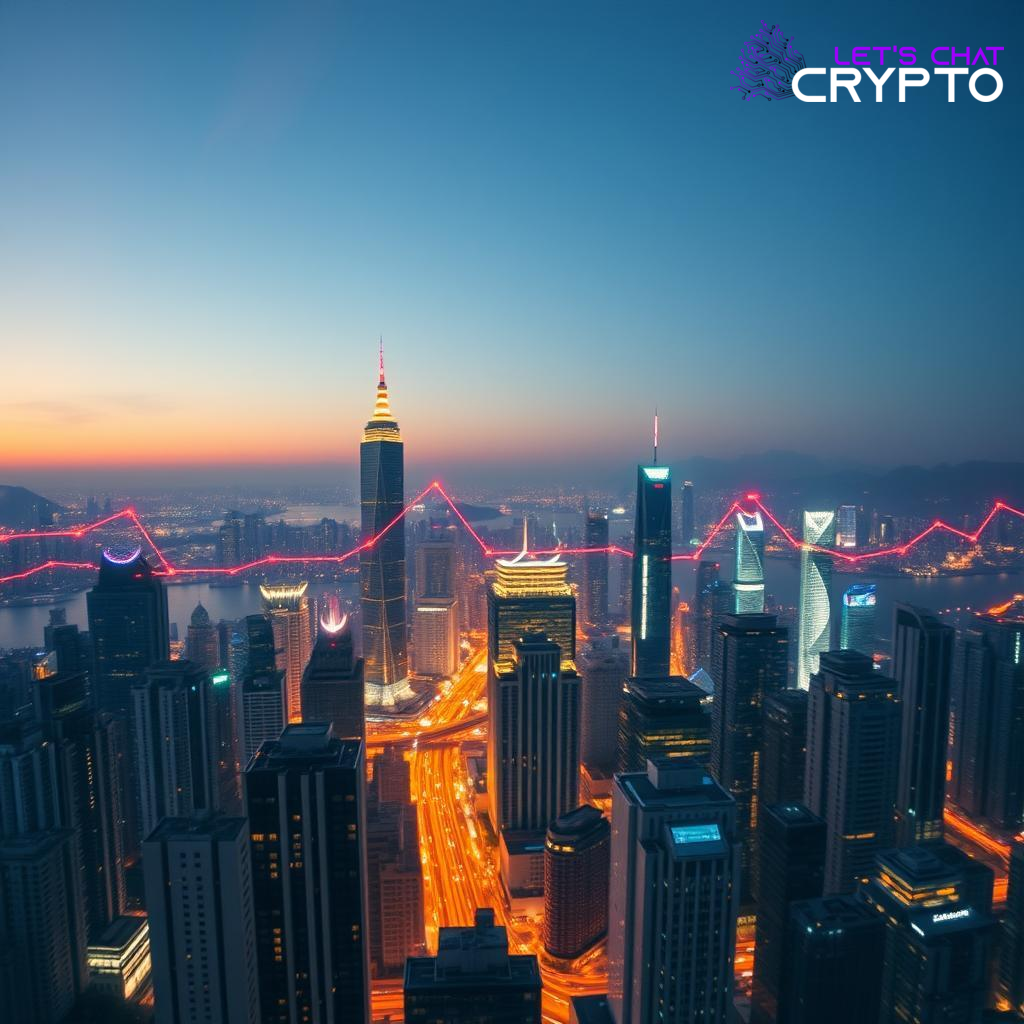
Consensus Hong Kong: Converging Futures of Finance and Technology
Consensus Hong Kong served as a pivotal forum, bringing into sharp focus the intricate interplay between the burgeoning digital asset landscape, the transformative potential of artificial intelligence, and the evolving global regulatory framework. The discussions underscored a critical juncture for the industry, emphasizing not just technological advancement but also the imperative for responsible innovation and clear governance.
Crypto Payments and the AI Revolution
A dominant theme throughout the conference revolved around the increasingly critical role of cryptocurrencies in facilitating payments within the burgeoning artificial intelligence sector. As AI applications demand faster, more efficient, and often cross-border transactions, traditional financial rails frequently fall short. Panelists highlighted how blockchain-based payment solutions offer unprecedented speed, lower fees, and enhanced transparency, making them an ideal fit for AI-driven ecosystems, particularly in areas like micro-payments for AI services, data monetization, and decentralized AI networks.
Experts pointed to the potential for smart contracts to automate payments between AI agents or for computational resources, thereby streamlining operations and fostering new economic models. The dialogue extended to the challenges of scalability and interoperability that still need to be addressed for crypto payments to fully support the vast demands of a globally integrated AI infrastructure.
Regulatory Shifts and Market Maturation
The regulatory landscape for digital assets, particularly in Asia, was a subject of intense scrutiny. Discussions at Consensus Hong Kong revealed a growing global consensus on the need for comprehensive frameworks, yet also highlighted the varied approaches adopted by different jurisdictions. Hong Kong, in particular, showcased its ambition to cement its position as a leading digital asset hub, with regulators outlining progressive stances on virtual asset service providers (VASPs) and stablecoins.
There was a palpable sense that the industry is moving past its nascent stages, with a stronger emphasis on compliance, consumer protection, and institutional adoption. Speakers delved into the intricacies of MiCA (Markets in Crypto-Assets) in Europe, the evolving stance of the SEC in the United States, and the pragmatic approaches observed in key Asian markets. The consensus was clear: regulatory clarity, while challenging to achieve, is indispensable for the long-term growth and stability of the digital asset market.
The Evolving Digital Asset Market
Beyond regulatory discussions, the conference provided a pulse check on the broader digital asset market. While Bitcoin’s halving event and Ethereum’s ongoing upgrades were natural talking points, the conversation also extended to emerging trends in decentralized finance (DeFi), non-fungible tokens (NFTs), and the continued institutionalization of crypto. Investors and innovators alike explored strategies for navigating market volatility, identifying growth opportunities, and understanding the macro-economic factors influencing digital asset valuations.
Particular attention was given to real-world asset tokenization and the potential for blockchain to unlock liquidity and efficiency in traditional markets. The narrative emphasized a shift from speculative trading to utility-driven applications, signaling a maturing market where fundamental value propositions are gaining prominence.
Summary
Consensus Hong Kong unequivocally underscored the critical juncture at which the digital asset industry stands. The convergence of crypto payments with AI development presents a compelling future, while evolving global regulations are shaping a more mature and compliant market. The discussions highlighted both the immense opportunities and the significant challenges that lie ahead, demanding continued innovation, careful regulatory navigation, and robust infrastructure development to realize the full potential of this transformative technology.
Resources
Details
Author
Top articles

 }})
You can now watch HBO Max for $10
Latest articles
You can now watch HBO Max for $10
Consensus Hong Kong: Converging Futures of Finance and Technology
Consensus Hong Kong served as a pivotal forum, bringing into sharp focus the intricate interplay between the burgeoning digital asset landscape, the transformative potential of artificial intelligence, and the evolving global regulatory framework. The discussions underscored a critical juncture for the industry, emphasizing not just technological advancement but also the imperative for responsible innovation and clear governance.
Crypto Payments and the AI Revolution
A dominant theme throughout the conference revolved around the increasingly critical role of cryptocurrencies in facilitating payments within the burgeoning artificial intelligence sector. As AI applications demand faster, more efficient, and often cross-border transactions, traditional financial rails frequently fall short. Panelists highlighted how blockchain-based payment solutions offer unprecedented speed, lower fees, and enhanced transparency, making them an ideal fit for AI-driven ecosystems, particularly in areas like micro-payments for AI services, data monetization, and decentralized AI networks.
Experts pointed to the potential for smart contracts to automate payments between AI agents or for computational resources, thereby streamlining operations and fostering new economic models. The dialogue extended to the challenges of scalability and interoperability that still need to be addressed for crypto payments to fully support the vast demands of a globally integrated AI infrastructure.
Regulatory Shifts and Market Maturation
The regulatory landscape for digital assets, particularly in Asia, was a subject of intense scrutiny. Discussions at Consensus Hong Kong revealed a growing global consensus on the need for comprehensive frameworks, yet also highlighted the varied approaches adopted by different jurisdictions. Hong Kong, in particular, showcased its ambition to cement its position as a leading digital asset hub, with regulators outlining progressive stances on virtual asset service providers (VASPs) and stablecoins.
There was a palpable sense that the industry is moving past its nascent stages, with a stronger emphasis on compliance, consumer protection, and institutional adoption. Speakers delved into the intricacies of MiCA (Markets in Crypto-Assets) in Europe, the evolving stance of the SEC in the United States, and the pragmatic approaches observed in key Asian markets. The consensus was clear: regulatory clarity, while challenging to achieve, is indispensable for the long-term growth and stability of the digital asset market.
The Evolving Digital Asset Market
Beyond regulatory discussions, the conference provided a pulse check on the broader digital asset market. While Bitcoin’s halving event and Ethereum’s ongoing upgrades were natural talking points, the conversation also extended to emerging trends in decentralized finance (DeFi), non-fungible tokens (NFTs), and the continued institutionalization of crypto. Investors and innovators alike explored strategies for navigating market volatility, identifying growth opportunities, and understanding the macro-economic factors influencing digital asset valuations.
Particular attention was given to real-world asset tokenization and the potential for blockchain to unlock liquidity and efficiency in traditional markets. The narrative emphasized a shift from speculative trading to utility-driven applications, signaling a maturing market where fundamental value propositions are gaining prominence.
Summary
Consensus Hong Kong unequivocally underscored the critical juncture at which the digital asset industry stands. The convergence of crypto payments with AI development presents a compelling future, while evolving global regulations are shaping a more mature and compliant market. The discussions highlighted both the immense opportunities and the significant challenges that lie ahead, demanding continued innovation, careful regulatory navigation, and robust infrastructure development to realize the full potential of this transformative technology.
Resources
Top articles
You can now watch HBO Max for $10
Latest articles
You can now watch HBO Max for $10
Similar posts
This is a page that only logged-in people can visit. Don't you feel special? Try clicking on a button below to do some things you can't do when you're logged out.
Example modal
At your leisure, please peruse this excerpt from a whale of a tale.
Chapter 1: Loomings.
Call me Ishmael. Some years ago—never mind how long precisely—having little or no money in my purse, and nothing particular to interest me on shore, I thought I would sail about a little and see the watery part of the world. It is a way I have of driving off the spleen and regulating the circulation. Whenever I find myself growing grim about the mouth; whenever it is a damp, drizzly November in my soul; whenever I find myself involuntarily pausing before coffin warehouses, and bringing up the rear of every funeral I meet; and especially whenever my hypos get such an upper hand of me, that it requires a strong moral principle to prevent me from deliberately stepping into the street, and methodically knocking people's hats off—then, I account it high time to get to sea as soon as I can. This is my substitute for pistol and ball. With a philosophical flourish Cato throws himself upon his sword; I quietly take to the ship. There is nothing surprising in this. If they but knew it, almost all men in their degree, some time or other, cherish very nearly the same feelings towards the ocean with me.
Comment