Bitcoin Defies Gravity: Market Fear Index Plummets While Price Climbs Ahead of Feb 12, 2026
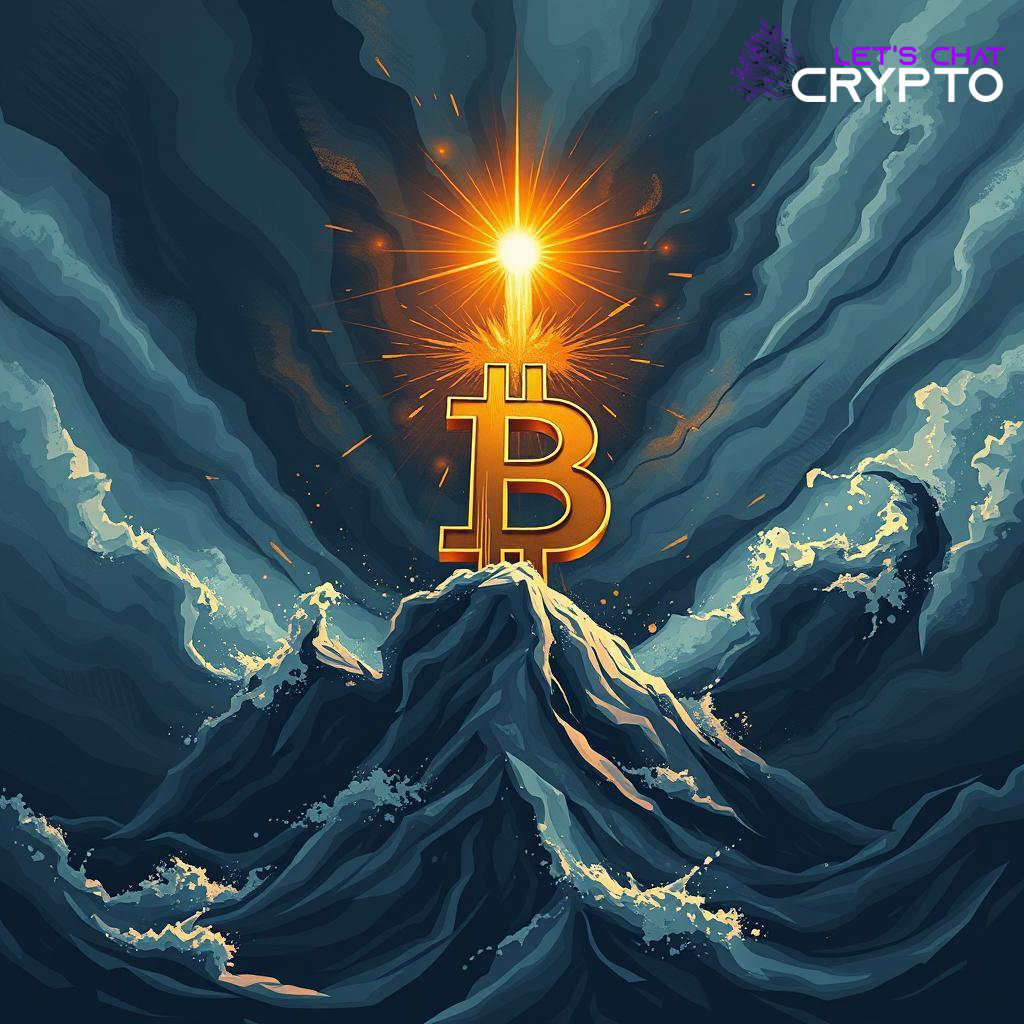
A Day-Ahead Look: February 12, 2026
As February 12, 2026, approaches, the cryptocurrency market presents a paradox that continues to perplex casual observers yet defines its resilient nature. Bitcoin, the vanguard of the digital asset class, has consistently demonstrated an uncanny ability to appreciate in value even as the broader market sentiment indicators, such as the widely referenced Crypto Fear & Greed Index, register states of "extreme fear." This decoupling of price action from perceived investor sentiment is not merely a fleeting anomaly but a deeply ingrained characteristic of this maturing financial frontier.
The Contradiction of Sentiment and Value
The Crypto Fear & Greed Index, a composite measure drawing data from volatility, market momentum, social media, and Google Trends, is designed to gauge the prevailing emotional state of the market. Historically, readings of "extreme fear" often signal potential buying opportunities, indicating that investors are overly cautious or panicking, leading to undervalued assets. Conversely, "extreme greed" can precede market corrections. However, in the current landscape leading up to mid-February 2026, Bitcoin's price trajectory has frequently ignored these deeply bearish sentiment signals, carving out higher lows and challenging new resistance levels.
Drivers Behind Bitcoin's Resilience
- Post-Halving Dynamics: Following the 2024 halving event, the supply shock reverberations continue to play a crucial role. The programmed reduction in new Bitcoin issuance inherently creates scarcity, placing upward pressure on its price, largely irrespective of short-term emotional swings.
- Institutional Accumulation: The increasing embrace by institutional players—ranging from major investment funds to corporate treasuries—provides a robust demand floor. These entities often operate with long-term investment horizons, focusing on fundamental value propositions rather than daily sentiment fluctuations, thus absorbing sell pressure from more reactive retail investors.
- Macroeconomic Hedging: In an era marked by persistent inflationary pressures and evolving global economic policies, Bitcoin's appeal as a digital store of value and a hedge against traditional financial system uncertainties has solidified. This narrative attracts capital from investors seeking diversification and a non-sovereign asset, further insulating its price from localized fear.
- Technological Advancement and Network Effect: Continuous development within the Bitcoin ecosystem, coupled with its unparalleled network security and global reach, reinforces its position as the dominant digital asset. Its expanding utility and adoption, albeit often incremental, build a fundamental value proposition that sentiment indices struggle to capture fully.
Summary and Outlook
The sustained push of Bitcoin prices higher amidst prevailing "extreme fear" serves as a potent reminder of the market's complex dynamics. It underscores a growing maturity where fundamental drivers, such as scarcity, institutional demand, and its role as a macroeconomic hedge, often override transient emotional states. As we approach February 12, 2026, this trend suggests that investors focusing on Bitcoin's long-term value proposition rather than short-term sentiment indicators are likely to be better positioned. The market's ability to absorb and shrug off fear signals highlights a deepening conviction among a significant cohort of participants in Bitcoin's enduring value.
Resources
- Alternative.me (for Crypto Fear & Greed Index methodology)
- CoinDesk Research (for institutional adoption trends and market analysis)
- Grayscale Investments (for insights into digital asset investment products and market perspectives)
Details
Author
Top articles


 }})
You can now watch HBO Max for $10
Latest articles


You can now watch HBO Max for $10
A Day-Ahead Look: February 12, 2026
As February 12, 2026, approaches, the cryptocurrency market presents a paradox that continues to perplex casual observers yet defines its resilient nature. Bitcoin, the vanguard of the digital asset class, has consistently demonstrated an uncanny ability to appreciate in value even as the broader market sentiment indicators, such as the widely referenced Crypto Fear & Greed Index, register states of "extreme fear." This decoupling of price action from perceived investor sentiment is not merely a fleeting anomaly but a deeply ingrained characteristic of this maturing financial frontier.
The Contradiction of Sentiment and Value
The Crypto Fear & Greed Index, a composite measure drawing data from volatility, market momentum, social media, and Google Trends, is designed to gauge the prevailing emotional state of the market. Historically, readings of "extreme fear" often signal potential buying opportunities, indicating that investors are overly cautious or panicking, leading to undervalued assets. Conversely, "extreme greed" can precede market corrections. However, in the current landscape leading up to mid-February 2026, Bitcoin's price trajectory has frequently ignored these deeply bearish sentiment signals, carving out higher lows and challenging new resistance levels.
Drivers Behind Bitcoin's Resilience
- Post-Halving Dynamics: Following the 2024 halving event, the supply shock reverberations continue to play a crucial role. The programmed reduction in new Bitcoin issuance inherently creates scarcity, placing upward pressure on its price, largely irrespective of short-term emotional swings.
- Institutional Accumulation: The increasing embrace by institutional players—ranging from major investment funds to corporate treasuries—provides a robust demand floor. These entities often operate with long-term investment horizons, focusing on fundamental value propositions rather than daily sentiment fluctuations, thus absorbing sell pressure from more reactive retail investors.
- Macroeconomic Hedging: In an era marked by persistent inflationary pressures and evolving global economic policies, Bitcoin's appeal as a digital store of value and a hedge against traditional financial system uncertainties has solidified. This narrative attracts capital from investors seeking diversification and a non-sovereign asset, further insulating its price from localized fear.
- Technological Advancement and Network Effect: Continuous development within the Bitcoin ecosystem, coupled with its unparalleled network security and global reach, reinforces its position as the dominant digital asset. Its expanding utility and adoption, albeit often incremental, build a fundamental value proposition that sentiment indices struggle to capture fully.
Summary and Outlook
The sustained push of Bitcoin prices higher amidst prevailing "extreme fear" serves as a potent reminder of the market's complex dynamics. It underscores a growing maturity where fundamental drivers, such as scarcity, institutional demand, and its role as a macroeconomic hedge, often override transient emotional states. As we approach February 12, 2026, this trend suggests that investors focusing on Bitcoin's long-term value proposition rather than short-term sentiment indicators are likely to be better positioned. The market's ability to absorb and shrug off fear signals highlights a deepening conviction among a significant cohort of participants in Bitcoin's enduring value.
Resources
- Alternative.me (for Crypto Fear & Greed Index methodology)
- CoinDesk Research (for institutional adoption trends and market analysis)
- Grayscale Investments (for insights into digital asset investment products and market perspectives)
Top articles
You can now watch HBO Max for $10
Latest articles
You can now watch HBO Max for $10
Similar posts
This is a page that only logged-in people can visit. Don't you feel special? Try clicking on a button below to do some things you can't do when you're logged out.
Example modal
At your leisure, please peruse this excerpt from a whale of a tale.
Chapter 1: Loomings.
Call me Ishmael. Some years ago—never mind how long precisely—having little or no money in my purse, and nothing particular to interest me on shore, I thought I would sail about a little and see the watery part of the world. It is a way I have of driving off the spleen and regulating the circulation. Whenever I find myself growing grim about the mouth; whenever it is a damp, drizzly November in my soul; whenever I find myself involuntarily pausing before coffin warehouses, and bringing up the rear of every funeral I meet; and especially whenever my hypos get such an upper hand of me, that it requires a strong moral principle to prevent me from deliberately stepping into the street, and methodically knocking people's hats off—then, I account it high time to get to sea as soon as I can. This is my substitute for pistol and ball. With a philosophical flourish Cato throws himself upon his sword; I quietly take to the ship. There is nothing surprising in this. If they but knew it, almost all men in their degree, some time or other, cherish very nearly the same feelings towards the ocean with me.
Comment