Bitcoin vs. Gold: Unpacking a 26% Undervaluation and Shifting Risk Perceptions
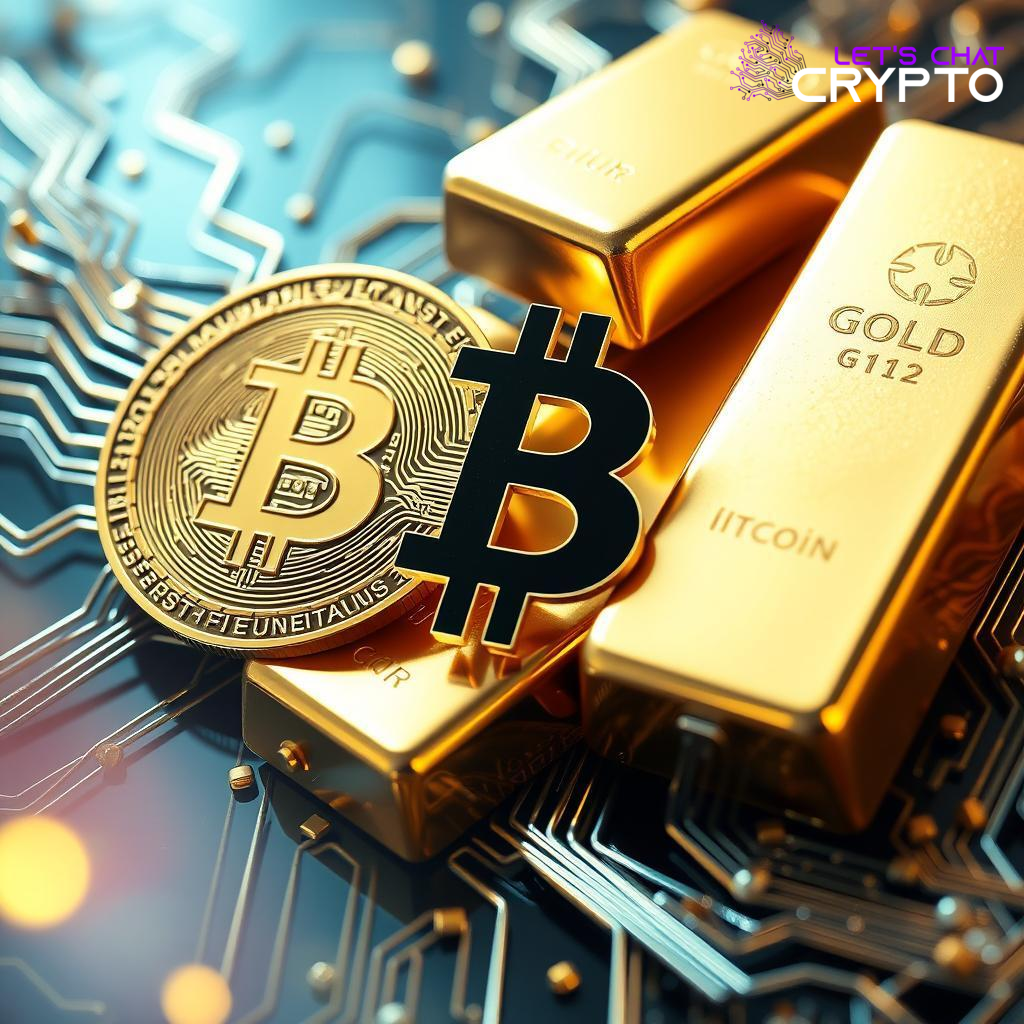
The Shifting Sands of Digital Gold: Unpacking Bitcoin's Undervaluation
The perennial debate surrounding Bitcoin's role in a diversified portfolio continues to evolve. In the latest edition of the Crypto Long & Short Newsletter, a compelling argument surfaces regarding Bitcoin's current standing against gold, suggesting a significant 26% relative undervaluation. This analysis challenges conventional wisdom and prompts a deeper examination of market dynamics and investor sentiment.
Bitcoin's Undervaluation Against Gold: A Data-Driven Perspective
Analyst Dovile Silenskyte presents a robust case for Bitcoin's relative undervaluation when benchmarked against gold. This perspective moves beyond a simple correlation analysis, delving into fundamental metrics that suggest Bitcoin, despite its inherent volatility, possesses an intrinsic value that is not fully priced into the current market compared to its traditional safe-haven counterpart. The 26% figure indicates a quantitative assessment, likely factoring in supply dynamics, adoption rates, and macroeconomic indicators influencing both assets.
Historically, gold has served as the ultimate store of value, particularly during periods of economic uncertainty and inflationary pressures. Bitcoin, often dubbed "digital gold," shares several characteristics, including scarcity and resistance to censorship. However, its shorter history and higher price fluctuations have often led it to be categorized predominantly as a risk asset, moving in tandem with broader equity markets. The argument for undervaluation suggests a decoupling is overdue or that its long-term value proposition is being overlooked in the immediate market sentiment.
Challenging the "Bitcoin as a Risk Asset" Narrative
A significant contribution from Silenskyte's work lies in providing an alternative to the prevailing "bitcoin as a risk asset" narrative. This challenges the notion that Bitcoin primarily functions as a speculative vehicle whose price movements are dictated solely by the ebb and flow of risk appetite in traditional finance. Instead, the analysis likely posits that Bitcoin's unique attributes—such as its decentralized nature, finite supply cap, and increasing institutional integration—are beginning to establish it as a distinct asset class with its own value drivers, potentially offering a hedge against monetary debasement or systemic risk that diverges from traditional equities.
This re-evaluation encourages investors to consider Bitcoin not merely as a high-beta tech stock but as an emerging alternative store of value, capable of performing independently of, or even inversely to, conventional risk assets under certain market conditions. Such a shift in perception could fundamentally alter investment strategies and portfolio allocations.
Global Exchange Dynamics and Market Insights
Adding another layer to the market's complexity, Joshua de Vos offers crucial insights and analysis on global exchanges. His observations typically cover critical areas such as liquidity, trading volumes, regulatory shifts, and the geographical distribution of trading activity. These elements are vital for understanding the underlying infrastructure supporting the crypto market and can significantly influence price discovery and stability.
De Vos's insights often highlight how evolving regulatory landscapes, technological advancements in trading platforms, and shifts in institutional participation impact overall market efficiency and accessibility. Understanding these dynamics is paramount for any assessment of Bitcoin's current valuation and its future trajectory, as exchange infrastructure underpins the asset's ability to function as a global, liquid store of value.
Summary
The discourse around Bitcoin's valuation and its role in investment portfolios is undergoing a significant transformation. The suggested 26% undervaluation against gold, coupled with a nuanced challenge to its classification as a mere risk asset, indicates a maturing market perspective. As global exchange dynamics continue to evolve, Bitcoin's position as a unique, potentially uncorrelated asset becomes increasingly compelling, inviting investors to look beyond short-term volatility and consider its long-term value proposition in a rapidly changing financial landscape.
Resources
- CoinDesk Research
- Bloomberg Crypto
- Arcane Research
Details
Author
Top articles


 }})
You can now watch HBO Max for $10
Latest articles




You can now watch HBO Max for $10
The Shifting Sands of Digital Gold: Unpacking Bitcoin's Undervaluation
The perennial debate surrounding Bitcoin's role in a diversified portfolio continues to evolve. In the latest edition of the Crypto Long & Short Newsletter, a compelling argument surfaces regarding Bitcoin's current standing against gold, suggesting a significant 26% relative undervaluation. This analysis challenges conventional wisdom and prompts a deeper examination of market dynamics and investor sentiment.
Bitcoin's Undervaluation Against Gold: A Data-Driven Perspective
Analyst Dovile Silenskyte presents a robust case for Bitcoin's relative undervaluation when benchmarked against gold. This perspective moves beyond a simple correlation analysis, delving into fundamental metrics that suggest Bitcoin, despite its inherent volatility, possesses an intrinsic value that is not fully priced into the current market compared to its traditional safe-haven counterpart. The 26% figure indicates a quantitative assessment, likely factoring in supply dynamics, adoption rates, and macroeconomic indicators influencing both assets.
Historically, gold has served as the ultimate store of value, particularly during periods of economic uncertainty and inflationary pressures. Bitcoin, often dubbed "digital gold," shares several characteristics, including scarcity and resistance to censorship. However, its shorter history and higher price fluctuations have often led it to be categorized predominantly as a risk asset, moving in tandem with broader equity markets. The argument for undervaluation suggests a decoupling is overdue or that its long-term value proposition is being overlooked in the immediate market sentiment.
Challenging the "Bitcoin as a Risk Asset" Narrative
A significant contribution from Silenskyte's work lies in providing an alternative to the prevailing "bitcoin as a risk asset" narrative. This challenges the notion that Bitcoin primarily functions as a speculative vehicle whose price movements are dictated solely by the ebb and flow of risk appetite in traditional finance. Instead, the analysis likely posits that Bitcoin's unique attributes—such as its decentralized nature, finite supply cap, and increasing institutional integration—are beginning to establish it as a distinct asset class with its own value drivers, potentially offering a hedge against monetary debasement or systemic risk that diverges from traditional equities.
This re-evaluation encourages investors to consider Bitcoin not merely as a high-beta tech stock but as an emerging alternative store of value, capable of performing independently of, or even inversely to, conventional risk assets under certain market conditions. Such a shift in perception could fundamentally alter investment strategies and portfolio allocations.
Global Exchange Dynamics and Market Insights
Adding another layer to the market's complexity, Joshua de Vos offers crucial insights and analysis on global exchanges. His observations typically cover critical areas such as liquidity, trading volumes, regulatory shifts, and the geographical distribution of trading activity. These elements are vital for understanding the underlying infrastructure supporting the crypto market and can significantly influence price discovery and stability.
De Vos's insights often highlight how evolving regulatory landscapes, technological advancements in trading platforms, and shifts in institutional participation impact overall market efficiency and accessibility. Understanding these dynamics is paramount for any assessment of Bitcoin's current valuation and its future trajectory, as exchange infrastructure underpins the asset's ability to function as a global, liquid store of value.
Summary
The discourse around Bitcoin's valuation and its role in investment portfolios is undergoing a significant transformation. The suggested 26% undervaluation against gold, coupled with a nuanced challenge to its classification as a mere risk asset, indicates a maturing market perspective. As global exchange dynamics continue to evolve, Bitcoin's position as a unique, potentially uncorrelated asset becomes increasingly compelling, inviting investors to look beyond short-term volatility and consider its long-term value proposition in a rapidly changing financial landscape.
Resources
- CoinDesk Research
- Bloomberg Crypto
- Arcane Research
Top articles
You can now watch HBO Max for $10
Latest articles
You can now watch HBO Max for $10
Similar posts




This is a page that only logged-in people can visit. Don't you feel special? Try clicking on a button below to do some things you can't do when you're logged out.
Example modal
At your leisure, please peruse this excerpt from a whale of a tale.
Chapter 1: Loomings.
Call me Ishmael. Some years ago—never mind how long precisely—having little or no money in my purse, and nothing particular to interest me on shore, I thought I would sail about a little and see the watery part of the world. It is a way I have of driving off the spleen and regulating the circulation. Whenever I find myself growing grim about the mouth; whenever it is a damp, drizzly November in my soul; whenever I find myself involuntarily pausing before coffin warehouses, and bringing up the rear of every funeral I meet; and especially whenever my hypos get such an upper hand of me, that it requires a strong moral principle to prevent me from deliberately stepping into the street, and methodically knocking people's hats off—then, I account it high time to get to sea as soon as I can. This is my substitute for pistol and ball. With a philosophical flourish Cato throws himself upon his sword; I quietly take to the ship. There is nothing surprising in this. If they but knew it, almost all men in their degree, some time or other, cherish very nearly the same feelings towards the ocean with me.
Comment