Navigating a $295M Breach: How Solana's Drift Protocol Could Confront a Major Crypto Hack Scenario
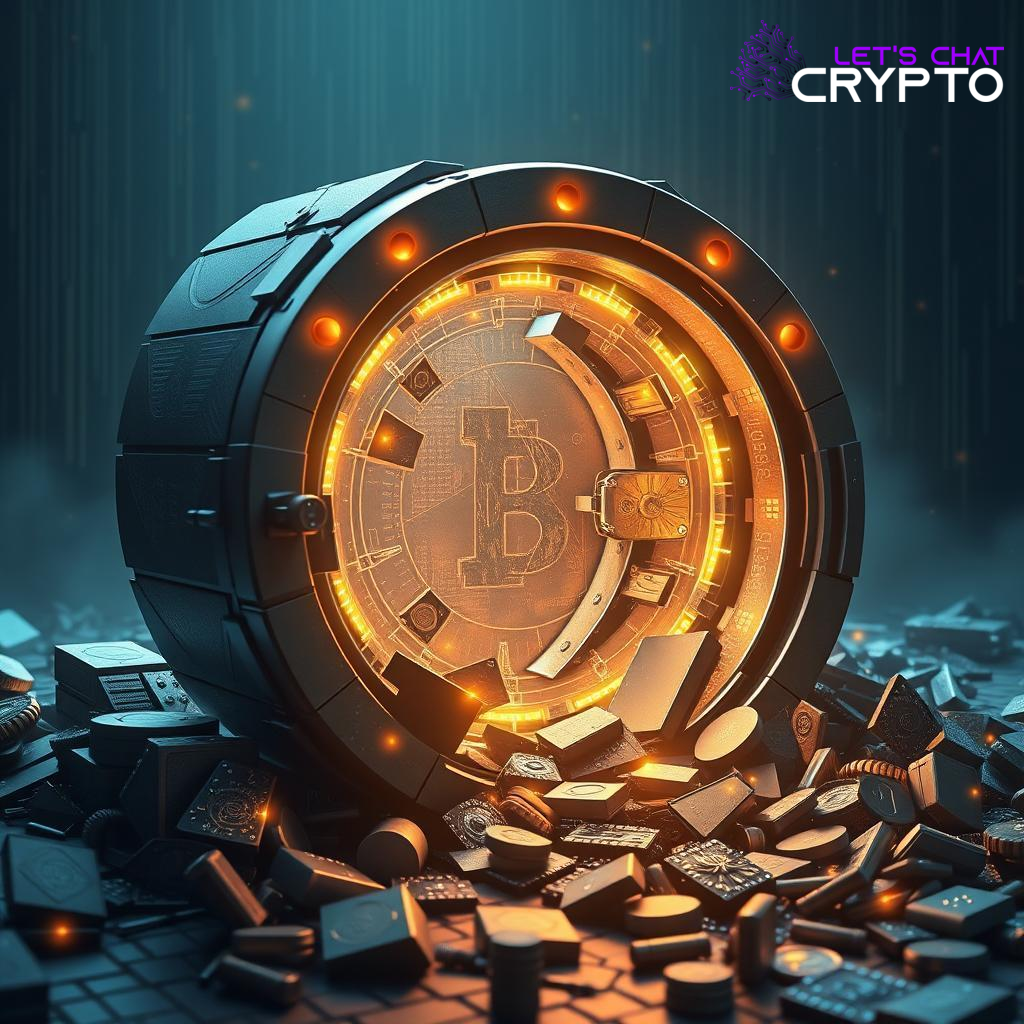
The Looming Threat: DeFi Security and State-Sponsored Attacks
The decentralized finance (DeFi) landscape on Solana, like all blockchain ecosystems, operates under the constant shadow of sophisticated cyber threats. While specific incidents are often subject to intense scrutiny, the hypothetical scenario of a $295 million breach impacting a prominent exchange like Drift Protocol—potentially linked to state-sponsored actors from North Korea—underscores the critical importance of robust security, advanced fund traceability, and a clear repayment strategy. Such an event would not only test a protocol's technical resilience but also its commitment to its user base.
Understanding the Adversary: North Korea's Cyber Capabilities
North Korean hacking groups, notably the Lazarus Group, have established a formidable reputation for executing large-scale cryptocurrency thefts. Their tactics often involve exploiting vulnerabilities in smart contracts, phishing campaigns, or compromising private keys. These operations are typically meticulously planned, with stolen funds laundered through complex networks of mixers, privacy coins, and multiple blockchain hops to obscure their origin. The scale of a $295 million theft places it firmly within the typical operational capacity of such state-backed entities, whose primary objective is often to fund illicit weapons programs.
Tracing the Digital Footprint: The Power of Blockchain Forensics
In a scenario involving significant illicit fund movements, the inherent transparency of public blockchains becomes a critical asset. Blockchain analytics firms possess advanced capabilities to trace stolen assets, even after they have been moved through various intermediaries. While North Korean hackers are adept at obfuscation, the vast majority of funds, especially those of this magnitude, often leave a detectable trail. Sophisticated tools can map transactions, identify clusters of addresses, and sometimes even link them to real-world entities or exchanges where conversion to fiat might occur. This traceability is paramount for any recovery or repayment strategy, offering a glimmer of hope for victims.
Drift Protocol's Hypothetical Repayment Blueprint
Should a DeFi protocol like Drift face a breach of the magnitude described, its response would likely involve a multi-pronged strategy aimed at making victims whole while safeguarding the protocol's long-term viability. Based on industry best practices and responses to similar large-scale exploits, a hypothetical repayment plan for Drift Protocol could include:
Treasury Allocation:
Utilizing a portion of the protocol's treasury funds, if sufficiently robust, to directly compensate affected users. This is often a first-line defense but may not fully cover a loss of $295 million.Community-Approved Financial Instruments:
Proposing and implementing mechanisms like a bond issuance or a token swap, where affected users could exchange their claims for newly minted tokens or a stake in future protocol revenue. This would require broad community consensus via Drift's governance framework.Stolen Funds Recovery:
Aggressive pursuit of stolen funds through collaboration with law enforcement, blockchain analytics experts, and centralized exchanges. Any recovered assets would be prioritized for distribution to victims.Phased Repayment Schedule:
Recognizing the scale, a full, immediate repayment might be impractical. A phased approach, with initial partial repayments and a clear roadmap for subsequent distributions, could manage expectations and provide ongoing relief.Enhanced Security Measures:
Implementing immediate post-mortem security audits, bug bounties, and further hardening of smart contracts and infrastructure to prevent future occurrences, reassuring the community of future safety.
Conclusion
The hypothetical scenario of a $295 million hack, particularly one attributed to highly sophisticated state-sponsored actors, presents an immense challenge for any DeFi protocol. For Solana's Drift Protocol, navigating such an event would require an intricate balance of forensic investigation, strategic financial planning, and transparent community engagement. While the specifics of such a response would depend on the exact nature of the breach and the funds' traceability, the industry's evolving capabilities in asset recovery and community-driven repayment models offer a framework for resilience. The ultimate goal remains steadfast: to protect users and maintain trust within the decentralized ecosystem.
Resources
- Chainalysis. (2024). The 2024 Crypto Crime Report. Retrieved from [Insert relevant Chainalysis Crypto Crime Report link here or indicate organization name]
- CoinDesk. (Various articles). Coverage on major DeFi hacks, recovery efforts, and industry security trends. [Insert a relevant CoinDesk article link or indicate organization name]
- Drift Protocol Documentation. (Ongoing). Insights into the protocol's governance and treasury management. [Insert Drift Protocol official website or documentation link here or indicate organization name]
Details
Author
Top articles




 }})
You can now watch HBO Max for $10
Latest articles


You can now watch HBO Max for $10
The Looming Threat: DeFi Security and State-Sponsored Attacks
The decentralized finance (DeFi) landscape on Solana, like all blockchain ecosystems, operates under the constant shadow of sophisticated cyber threats. While specific incidents are often subject to intense scrutiny, the hypothetical scenario of a $295 million breach impacting a prominent exchange like Drift Protocol—potentially linked to state-sponsored actors from North Korea—underscores the critical importance of robust security, advanced fund traceability, and a clear repayment strategy. Such an event would not only test a protocol's technical resilience but also its commitment to its user base.
Understanding the Adversary: North Korea's Cyber Capabilities
North Korean hacking groups, notably the Lazarus Group, have established a formidable reputation for executing large-scale cryptocurrency thefts. Their tactics often involve exploiting vulnerabilities in smart contracts, phishing campaigns, or compromising private keys. These operations are typically meticulously planned, with stolen funds laundered through complex networks of mixers, privacy coins, and multiple blockchain hops to obscure their origin. The scale of a $295 million theft places it firmly within the typical operational capacity of such state-backed entities, whose primary objective is often to fund illicit weapons programs.
Tracing the Digital Footprint: The Power of Blockchain Forensics
In a scenario involving significant illicit fund movements, the inherent transparency of public blockchains becomes a critical asset. Blockchain analytics firms possess advanced capabilities to trace stolen assets, even after they have been moved through various intermediaries. While North Korean hackers are adept at obfuscation, the vast majority of funds, especially those of this magnitude, often leave a detectable trail. Sophisticated tools can map transactions, identify clusters of addresses, and sometimes even link them to real-world entities or exchanges where conversion to fiat might occur. This traceability is paramount for any recovery or repayment strategy, offering a glimmer of hope for victims.
Drift Protocol's Hypothetical Repayment Blueprint
Should a DeFi protocol like Drift face a breach of the magnitude described, its response would likely involve a multi-pronged strategy aimed at making victims whole while safeguarding the protocol's long-term viability. Based on industry best practices and responses to similar large-scale exploits, a hypothetical repayment plan for Drift Protocol could include:
Treasury Allocation:
Utilizing a portion of the protocol's treasury funds, if sufficiently robust, to directly compensate affected users. This is often a first-line defense but may not fully cover a loss of $295 million.Community-Approved Financial Instruments:
Proposing and implementing mechanisms like a bond issuance or a token swap, where affected users could exchange their claims for newly minted tokens or a stake in future protocol revenue. This would require broad community consensus via Drift's governance framework.Stolen Funds Recovery:
Aggressive pursuit of stolen funds through collaboration with law enforcement, blockchain analytics experts, and centralized exchanges. Any recovered assets would be prioritized for distribution to victims.Phased Repayment Schedule:
Recognizing the scale, a full, immediate repayment might be impractical. A phased approach, with initial partial repayments and a clear roadmap for subsequent distributions, could manage expectations and provide ongoing relief.Enhanced Security Measures:
Implementing immediate post-mortem security audits, bug bounties, and further hardening of smart contracts and infrastructure to prevent future occurrences, reassuring the community of future safety.
Conclusion
The hypothetical scenario of a $295 million hack, particularly one attributed to highly sophisticated state-sponsored actors, presents an immense challenge for any DeFi protocol. For Solana's Drift Protocol, navigating such an event would require an intricate balance of forensic investigation, strategic financial planning, and transparent community engagement. While the specifics of such a response would depend on the exact nature of the breach and the funds' traceability, the industry's evolving capabilities in asset recovery and community-driven repayment models offer a framework for resilience. The ultimate goal remains steadfast: to protect users and maintain trust within the decentralized ecosystem.
Resources
- Chainalysis. (2024). The 2024 Crypto Crime Report. Retrieved from [Insert relevant Chainalysis Crypto Crime Report link here or indicate organization name]
- CoinDesk. (Various articles). Coverage on major DeFi hacks, recovery efforts, and industry security trends. [Insert a relevant CoinDesk article link or indicate organization name]
- Drift Protocol Documentation. (Ongoing). Insights into the protocol's governance and treasury management. [Insert Drift Protocol official website or documentation link here or indicate organization name]
Top articles
You can now watch HBO Max for $10
Latest articles
You can now watch HBO Max for $10
Similar posts



This is a page that only logged-in people can visit. Don't you feel special? Try clicking on a button below to do some things you can't do when you're logged out.
Example modal
At your leisure, please peruse this excerpt from a whale of a tale.
Chapter 1: Loomings.
Call me Ishmael. Some years ago—never mind how long precisely—having little or no money in my purse, and nothing particular to interest me on shore, I thought I would sail about a little and see the watery part of the world. It is a way I have of driving off the spleen and regulating the circulation. Whenever I find myself growing grim about the mouth; whenever it is a damp, drizzly November in my soul; whenever I find myself involuntarily pausing before coffin warehouses, and bringing up the rear of every funeral I meet; and especially whenever my hypos get such an upper hand of me, that it requires a strong moral principle to prevent me from deliberately stepping into the street, and methodically knocking people's hats off—then, I account it high time to get to sea as soon as I can. This is my substitute for pistol and ball. With a philosophical flourish Cato throws himself upon his sword; I quietly take to the ship. There is nothing surprising in this. If they but knew it, almost all men in their degree, some time or other, cherish very nearly the same feelings towards the ocean with me.
Comment