Bitcoin's Steep Decline: Is Whale Activity Intensifying the Crypto Winter?
Bitcoin's Steep Decline: Is Whale Activity Intensifying the Crypto Winter?
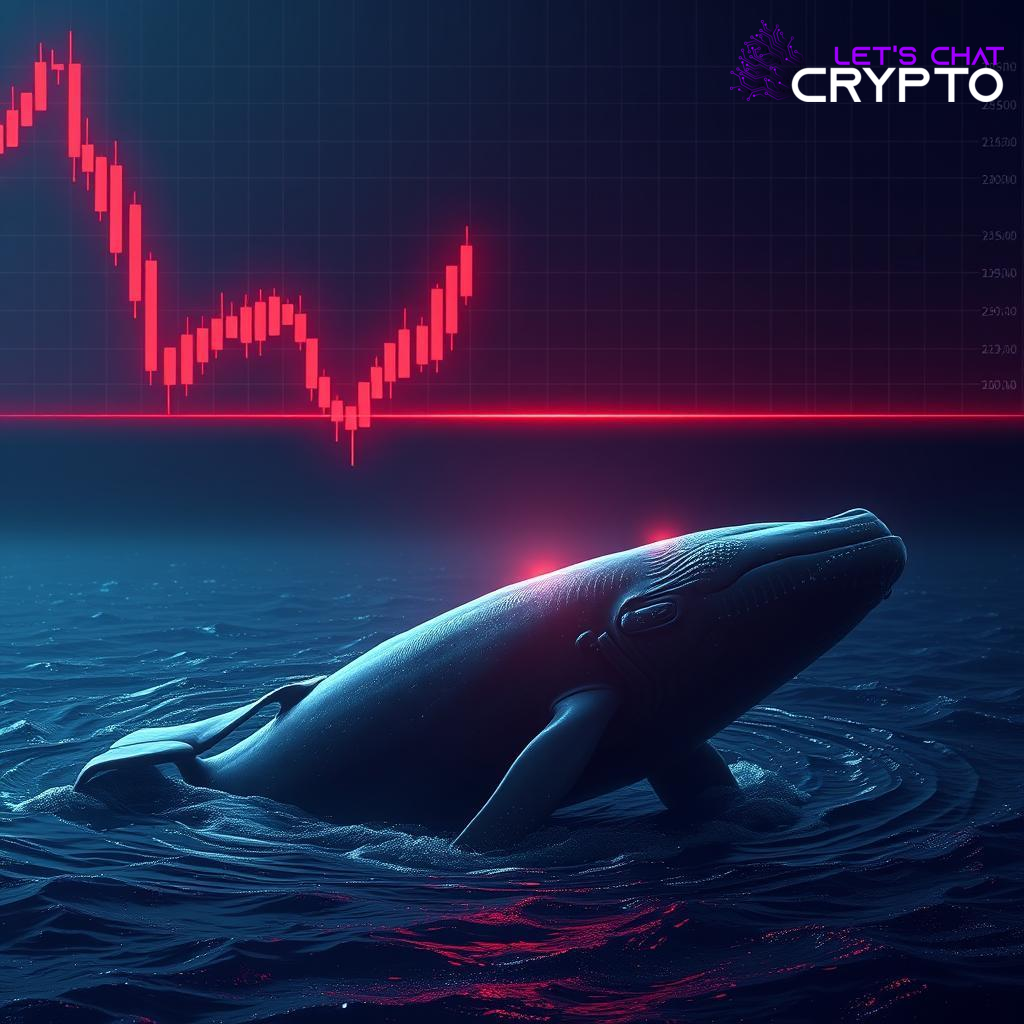
Bitcoin (BTC), the world's leading cryptocurrency, has experienced a challenging month, extending its downward trajectory with losses surpassing 30%. While the broader macroeconomic landscape and a prevailing bear market sentiment largely dictate this weakness, a closer examination of on-chain data reveals a more nuanced picture. Emerging signals suggest that the concentrated actions of large holders, commonly referred to as "whales," may be significantly amplifying Bitcoin's downside pressure.
Broader Market Headwinds and Bitcoin's Vulnerability
The cryptocurrency market, and Bitcoin in particular, remains highly sensitive to global economic indicators. Rising inflation, hawkish central bank policies, and geopolitical tensions have fostered a risk-off environment, prompting investors to withdraw from volatile assets. This macro backdrop has consistently pressured BTC throughout the current bear cycle. However, the recent accelerated decline warrants a deeper dive into market mechanics.
Whale Movements: A Catalyst for Volatility?
On-chain analytics platforms have reportedly identified patterns indicative of significant selling pressure from Bitcoin whales. These entities, holding substantial amounts of BTC, possess the capacity to move markets with their transactions. Recent data indicates a trend where large wallets have been reducing their holdings, contributing to increased supply on exchanges. This influx of selling orders from powerful market participants can quickly overwhelm demand, pushing prices lower at an accelerated pace.
Specifically, reports have highlighted an increase in the number of large transactions moving BTC to exchanges, a common precursor to selling. Furthermore, analysis of wallet cohorts suggests that certain long-term holders, or "older" whales, who typically accumulate during downturns, have instead shown signs of distribution. This behavior contrasts with typical accumulation phases and raises questions about the conviction of even the most established participants in the current market environment.
The Impact of Concentrated Selling
When whales initiate large sell-offs, it creates a cascading effect. Smaller investors, observing these significant movements and fearing further price depreciation, may panic sell, exacerbating the downward spiral. This amplification mechanism transforms what might be a gradual correction into a sharper decline. The market's liquidity depth, or its ability to absorb large orders without significant price impact, becomes a critical factor. In times of reduced liquidity, whale selling can have an outsized influence.
While the exact motivations behind these whale moves are speculative—ranging from profit-taking during temporary rallies to rebalancing portfolios or addressing liquidity needs elsewhere—their collective impact on market psychology and price action is undeniable. The presence of such concentrated selling activity adds another layer of complexity to Bitcoin's current valuation struggle, moving beyond mere macroeconomic correlation to internal market dynamics.
Summary
Bitcoin's recent drop exceeding 30% this month is a multifaceted phenomenon. While global economic pressures provide the overarching context, on-chain data points towards significant selling activity by large Bitcoin holders, or whales. This concentrated selling is likely playing a pivotal role in accelerating the asset's decline, transforming a bearish trend into a more precipitous fall. Understanding these internal market dynamics, alongside broader macroeconomic factors, is crucial for comprehending Bitcoin's current market position and potential future movements.
Resources
- CoinDesk: Reports often cover on-chain analysis and whale activity in their market updates.
- CryptoQuant: A leading on-chain analytics firm providing detailed data and insights into whale movements.
- Glassnode: Another prominent on-chain analytics platform offering metrics on large holder behavior and exchange flows.
Details
Author
Top articles





 }})
You can now watch HBO Max for $10
Latest articles





You can now watch HBO Max for $10
Bitcoin's Steep Decline: Is Whale Activity Intensifying the Crypto Winter?
Bitcoin (BTC), the world's leading cryptocurrency, has experienced a challenging month, extending its downward trajectory with losses surpassing 30%. While the broader macroeconomic landscape and a prevailing bear market sentiment largely dictate this weakness, a closer examination of on-chain data reveals a more nuanced picture. Emerging signals suggest that the concentrated actions of large holders, commonly referred to as "whales," may be significantly amplifying Bitcoin's downside pressure.
Broader Market Headwinds and Bitcoin's Vulnerability
The cryptocurrency market, and Bitcoin in particular, remains highly sensitive to global economic indicators. Rising inflation, hawkish central bank policies, and geopolitical tensions have fostered a risk-off environment, prompting investors to withdraw from volatile assets. This macro backdrop has consistently pressured BTC throughout the current bear cycle. However, the recent accelerated decline warrants a deeper dive into market mechanics.
Whale Movements: A Catalyst for Volatility?
On-chain analytics platforms have reportedly identified patterns indicative of significant selling pressure from Bitcoin whales. These entities, holding substantial amounts of BTC, possess the capacity to move markets with their transactions. Recent data indicates a trend where large wallets have been reducing their holdings, contributing to increased supply on exchanges. This influx of selling orders from powerful market participants can quickly overwhelm demand, pushing prices lower at an accelerated pace.
Specifically, reports have highlighted an increase in the number of large transactions moving BTC to exchanges, a common precursor to selling. Furthermore, analysis of wallet cohorts suggests that certain long-term holders, or "older" whales, who typically accumulate during downturns, have instead shown signs of distribution. This behavior contrasts with typical accumulation phases and raises questions about the conviction of even the most established participants in the current market environment.
The Impact of Concentrated Selling
When whales initiate large sell-offs, it creates a cascading effect. Smaller investors, observing these significant movements and fearing further price depreciation, may panic sell, exacerbating the downward spiral. This amplification mechanism transforms what might be a gradual correction into a sharper decline. The market's liquidity depth, or its ability to absorb large orders without significant price impact, becomes a critical factor. In times of reduced liquidity, whale selling can have an outsized influence.
While the exact motivations behind these whale moves are speculative—ranging from profit-taking during temporary rallies to rebalancing portfolios or addressing liquidity needs elsewhere—their collective impact on market psychology and price action is undeniable. The presence of such concentrated selling activity adds another layer of complexity to Bitcoin's current valuation struggle, moving beyond mere macroeconomic correlation to internal market dynamics.
Summary
Bitcoin's recent drop exceeding 30% this month is a multifaceted phenomenon. While global economic pressures provide the overarching context, on-chain data points towards significant selling activity by large Bitcoin holders, or whales. This concentrated selling is likely playing a pivotal role in accelerating the asset's decline, transforming a bearish trend into a more precipitous fall. Understanding these internal market dynamics, alongside broader macroeconomic factors, is crucial for comprehending Bitcoin's current market position and potential future movements.
Resources
- CoinDesk: Reports often cover on-chain analysis and whale activity in their market updates.
- CryptoQuant: A leading on-chain analytics firm providing detailed data and insights into whale movements.
- Glassnode: Another prominent on-chain analytics platform offering metrics on large holder behavior and exchange flows.
Top articles
You can now watch HBO Max for $10
Latest articles
You can now watch HBO Max for $10
Similar posts




This is a page that only logged-in people can visit. Don't you feel special? Try clicking on a button below to do some things you can't do when you're logged out.
Example modal
At your leisure, please peruse this excerpt from a whale of a tale.
Chapter 1: Loomings.
Call me Ishmael. Some years ago—never mind how long precisely—having little or no money in my purse, and nothing particular to interest me on shore, I thought I would sail about a little and see the watery part of the world. It is a way I have of driving off the spleen and regulating the circulation. Whenever I find myself growing grim about the mouth; whenever it is a damp, drizzly November in my soul; whenever I find myself involuntarily pausing before coffin warehouses, and bringing up the rear of every funeral I meet; and especially whenever my hypos get such an upper hand of me, that it requires a strong moral principle to prevent me from deliberately stepping into the street, and methodically knocking people's hats off—then, I account it high time to get to sea as soon as I can. This is my substitute for pistol and ball. With a philosophical flourish Cato throws himself upon his sword; I quietly take to the ship. There is nothing surprising in this. If they but knew it, almost all men in their degree, some time or other, cherish very nearly the same feelings towards the ocean with me.
Comment