BonkDAO’s $20M Treasury Drain Exposes Critical Flaws in Token-Weighted Governance
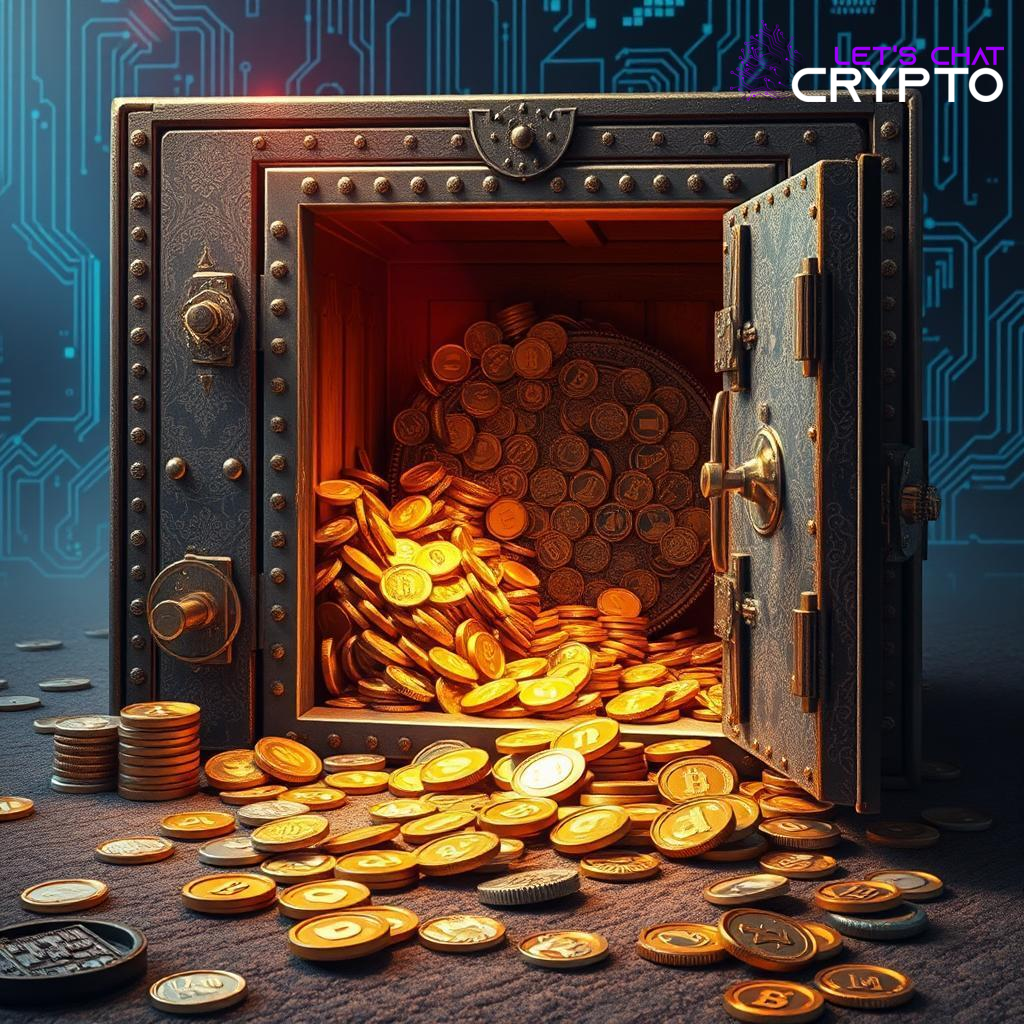
The Alarming Reality of DAO Vulnerabilities
The recent reported incident involving BonkDAO, where an estimated $20 million from its treasury was drained, serves as a stark warning about the inherent vulnerabilities within decentralized autonomous organizations (DAOs), particularly those governing memecoin projects. This event underscores a critical flaw in many token-weighted governance models: a straightforward proposal, when inadequately scrutinized, can become a direct conduit for treasury exploitation, exposing how thin review controls can lead to catastrophic financial losses.
Anatomy of a Treasury Raid: The Malicious Proposal
The core of the BonkDAO incident revolves around a malicious governance proposal that, upon passing, facilitated the unauthorized transfer of a substantial portion of the DAO's assets. While specific details of the proposal's wording are crucial for a full technical breakdown, the general consensus points to a cleverly crafted initiative designed to appear legitimate, yet ultimately serving to re-route funds. This highlights the sophisticated tactics bad actors employ to exploit the very mechanisms intended for democratic decentralized control.
The critical element here is the token-weighted voting system. In such systems, the power of a vote is directly proportional to the amount of governance tokens held by the voter. This design, while aiming to align incentives with major stakeholders, inadvertently creates a vector for concentrated power. If a sufficiently large entity or a coordinated group of token holders can amass enough voting power, they can push through proposals that serve their self-interest, even to the detriment of the wider community.
The Peril of Insufficient Review Controls
The BonkDAO scenario specifically illuminates the catastrophic consequences when a DAO's internal review mechanisms are deficient. Decentralized governance, by its very nature, relies on community vigilance and robust checks and balances. When these "review controls" are "too thin," as the briefing suggests, even a clearly detrimental proposal can pass unchallenged. This might be due to a lack of active participation, insufficient technical expertise among voters, or an over-reliance on the perceived legitimacy of proposals submitted by influential token holders.
For memecoin DAOs, the risk is often amplified. These projects frequently attract a large, enthusiastic, but sometimes less technically sophisticated user base. The rapid pace of development and the speculative nature of memecoins can also lead to an environment where governance processes are rushed or not given the rigorous attention seen in more established decentralized finance (DeFi) protocols.
Broader Implications for Decentralized Governance
This incident is not an isolated event but rather a potent reminder for the entire Web3 ecosystem. It necessitates a re-evaluation of how DAOs are structured and operated, particularly concerning treasury management. Key considerations include:
- Enhanced Proposal Vetting: Implementing multi-stage proposal review processes, requiring independent security audits for high-value transactions, and engaging community experts for deeper analysis.
- Diversified Voting Mechanisms: Exploring alternative or hybrid voting models that mitigate the risks of pure token-weighted power, such as quadratic voting, futarchy, or delegative liquid democracy, alongside expert committees.
- Transparency and Education: Ensuring proposals are clearly articulated, their implications are easily understood by all token holders, and fostering a culture of critical engagement within the community.
- Multi-signature Safeguards: Implementing multi-signature wallets for treasury funds, requiring approval from multiple independent parties for large transactions, adds an essential layer of security.
Summary
The BonkDAO treasury drain represents a significant wake-up call, demonstrating how a seemingly simple token-weighted vote, when coupled with inadequate review controls, can become a devastating vulnerability. It underscores the urgent need for DAOs, particularly those managing substantial treasuries, to adopt more robust governance frameworks, enhance proposal vetting, and diversify security measures to protect against future exploitations. The incident reinforces that decentralization, while powerful, demands rigorous diligence and continuous innovation in security and governance design.
Resources
Details
Author
Top articles

 }})
You can now watch HBO Max for $10
Latest articles
You can now watch HBO Max for $10
The Alarming Reality of DAO Vulnerabilities
The recent reported incident involving BonkDAO, where an estimated $20 million from its treasury was drained, serves as a stark warning about the inherent vulnerabilities within decentralized autonomous organizations (DAOs), particularly those governing memecoin projects. This event underscores a critical flaw in many token-weighted governance models: a straightforward proposal, when inadequately scrutinized, can become a direct conduit for treasury exploitation, exposing how thin review controls can lead to catastrophic financial losses.
Anatomy of a Treasury Raid: The Malicious Proposal
The core of the BonkDAO incident revolves around a malicious governance proposal that, upon passing, facilitated the unauthorized transfer of a substantial portion of the DAO's assets. While specific details of the proposal's wording are crucial for a full technical breakdown, the general consensus points to a cleverly crafted initiative designed to appear legitimate, yet ultimately serving to re-route funds. This highlights the sophisticated tactics bad actors employ to exploit the very mechanisms intended for democratic decentralized control.
The critical element here is the token-weighted voting system. In such systems, the power of a vote is directly proportional to the amount of governance tokens held by the voter. This design, while aiming to align incentives with major stakeholders, inadvertently creates a vector for concentrated power. If a sufficiently large entity or a coordinated group of token holders can amass enough voting power, they can push through proposals that serve their self-interest, even to the detriment of the wider community.
The Peril of Insufficient Review Controls
The BonkDAO scenario specifically illuminates the catastrophic consequences when a DAO's internal review mechanisms are deficient. Decentralized governance, by its very nature, relies on community vigilance and robust checks and balances. When these "review controls" are "too thin," as the briefing suggests, even a clearly detrimental proposal can pass unchallenged. This might be due to a lack of active participation, insufficient technical expertise among voters, or an over-reliance on the perceived legitimacy of proposals submitted by influential token holders.
For memecoin DAOs, the risk is often amplified. These projects frequently attract a large, enthusiastic, but sometimes less technically sophisticated user base. The rapid pace of development and the speculative nature of memecoins can also lead to an environment where governance processes are rushed or not given the rigorous attention seen in more established decentralized finance (DeFi) protocols.
Broader Implications for Decentralized Governance
This incident is not an isolated event but rather a potent reminder for the entire Web3 ecosystem. It necessitates a re-evaluation of how DAOs are structured and operated, particularly concerning treasury management. Key considerations include:
- Enhanced Proposal Vetting: Implementing multi-stage proposal review processes, requiring independent security audits for high-value transactions, and engaging community experts for deeper analysis.
- Diversified Voting Mechanisms: Exploring alternative or hybrid voting models that mitigate the risks of pure token-weighted power, such as quadratic voting, futarchy, or delegative liquid democracy, alongside expert committees.
- Transparency and Education: Ensuring proposals are clearly articulated, their implications are easily understood by all token holders, and fostering a culture of critical engagement within the community.
- Multi-signature Safeguards: Implementing multi-signature wallets for treasury funds, requiring approval from multiple independent parties for large transactions, adds an essential layer of security.
Summary
The BonkDAO treasury drain represents a significant wake-up call, demonstrating how a seemingly simple token-weighted vote, when coupled with inadequate review controls, can become a devastating vulnerability. It underscores the urgent need for DAOs, particularly those managing substantial treasuries, to adopt more robust governance frameworks, enhance proposal vetting, and diversify security measures to protect against future exploitations. The incident reinforces that decentralization, while powerful, demands rigorous diligence and continuous innovation in security and governance design.
Resources
Top articles
You can now watch HBO Max for $10
Latest articles
You can now watch HBO Max for $10
Similar posts
This is a page that only logged-in people can visit. Don't you feel special? Try clicking on a button below to do some things you can't do when you're logged out.
Example modal
At your leisure, please peruse this excerpt from a whale of a tale.
Chapter 1: Loomings.
Call me Ishmael. Some years ago—never mind how long precisely—having little or no money in my purse, and nothing particular to interest me on shore, I thought I would sail about a little and see the watery part of the world. It is a way I have of driving off the spleen and regulating the circulation. Whenever I find myself growing grim about the mouth; whenever it is a damp, drizzly November in my soul; whenever I find myself involuntarily pausing before coffin warehouses, and bringing up the rear of every funeral I meet; and especially whenever my hypos get such an upper hand of me, that it requires a strong moral principle to prevent me from deliberately stepping into the street, and methodically knocking people's hats off—then, I account it high time to get to sea as soon as I can. This is my substitute for pistol and ball. With a philosophical flourish Cato throws himself upon his sword; I quietly take to the ship. There is nothing surprising in this. If they but knew it, almost all men in their degree, some time or other, cherish very nearly the same feelings towards the ocean with me.
Comment