Beyond the Grid: How Bitcoin Miners Anticipated AI's Power Crunch and Ignited a Nuclear Renaissance for High-Performance Computing
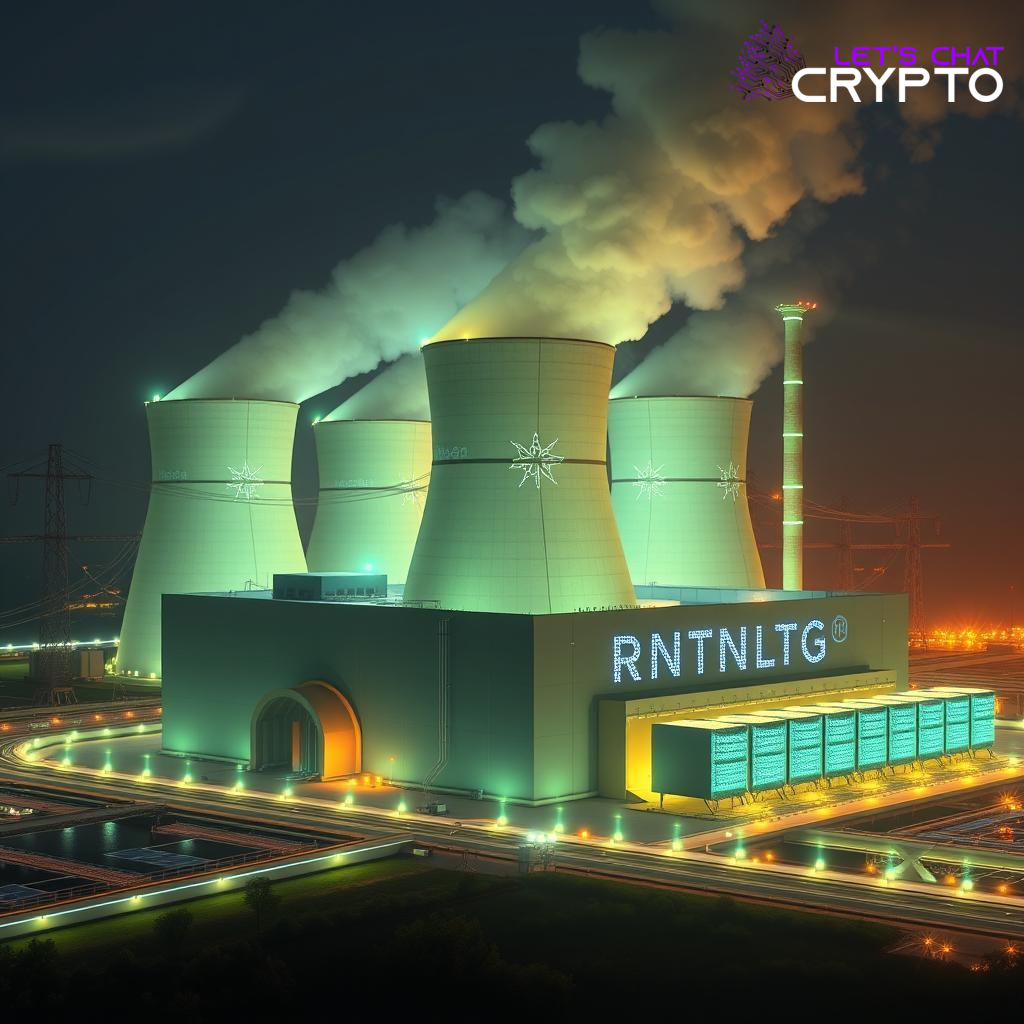
The Converging Energy Imperative: AI, Bitcoin, and Nuclear's Resurgence
The insatiable energy demands of artificial intelligence are reshaping the global power landscape, driving a critical reassessment of energy sources. Amidst this shift, an often-overlooked sector—Bitcoin mining—demonstrated remarkable foresight, identifying and embracing nuclear power as a strategic solution long before the broader tech industry fully grappled with the impending "AI power crunch."
AI's Escalating Energy Footprint
The exponential growth of AI models and the accompanying data centers demand unprecedented amounts of electricity. Training sophisticated large language models and running complex inferencing operations require massive clusters of graphics processing units (GPUs), consuming energy equivalent to, and projected to surpass, the needs of entire cities or even small nations. This escalating consumption strains existing grids, exacerbates carbon emissions concerns, and creates an urgent need for reliable, high-density power solutions.
Bitcoin Miners: Early Adopters of Sustainable Power
While often criticized for their energy consumption, Bitcoin miners, by necessity, have been at the forefront of identifying and securing stable, cost-effective power sources for their high-performance computing operations. Long before AI became the primary driver of data center expansion, these entities understood the critical importance of baseload power. Their operational model, characterized by geographically flexible and energy-intensive compute loads, made them ideal early partners for underutilized power grids and, crucially, for nuclear facilities seeking consistent demand. Companies engaged in digital asset mining began forging partnerships with nuclear plants, or even acquiring sites adjacent to them, recognizing nuclear's capacity for continuous, low-carbon power generation.
Nuclear Power: The Strategic Imperative for HPC
The renewed interest in nuclear power, particularly in the United States, is not coincidental. As traditional fossil fuel sources face increasing environmental scrutiny and intermittent renewables require extensive grid balancing, nuclear energy offers a compelling alternative: clean, dispatchable, and highly efficient baseload power. This makes it an ideal match for the continuous, high-intensity power demands of both Bitcoin mining and advanced AI data centers. The development of Small Modular Reactors (SMRs) further promises to enhance deployability and flexibility, potentially accelerating the integration of nuclear power into energy-intensive industrial applications.
Challenges and Opportunities Ahead
Despite the strategic alignment, the path to a widespread nuclear-powered data center future is not without its hurdles. Regulatory complexities, significant capital investment requirements, and public perception remain considerable challenges. However, the symbiotic relationship between energy-intensive industries and nuclear power development presents a unique opportunity. Bitcoin miners, by acting as stable, long-term power purchasers, can de-risk nuclear projects, accelerate their development, and contribute to the modernization and decarbonization of national energy infrastructures. This creates a powerful economic incentive for nuclear energy expansion.
Conclusion
The confluence of AI's burgeoning power demands and a strategic pivot towards nuclear energy represents a pivotal moment in the evolution of both technology and infrastructure. Bitcoin miners, often operating at the cutting edge of high-performance computing infrastructure, demonstrated a prescient understanding of this energy paradigm shift. Their early adoption of nuclear power illustrates a path forward for other energy-hungry sectors, highlighting nuclear energy as a critical enabler for the next generation of digital innovation and a cornerstone of a robust, decarbonized energy future.
Resources
- Reuters (Reporting on global energy markets and technology's power demands)
- U.S. Department of Energy (Official information on nuclear energy development and policy)
- Bloomberg / Wall Street Journal (Analysis of financial markets, energy investments, and technological infrastructure)
- MIT Technology Review (In-depth articles on emerging technologies, their societal impact, and energy implications)
Details
Author
Top articles



 }})
You can now watch HBO Max for $10
Latest articles


You can now watch HBO Max for $10
The Converging Energy Imperative: AI, Bitcoin, and Nuclear's Resurgence
The insatiable energy demands of artificial intelligence are reshaping the global power landscape, driving a critical reassessment of energy sources. Amidst this shift, an often-overlooked sector—Bitcoin mining—demonstrated remarkable foresight, identifying and embracing nuclear power as a strategic solution long before the broader tech industry fully grappled with the impending "AI power crunch."
AI's Escalating Energy Footprint
The exponential growth of AI models and the accompanying data centers demand unprecedented amounts of electricity. Training sophisticated large language models and running complex inferencing operations require massive clusters of graphics processing units (GPUs), consuming energy equivalent to, and projected to surpass, the needs of entire cities or even small nations. This escalating consumption strains existing grids, exacerbates carbon emissions concerns, and creates an urgent need for reliable, high-density power solutions.
Bitcoin Miners: Early Adopters of Sustainable Power
While often criticized for their energy consumption, Bitcoin miners, by necessity, have been at the forefront of identifying and securing stable, cost-effective power sources for their high-performance computing operations. Long before AI became the primary driver of data center expansion, these entities understood the critical importance of baseload power. Their operational model, characterized by geographically flexible and energy-intensive compute loads, made them ideal early partners for underutilized power grids and, crucially, for nuclear facilities seeking consistent demand. Companies engaged in digital asset mining began forging partnerships with nuclear plants, or even acquiring sites adjacent to them, recognizing nuclear's capacity for continuous, low-carbon power generation.
Nuclear Power: The Strategic Imperative for HPC
The renewed interest in nuclear power, particularly in the United States, is not coincidental. As traditional fossil fuel sources face increasing environmental scrutiny and intermittent renewables require extensive grid balancing, nuclear energy offers a compelling alternative: clean, dispatchable, and highly efficient baseload power. This makes it an ideal match for the continuous, high-intensity power demands of both Bitcoin mining and advanced AI data centers. The development of Small Modular Reactors (SMRs) further promises to enhance deployability and flexibility, potentially accelerating the integration of nuclear power into energy-intensive industrial applications.
Challenges and Opportunities Ahead
Despite the strategic alignment, the path to a widespread nuclear-powered data center future is not without its hurdles. Regulatory complexities, significant capital investment requirements, and public perception remain considerable challenges. However, the symbiotic relationship between energy-intensive industries and nuclear power development presents a unique opportunity. Bitcoin miners, by acting as stable, long-term power purchasers, can de-risk nuclear projects, accelerate their development, and contribute to the modernization and decarbonization of national energy infrastructures. This creates a powerful economic incentive for nuclear energy expansion.
Conclusion
The confluence of AI's burgeoning power demands and a strategic pivot towards nuclear energy represents a pivotal moment in the evolution of both technology and infrastructure. Bitcoin miners, often operating at the cutting edge of high-performance computing infrastructure, demonstrated a prescient understanding of this energy paradigm shift. Their early adoption of nuclear power illustrates a path forward for other energy-hungry sectors, highlighting nuclear energy as a critical enabler for the next generation of digital innovation and a cornerstone of a robust, decarbonized energy future.
Resources
- Reuters (Reporting on global energy markets and technology's power demands)
- U.S. Department of Energy (Official information on nuclear energy development and policy)
- Bloomberg / Wall Street Journal (Analysis of financial markets, energy investments, and technological infrastructure)
- MIT Technology Review (In-depth articles on emerging technologies, their societal impact, and energy implications)
Top articles
You can now watch HBO Max for $10
Latest articles
You can now watch HBO Max for $10
Similar posts

This is a page that only logged-in people can visit. Don't you feel special? Try clicking on a button below to do some things you can't do when you're logged out.
Example modal
At your leisure, please peruse this excerpt from a whale of a tale.
Chapter 1: Loomings.
Call me Ishmael. Some years ago—never mind how long precisely—having little or no money in my purse, and nothing particular to interest me on shore, I thought I would sail about a little and see the watery part of the world. It is a way I have of driving off the spleen and regulating the circulation. Whenever I find myself growing grim about the mouth; whenever it is a damp, drizzly November in my soul; whenever I find myself involuntarily pausing before coffin warehouses, and bringing up the rear of every funeral I meet; and especially whenever my hypos get such an upper hand of me, that it requires a strong moral principle to prevent me from deliberately stepping into the street, and methodically knocking people's hats off—then, I account it high time to get to sea as soon as I can. This is my substitute for pistol and ball. With a philosophical flourish Cato throws himself upon his sword; I quietly take to the ship. There is nothing surprising in this. If they but knew it, almost all men in their degree, some time or other, cherish very nearly the same feelings towards the ocean with me.
Comment