Circle’s Arc Network Unveils Quantum Resistance Blueprint Amidst Cryptographic Uncertainty
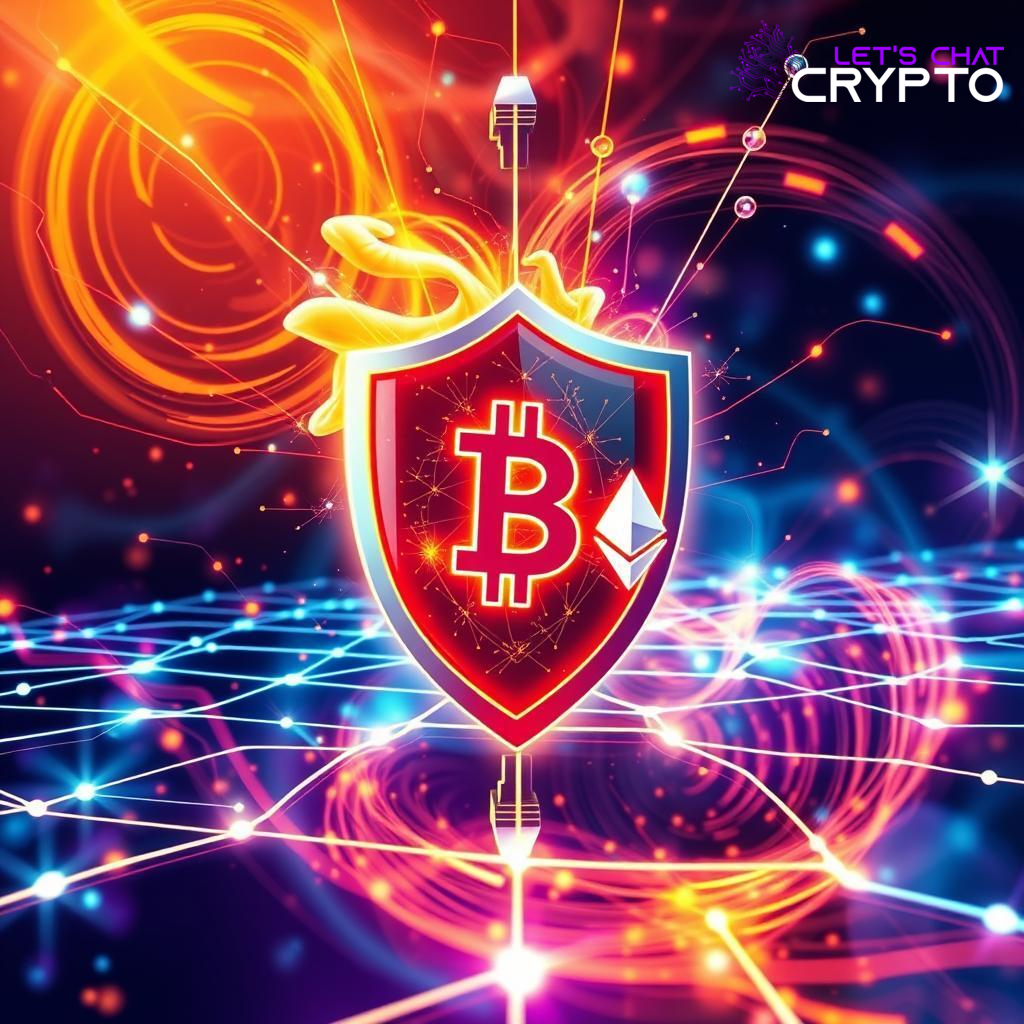
The Impending Quantum Challenge to Blockchain Security
As the digital landscape evolves, the specter of quantum computing looms large over existing cryptographic foundations. Blockchain networks, including titans like Bitcoin and Ethereum, rely heavily on public-key cryptography (specifically elliptic curve cryptography for digital signatures) which, while robust against classical computers, is theoretically vulnerable to attacks from sufficiently powerful quantum machines. Algorithms like Shor's algorithm could, in a post-quantum era, potentially compromise private keys from public addresses, thereby threatening the integrity and security of countless digital assets.
Circle’s Proactive Stance with the Arc Network
In response to this emerging threat, Circle, a prominent player in the stablecoin market and blockchain infrastructure, is positioning its upcoming Arc Network with a strategic focus on quantum resilience. Recognizing the significant lead time required for such a transition, Circle’s approach is a multi-phased roadmap designed to fortify Arc against future quantum attacks.
Arc’s Multi-Step Quantum Resilience Roadmap
Circle’s strategy for the Arc Network is not a singular solution but a comprehensive, adaptive plan. While specific technical details are still under development and subject to change as the field of post-quantum cryptography (PQC) matures, the general framework involves:
- Monitoring and Research: Continuous engagement with leading cryptographic research and development in post-quantum algorithms, tracking advancements from entities like NIST (National Institute of Standards and Technology).
- Standardization Adherence: Prioritizing the adoption of algorithms that achieve industry and governmental standardization, ensuring broad compatibility and rigorous vetting.
- Phased Implementation: A cautious, incremental rollout of PQC measures. This could involve hybrid schemes initially, where classical cryptography is paired with quantum-resistant algorithms, providing a layered defense while PQC solutions mature and gain wider acceptance.
- Module Upgradability: Designing Arc's architecture with modularity to facilitate seamless upgrades and replacements of cryptographic primitives as new, more robust quantum-resistant algorithms become available. This foresight aims to prevent costly and disruptive hard forks for future cryptographic transitions.
- Developer Tooling and Education: Providing developers building on Arc with the necessary tools, libraries, and educational resources to implement quantum-resistant solutions effectively.
Implications for Bitcoin, Ethereum, and the Broader Ecosystem
The proactive steps taken by Circle with its Arc Network highlight a growing awareness within the blockchain industry about the long-term cryptographic challenges posed by quantum computing. While Bitcoin and Ethereum communities are also engaged in discussions and research regarding quantum resistance, their large, decentralized nature and established consensus mechanisms make rapid, fundamental cryptographic changes more complex and potentially more disruptive.
Arc’s early focus on PQC could offer a template or at least provoke more urgent consideration among other networks. The key difference lies in Arc being a newer entrant with the opportunity to bake in quantum resistance from its foundational design, rather than retrofitting it into an already massive and mature ecosystem. The lessons learned and technologies developed within Arc’s resilience efforts could ultimately contribute to the broader blockchain community's efforts to secure digital assets against quantum threats.
Summary
Circle's Arc Network is demonstrating a forward-thinking approach to blockchain security by integrating quantum resistance into its core design. Through a multi-step roadmap involving research, standardization, phased implementation, and architectural flexibility, Arc aims to safeguard digital transactions against the future capabilities of quantum computers. This proactive strategy not only positions Arc as a potentially more secure platform in the long run but also underscores the critical need for the entire blockchain industry, including dominant networks like Bitcoin and Ethereum, to accelerate their efforts in preparing for the quantum era.
Resources
Details
Author
Top articles



 }})
You can now watch HBO Max for $10
Latest articles


You can now watch HBO Max for $10
The Impending Quantum Challenge to Blockchain Security
As the digital landscape evolves, the specter of quantum computing looms large over existing cryptographic foundations. Blockchain networks, including titans like Bitcoin and Ethereum, rely heavily on public-key cryptography (specifically elliptic curve cryptography for digital signatures) which, while robust against classical computers, is theoretically vulnerable to attacks from sufficiently powerful quantum machines. Algorithms like Shor's algorithm could, in a post-quantum era, potentially compromise private keys from public addresses, thereby threatening the integrity and security of countless digital assets.
Circle’s Proactive Stance with the Arc Network
In response to this emerging threat, Circle, a prominent player in the stablecoin market and blockchain infrastructure, is positioning its upcoming Arc Network with a strategic focus on quantum resilience. Recognizing the significant lead time required for such a transition, Circle’s approach is a multi-phased roadmap designed to fortify Arc against future quantum attacks.
Arc’s Multi-Step Quantum Resilience Roadmap
Circle’s strategy for the Arc Network is not a singular solution but a comprehensive, adaptive plan. While specific technical details are still under development and subject to change as the field of post-quantum cryptography (PQC) matures, the general framework involves:
- Monitoring and Research: Continuous engagement with leading cryptographic research and development in post-quantum algorithms, tracking advancements from entities like NIST (National Institute of Standards and Technology).
- Standardization Adherence: Prioritizing the adoption of algorithms that achieve industry and governmental standardization, ensuring broad compatibility and rigorous vetting.
- Phased Implementation: A cautious, incremental rollout of PQC measures. This could involve hybrid schemes initially, where classical cryptography is paired with quantum-resistant algorithms, providing a layered defense while PQC solutions mature and gain wider acceptance.
- Module Upgradability: Designing Arc's architecture with modularity to facilitate seamless upgrades and replacements of cryptographic primitives as new, more robust quantum-resistant algorithms become available. This foresight aims to prevent costly and disruptive hard forks for future cryptographic transitions.
- Developer Tooling and Education: Providing developers building on Arc with the necessary tools, libraries, and educational resources to implement quantum-resistant solutions effectively.
Implications for Bitcoin, Ethereum, and the Broader Ecosystem
The proactive steps taken by Circle with its Arc Network highlight a growing awareness within the blockchain industry about the long-term cryptographic challenges posed by quantum computing. While Bitcoin and Ethereum communities are also engaged in discussions and research regarding quantum resistance, their large, decentralized nature and established consensus mechanisms make rapid, fundamental cryptographic changes more complex and potentially more disruptive.
Arc’s early focus on PQC could offer a template or at least provoke more urgent consideration among other networks. The key difference lies in Arc being a newer entrant with the opportunity to bake in quantum resistance from its foundational design, rather than retrofitting it into an already massive and mature ecosystem. The lessons learned and technologies developed within Arc’s resilience efforts could ultimately contribute to the broader blockchain community's efforts to secure digital assets against quantum threats.
Summary
Circle's Arc Network is demonstrating a forward-thinking approach to blockchain security by integrating quantum resistance into its core design. Through a multi-step roadmap involving research, standardization, phased implementation, and architectural flexibility, Arc aims to safeguard digital transactions against the future capabilities of quantum computers. This proactive strategy not only positions Arc as a potentially more secure platform in the long run but also underscores the critical need for the entire blockchain industry, including dominant networks like Bitcoin and Ethereum, to accelerate their efforts in preparing for the quantum era.
Resources
Top articles
You can now watch HBO Max for $10
Latest articles
You can now watch HBO Max for $10
Similar posts
This is a page that only logged-in people can visit. Don't you feel special? Try clicking on a button below to do some things you can't do when you're logged out.
Example modal
At your leisure, please peruse this excerpt from a whale of a tale.
Chapter 1: Loomings.
Call me Ishmael. Some years ago—never mind how long precisely—having little or no money in my purse, and nothing particular to interest me on shore, I thought I would sail about a little and see the watery part of the world. It is a way I have of driving off the spleen and regulating the circulation. Whenever I find myself growing grim about the mouth; whenever it is a damp, drizzly November in my soul; whenever I find myself involuntarily pausing before coffin warehouses, and bringing up the rear of every funeral I meet; and especially whenever my hypos get such an upper hand of me, that it requires a strong moral principle to prevent me from deliberately stepping into the street, and methodically knocking people's hats off—then, I account it high time to get to sea as soon as I can. This is my substitute for pistol and ball. With a philosophical flourish Cato throws himself upon his sword; I quietly take to the ship. There is nothing surprising in this. If they but knew it, almost all men in their degree, some time or other, cherish very nearly the same feelings towards the ocean with me.
Comment