Bitcoin ATMs: The Terminal Point in America's $11 Billion Crypto Scam Epidemic
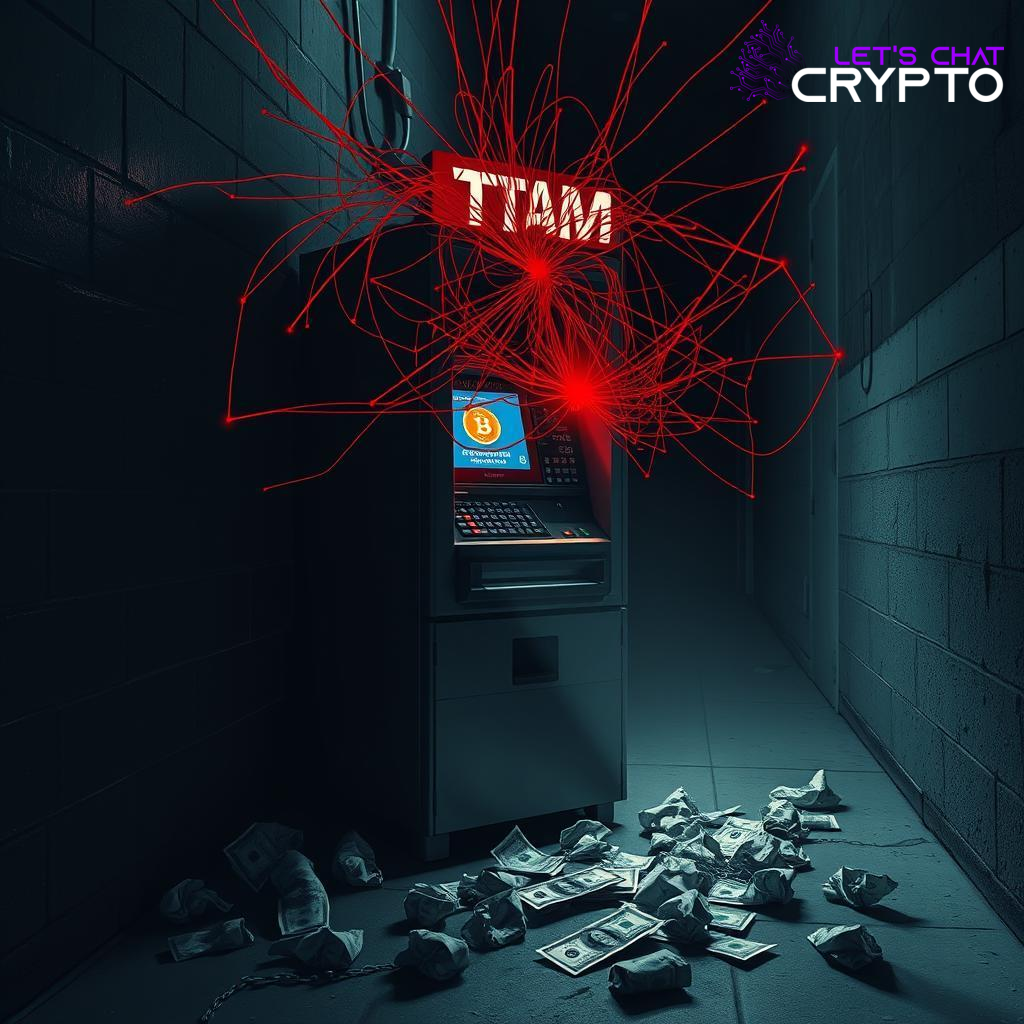
The digital frontier of finance, while promising innovation, has concurrently opened new avenues for sophisticated fraud. America finds itself grappling with an escalating cryptocurrency scam crisis, a pipeline estimated to siphon over $11 billion annually from unsuspecting victims. A particularly insidious endpoint in this financial drain is the ubiquitous Bitcoin ATM, increasingly becoming the terminal stop where coerced individuals unwittingly finalize irreversible transfers, often before any intervention can occur.
The Anatomy of Coercion: From Screen to Kiosk
Modern crypto scams are rarely brute-force attacks; they are intricate psychological operations designed to manipulate and pressure. Data from the Federal Bureau of Investigation (FBI) and the Internet Crime Complaint Center (IC3) consistently highlight patterns of online coercion. Scammers employ a variety of guises: romantic partners in "pig butchering" schemes, government officials demanding payment for fabricated fines, tech support agents "fixing" non-existent computer issues, or even lottery organizers promising grand prizes. The common thread is intense psychological pressure, isolating the victim and cultivating a sense of urgency and fear.
Once ensnared, victims are typically directed to purchase cryptocurrency. This is where Bitcoin ATMs enter the criminal ecosystem. These kiosks, often found in convenience stores and public spaces, offer a seemingly straightforward, albeit largely unregulated, pathway to convert cash into digital assets. For scammers, they represent an ideal tool: accessible, discreet, and critically, designed for irreversible transactions.
Bitcoin ATMs: The Irreversible Trap
The appeal of Bitcoin ATMs to fraudsters lies in their fundamental design. Unlike traditional banking transactions that offer reversal mechanisms or hold periods, cryptocurrency transactions are, by their very nature, final once confirmed on the blockchain. This immutability is a core tenet of decentralized finance but serves as a devastating advantage for criminals. Victims, often under duress and with limited understanding of cryptocurrency mechanics, are guided step-by-step to deposit cash into the ATM and send it directly to a scammer’s wallet address. By the time the victim realizes they've been defrauded, the funds are already gone, dispersed, and often irrecoverable.
FBI and IC3 reports consistently detail how victims of various fraud types—from investment scams to government impersonation—are steered towards these machines. The speed and anonymity offered by many Bitcoin ATMs circumvent traditional banking scrutiny, allowing large sums to be transferred swiftly and without question. This lack of a 'human element' or a pause for reflection at the point of transfer is a critical vulnerability exploited by scammers.
Scale of the Problem: FBI and IC3 Insights
The sheer volume of reported crypto scams underscores the urgency of this issue. The IC3's annual reports frequently cite billions in losses attributed to cryptocurrency fraud, with a significant portion funneled through methods like Bitcoin ATMs. These machines provide a final, tangible touchpoint in an otherwise digital crime, making them a crucial investigative focus for law enforcement. The data reveal a clear pattern: the online coercion and manipulation phase of the scam is meticulously designed to culminate in an irreversible financial action at a physical location, minimizing the window for intervention.
Efforts to combat this involve public awareness campaigns, but the psychological grip of these scams often overrides caution. The convenience of Bitcoin ATMs, ironically, becomes their biggest drawback in the context of fraud, serving as efficient conduits for criminal proceeds.
Summary
Bitcoin ATMs have inadvertently become a critical node in America's burgeoning crypto scam crisis, acting as the irreversible final destination for funds extracted through sophisticated online coercion. The confluence of psychological manipulation, the inherent irreversibility of blockchain transactions, and the operational model of these ATMs creates a potent environment for fraud. While beneficial for legitimate users, their exploitation by criminals highlights an urgent need for enhanced regulatory oversight, industry collaboration, and intensified public education to break this multi-billion dollar scam pipeline.
Resources
- Federal Bureau of Investigation (FBI) - Public Warnings and Reports
- Internet Crime Complaint Center (IC3) - Annual Reports
- Consumer Financial Protection Bureau (CFPB) - Cryptocurrency Fraud Information
Details
Author
Top articles




 }})
You can now watch HBO Max for $10
Latest articles





You can now watch HBO Max for $10
The digital frontier of finance, while promising innovation, has concurrently opened new avenues for sophisticated fraud. America finds itself grappling with an escalating cryptocurrency scam crisis, a pipeline estimated to siphon over $11 billion annually from unsuspecting victims. A particularly insidious endpoint in this financial drain is the ubiquitous Bitcoin ATM, increasingly becoming the terminal stop where coerced individuals unwittingly finalize irreversible transfers, often before any intervention can occur.
The Anatomy of Coercion: From Screen to Kiosk
Modern crypto scams are rarely brute-force attacks; they are intricate psychological operations designed to manipulate and pressure. Data from the Federal Bureau of Investigation (FBI) and the Internet Crime Complaint Center (IC3) consistently highlight patterns of online coercion. Scammers employ a variety of guises: romantic partners in "pig butchering" schemes, government officials demanding payment for fabricated fines, tech support agents "fixing" non-existent computer issues, or even lottery organizers promising grand prizes. The common thread is intense psychological pressure, isolating the victim and cultivating a sense of urgency and fear.
Once ensnared, victims are typically directed to purchase cryptocurrency. This is where Bitcoin ATMs enter the criminal ecosystem. These kiosks, often found in convenience stores and public spaces, offer a seemingly straightforward, albeit largely unregulated, pathway to convert cash into digital assets. For scammers, they represent an ideal tool: accessible, discreet, and critically, designed for irreversible transactions.
Bitcoin ATMs: The Irreversible Trap
The appeal of Bitcoin ATMs to fraudsters lies in their fundamental design. Unlike traditional banking transactions that offer reversal mechanisms or hold periods, cryptocurrency transactions are, by their very nature, final once confirmed on the blockchain. This immutability is a core tenet of decentralized finance but serves as a devastating advantage for criminals. Victims, often under duress and with limited understanding of cryptocurrency mechanics, are guided step-by-step to deposit cash into the ATM and send it directly to a scammer’s wallet address. By the time the victim realizes they've been defrauded, the funds are already gone, dispersed, and often irrecoverable.
FBI and IC3 reports consistently detail how victims of various fraud types—from investment scams to government impersonation—are steered towards these machines. The speed and anonymity offered by many Bitcoin ATMs circumvent traditional banking scrutiny, allowing large sums to be transferred swiftly and without question. This lack of a 'human element' or a pause for reflection at the point of transfer is a critical vulnerability exploited by scammers.
Scale of the Problem: FBI and IC3 Insights
The sheer volume of reported crypto scams underscores the urgency of this issue. The IC3's annual reports frequently cite billions in losses attributed to cryptocurrency fraud, with a significant portion funneled through methods like Bitcoin ATMs. These machines provide a final, tangible touchpoint in an otherwise digital crime, making them a crucial investigative focus for law enforcement. The data reveal a clear pattern: the online coercion and manipulation phase of the scam is meticulously designed to culminate in an irreversible financial action at a physical location, minimizing the window for intervention.
Efforts to combat this involve public awareness campaigns, but the psychological grip of these scams often overrides caution. The convenience of Bitcoin ATMs, ironically, becomes their biggest drawback in the context of fraud, serving as efficient conduits for criminal proceeds.
Summary
Bitcoin ATMs have inadvertently become a critical node in America's burgeoning crypto scam crisis, acting as the irreversible final destination for funds extracted through sophisticated online coercion. The confluence of psychological manipulation, the inherent irreversibility of blockchain transactions, and the operational model of these ATMs creates a potent environment for fraud. While beneficial for legitimate users, their exploitation by criminals highlights an urgent need for enhanced regulatory oversight, industry collaboration, and intensified public education to break this multi-billion dollar scam pipeline.
Resources
- Federal Bureau of Investigation (FBI) - Public Warnings and Reports
- Internet Crime Complaint Center (IC3) - Annual Reports
- Consumer Financial Protection Bureau (CFPB) - Cryptocurrency Fraud Information
Top articles
You can now watch HBO Max for $10
Latest articles
You can now watch HBO Max for $10
Similar posts




This is a page that only logged-in people can visit. Don't you feel special? Try clicking on a button below to do some things you can't do when you're logged out.
Example modal
At your leisure, please peruse this excerpt from a whale of a tale.
Chapter 1: Loomings.
Call me Ishmael. Some years ago—never mind how long precisely—having little or no money in my purse, and nothing particular to interest me on shore, I thought I would sail about a little and see the watery part of the world. It is a way I have of driving off the spleen and regulating the circulation. Whenever I find myself growing grim about the mouth; whenever it is a damp, drizzly November in my soul; whenever I find myself involuntarily pausing before coffin warehouses, and bringing up the rear of every funeral I meet; and especially whenever my hypos get such an upper hand of me, that it requires a strong moral principle to prevent me from deliberately stepping into the street, and methodically knocking people's hats off—then, I account it high time to get to sea as soon as I can. This is my substitute for pistol and ball. With a philosophical flourish Cato throws himself upon his sword; I quietly take to the ship. There is nothing surprising in this. If they but knew it, almost all men in their degree, some time or other, cherish very nearly the same feelings towards the ocean with me.
Comment