Supreme Court's Tariff Stance Signals Political Shake-Up, Not Immediate Crypto Crash

The Supreme Court, Tariffs, and a Brewing Political Storm
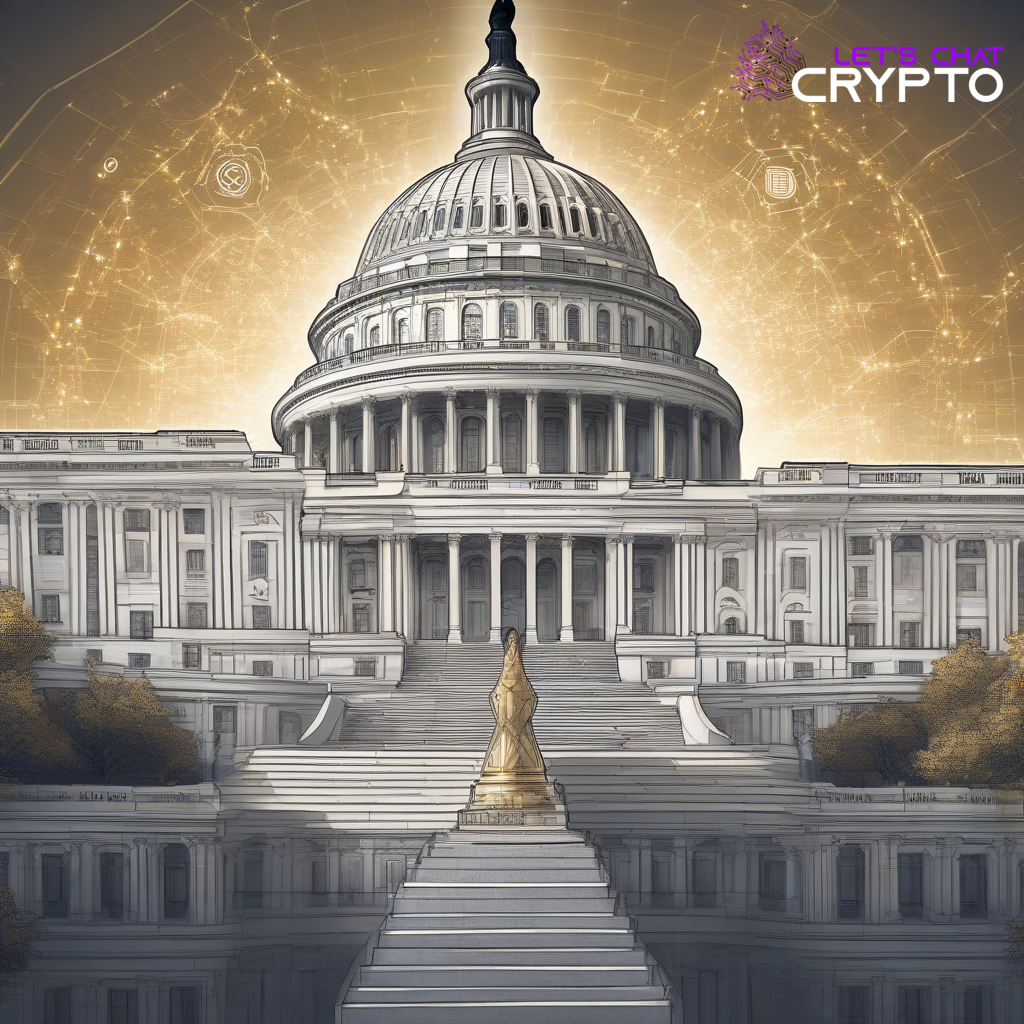
The U.S. Supreme Court's nuanced stance regarding the legality and scope of presidential authority in imposing trade tariffs, particularly those enacted during the Trump administration, appears to be generating more significant political ripples than direct financial tremors in the cryptocurrency markets. While headline-grabbing judicial interventions often captivate financial analysts, the immediate impact on digital assets like Bitcoin or Ethereum remains largely muted. The more profound consequence, however, is a subtle but potent shift in the political landscape surrounding executive power and trade, a development that could subtly sting the nascent digital asset industry in the long run.
Judicial Scrutiny and Executive Trade Authority
Recent legal challenges to tariffs, such as those imposed under Section 232 (national security) or Section 301 (unfair trade practices), have consistently tested the boundaries of presidential authority. While the Supreme Court has often opted for a cautious approach, occasionally declining to hear appeals and thereby letting lower court rulings stand, its overall posture signals increasing judicial scrutiny over the executive branch's expansive interpretation of trade powers. This judicial temperament, even in its restraint, acts as a check, prompting a re-evaluation of how future administrations might wield trade instruments.
The absence of a sweeping, outright Supreme Court "rejection" of all Trump-era tariffs does not diminish the political implications. Instead, the ongoing legal debates and the Court's selective engagement reinforce the legislative branch's constitutional role in commerce. This rebalancing act, away from unchecked executive discretion, sets a precedent for future trade policy, pushing discussions back into the legislative arena where political bargaining and industry lobbying take center stage.
Political Fallout: A Stinging Precedent for Industry
The primary fallout from this judicial environment is decidedly political. It sparks renewed debate within Congress over trade legislation, potentially leading to more restrictive frameworks for presidential action. For industries reliant on predictable international trade, this creates an environment of heightened uncertainty. Furthermore, the issue becomes a potent talking point in electoral campaigns, with candidates likely to align themselves with either stricter checks on presidential power or a more robust executive ability to respond to global economic challenges.
For the broader economic landscape, this political shift can manifest in:
- Increased lobbying efforts from various industries seeking to influence new trade legislation.
- Greater volatility in trade relations as countries observe the U.S. internal power struggles over policy.
- A potential for slower, more deliberate, and politically charged trade policy formulation, rather than swift executive action.
Crypto's Indirect Vulnerability in a Politically Charged Environment
At first glance, the intricate world of digital assets might seem far removed from the tariff debates on steel or semiconductors. However, the cryptocurrency industry thrives on regulatory clarity and a stable geopolitical environment. The political "sting" from shifting trade authority primarily impacts crypto through indirect channels:
- Regulatory Uncertainty: A politically contentious trade policy environment can spill over into other regulatory domains, including financial innovation. Increased partisan gridlock or shifts in power could lead to unpredictable or fragmented approaches to crypto regulation, hindering growth and adoption.
- Economic Stability: While crypto often positions itself as an alternative to traditional finance, its growth is still intrinsically linked to global economic health and investor confidence. Political instability stemming from trade policy debates can dampen overall economic sentiment, potentially reducing appetite for speculative assets like cryptocurrencies.
- National Security & Financial Controls: Debates over executive power and national security (often tied to tariffs) can also influence discussions around financial controls, anti-money laundering (AML), and know-your-customer (KYC) regulations for digital assets. A more protectionist or interventionist political stance could lead to stricter oversight or even nationalization of certain digital asset functions.
Summary & Outlook
The U.S. Supreme Court's engagement, or lack thereof, with the intricacies of presidential tariff authority, has underscored a significant political recalibration rather than an immediate economic shockwave for cryptocurrency. The true consequence lies in the empowerment of legislative debate and the shaping of future trade policy, creating an environment of political uncertainty that could indirectly, but profoundly, influence the regulatory trajectory and broader acceptance of digital assets. While crypto markets may not have "rocked" in response to these developments, the political reverberations are setting a stage where future policy decisions could introduce a challenging, albeit indirect, sting to the industry.
Resources
- Council on Foreign Relations (CFR)
- Peterson Institute for International Economics (PIIE)
- SCOTUSblog
Details
Author
Top articles





 }})
You can now watch HBO Max for $10
Latest articles




You can now watch HBO Max for $10
The Supreme Court, Tariffs, and a Brewing Political Storm
The U.S. Supreme Court's nuanced stance regarding the legality and scope of presidential authority in imposing trade tariffs, particularly those enacted during the Trump administration, appears to be generating more significant political ripples than direct financial tremors in the cryptocurrency markets. While headline-grabbing judicial interventions often captivate financial analysts, the immediate impact on digital assets like Bitcoin or Ethereum remains largely muted. The more profound consequence, however, is a subtle but potent shift in the political landscape surrounding executive power and trade, a development that could subtly sting the nascent digital asset industry in the long run.
Judicial Scrutiny and Executive Trade Authority
Recent legal challenges to tariffs, such as those imposed under Section 232 (national security) or Section 301 (unfair trade practices), have consistently tested the boundaries of presidential authority. While the Supreme Court has often opted for a cautious approach, occasionally declining to hear appeals and thereby letting lower court rulings stand, its overall posture signals increasing judicial scrutiny over the executive branch's expansive interpretation of trade powers. This judicial temperament, even in its restraint, acts as a check, prompting a re-evaluation of how future administrations might wield trade instruments.
The absence of a sweeping, outright Supreme Court "rejection" of all Trump-era tariffs does not diminish the political implications. Instead, the ongoing legal debates and the Court's selective engagement reinforce the legislative branch's constitutional role in commerce. This rebalancing act, away from unchecked executive discretion, sets a precedent for future trade policy, pushing discussions back into the legislative arena where political bargaining and industry lobbying take center stage.
Political Fallout: A Stinging Precedent for Industry
The primary fallout from this judicial environment is decidedly political. It sparks renewed debate within Congress over trade legislation, potentially leading to more restrictive frameworks for presidential action. For industries reliant on predictable international trade, this creates an environment of heightened uncertainty. Furthermore, the issue becomes a potent talking point in electoral campaigns, with candidates likely to align themselves with either stricter checks on presidential power or a more robust executive ability to respond to global economic challenges.
For the broader economic landscape, this political shift can manifest in:
- Increased lobbying efforts from various industries seeking to influence new trade legislation.
- Greater volatility in trade relations as countries observe the U.S. internal power struggles over policy.
- A potential for slower, more deliberate, and politically charged trade policy formulation, rather than swift executive action.
Crypto's Indirect Vulnerability in a Politically Charged Environment
At first glance, the intricate world of digital assets might seem far removed from the tariff debates on steel or semiconductors. However, the cryptocurrency industry thrives on regulatory clarity and a stable geopolitical environment. The political "sting" from shifting trade authority primarily impacts crypto through indirect channels:
- Regulatory Uncertainty: A politically contentious trade policy environment can spill over into other regulatory domains, including financial innovation. Increased partisan gridlock or shifts in power could lead to unpredictable or fragmented approaches to crypto regulation, hindering growth and adoption.
- Economic Stability: While crypto often positions itself as an alternative to traditional finance, its growth is still intrinsically linked to global economic health and investor confidence. Political instability stemming from trade policy debates can dampen overall economic sentiment, potentially reducing appetite for speculative assets like cryptocurrencies.
- National Security & Financial Controls: Debates over executive power and national security (often tied to tariffs) can also influence discussions around financial controls, anti-money laundering (AML), and know-your-customer (KYC) regulations for digital assets. A more protectionist or interventionist political stance could lead to stricter oversight or even nationalization of certain digital asset functions.
Summary & Outlook
The U.S. Supreme Court's engagement, or lack thereof, with the intricacies of presidential tariff authority, has underscored a significant political recalibration rather than an immediate economic shockwave for cryptocurrency. The true consequence lies in the empowerment of legislative debate and the shaping of future trade policy, creating an environment of political uncertainty that could indirectly, but profoundly, influence the regulatory trajectory and broader acceptance of digital assets. While crypto markets may not have "rocked" in response to these developments, the political reverberations are setting a stage where future policy decisions could introduce a challenging, albeit indirect, sting to the industry.
Resources
- Council on Foreign Relations (CFR)
- Peterson Institute for International Economics (PIIE)
- SCOTUSblog
Top articles
You can now watch HBO Max for $10
Latest articles
You can now watch HBO Max for $10
Similar posts



This is a page that only logged-in people can visit. Don't you feel special? Try clicking on a button below to do some things you can't do when you're logged out.
Example modal
At your leisure, please peruse this excerpt from a whale of a tale.
Chapter 1: Loomings.
Call me Ishmael. Some years ago—never mind how long precisely—having little or no money in my purse, and nothing particular to interest me on shore, I thought I would sail about a little and see the watery part of the world. It is a way I have of driving off the spleen and regulating the circulation. Whenever I find myself growing grim about the mouth; whenever it is a damp, drizzly November in my soul; whenever I find myself involuntarily pausing before coffin warehouses, and bringing up the rear of every funeral I meet; and especially whenever my hypos get such an upper hand of me, that it requires a strong moral principle to prevent me from deliberately stepping into the street, and methodically knocking people's hats off—then, I account it high time to get to sea as soon as I can. This is my substitute for pistol and ball. With a philosophical flourish Cato throws himself upon his sword; I quietly take to the ship. There is nothing surprising in this. If they but knew it, almost all men in their degree, some time or other, cherish very nearly the same feelings towards the ocean with me.
Comment