Bitcoin Bears Face $600M Squeeze as Network Strength Points to $70K Rally Potential

The Imminent Short Squeeze: A Catalyst for Ascent
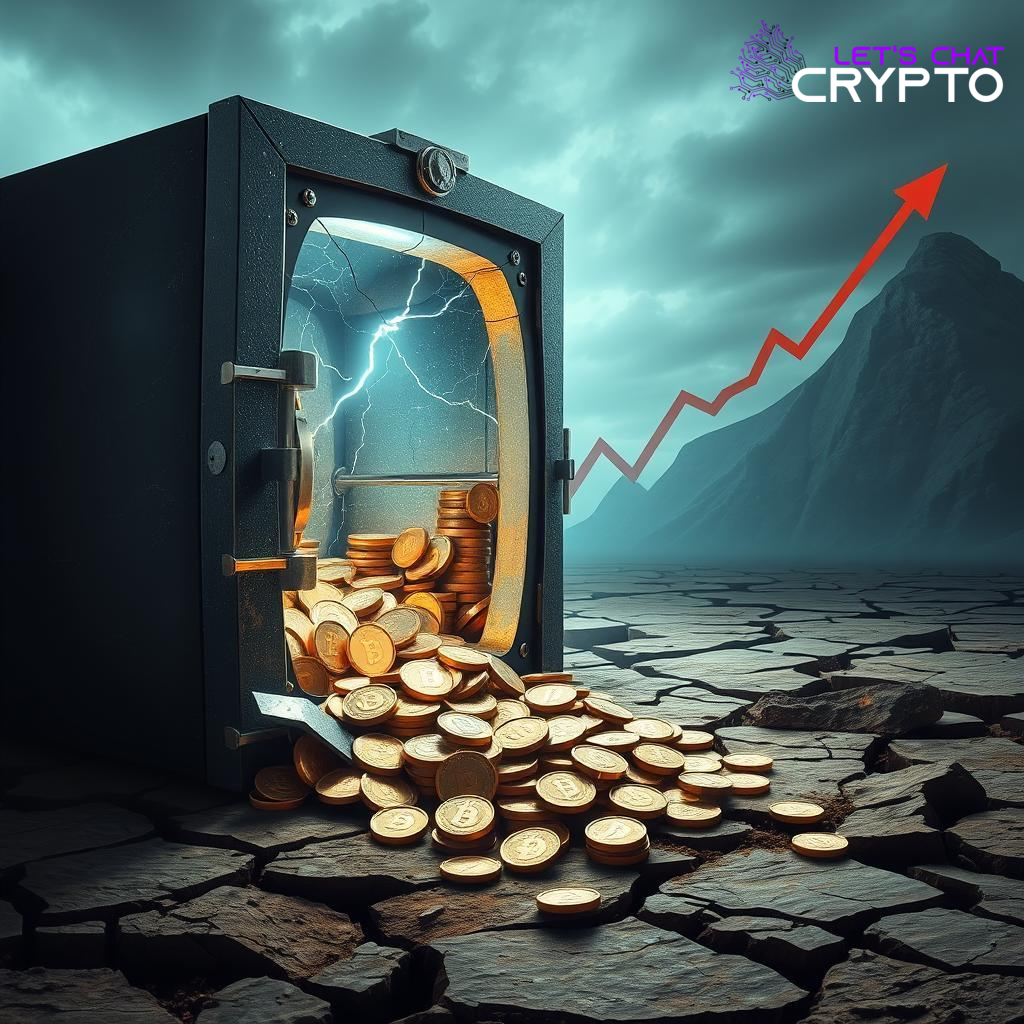
Data from various on-chain analytics platforms reveals a substantial aggregation of short positions that could face forced liquidation if Bitcoin's price breaches critical resistance levels, particularly in the $67,000 to $68,000 range. The sheer volume, estimated to be around $600 million, represents a significant market pressure point. Should Bitcoin's price ascend past these thresholds, these short sellers would be compelled to buy back Bitcoin to cover their positions, triggering a cascade of buying pressure known as a "short squeeze." This mechanism has historically acted as a potent catalyst for rapid price appreciation, turning bearish sentiment into fuel for an upward trajectory.
Bitcoin's Hashrate Resilience and Network Security
The health and security of the Bitcoin network are fundamentally tied to its hashrate—the total computational power miners dedicate to processing transactions and securing the blockchain. Following minor fluctuations, Bitcoin's hashrate has demonstrated a remarkable recovery, consistently trending towards new all-time highs. This resilience underscores growing confidence among miners and reinforces the network's robust security architecture against potential attacks. A strong and recovering hashrate signals a healthy, decentralized network, which is a key factor in attracting and retaining investor confidence, further underpinning Bitcoin's intrinsic value proposition.
While specific "new onchain security protocols" in the traditional sense are less frequent, the continuous enhancements to Bitcoin's underlying technology, such as the increasing adoption of Taproot, contribute to improved privacy, efficiency, and smart contract capabilities. These developments subtly enhance the network's long-term utility and security, making it a more attractive and viable asset for a broader range of applications and users.
Navigating Macroeconomic Currents Towards $70K
The broader financial landscape, characterized by weak US economic data and ongoing speculation regarding the Federal Reserve's monetary policy, often introduces volatility into risk assets. However, Bitcoin has increasingly carved out a distinct narrative. While traditional markets may react cautiously to such data, Bitcoin enthusiasts and institutional investors often view the asset as a hedge against inflation and a store of value in an environment of currency debasement. The prevailing sentiment among a segment of market participants is that any long-term dovish shift by central banks could further bolster Bitcoin's appeal as a scarce digital commodity.
Coupled with robust institutional interest, as evidenced by inflows into spot Bitcoin ETFs, and the enduring narrative surrounding its programmatic scarcity (such as the halving cycles, even if the next one is distant), these factors collectively build a strong case for Bitcoin's upward momentum. Breaching the psychological and technical resistance at $70,000 would not only liquidate numerous short positions but also open the door for a retest of previous all-time highs and potentially new price discovery.
Summary
The confluence of a significant short liquidation risk, a recovering and robust network hashrate, and Bitcoin's evolving role within the global financial system positions it strongly for a rally. Despite external macroeconomic pressures, the digital asset's internal dynamics and growing institutional acceptance suggest that the path to $70,000 is not only plausible but increasingly probable as market forces align to challenge bearish positions.
Resources
- Coinglass.com (for liquidation data)
- Blockchain.com (for hashrate data)
- CryptoQuant.com (for on-chain analytics)
Details
Author
Top articles



 }})
You can now watch HBO Max for $10
Latest articles





You can now watch HBO Max for $10
The Imminent Short Squeeze: A Catalyst for Ascent
Data from various on-chain analytics platforms reveals a substantial aggregation of short positions that could face forced liquidation if Bitcoin's price breaches critical resistance levels, particularly in the $67,000 to $68,000 range. The sheer volume, estimated to be around $600 million, represents a significant market pressure point. Should Bitcoin's price ascend past these thresholds, these short sellers would be compelled to buy back Bitcoin to cover their positions, triggering a cascade of buying pressure known as a "short squeeze." This mechanism has historically acted as a potent catalyst for rapid price appreciation, turning bearish sentiment into fuel for an upward trajectory.
Bitcoin's Hashrate Resilience and Network Security
The health and security of the Bitcoin network are fundamentally tied to its hashrate—the total computational power miners dedicate to processing transactions and securing the blockchain. Following minor fluctuations, Bitcoin's hashrate has demonstrated a remarkable recovery, consistently trending towards new all-time highs. This resilience underscores growing confidence among miners and reinforces the network's robust security architecture against potential attacks. A strong and recovering hashrate signals a healthy, decentralized network, which is a key factor in attracting and retaining investor confidence, further underpinning Bitcoin's intrinsic value proposition.
While specific "new onchain security protocols" in the traditional sense are less frequent, the continuous enhancements to Bitcoin's underlying technology, such as the increasing adoption of Taproot, contribute to improved privacy, efficiency, and smart contract capabilities. These developments subtly enhance the network's long-term utility and security, making it a more attractive and viable asset for a broader range of applications and users.
Navigating Macroeconomic Currents Towards $70K
The broader financial landscape, characterized by weak US economic data and ongoing speculation regarding the Federal Reserve's monetary policy, often introduces volatility into risk assets. However, Bitcoin has increasingly carved out a distinct narrative. While traditional markets may react cautiously to such data, Bitcoin enthusiasts and institutional investors often view the asset as a hedge against inflation and a store of value in an environment of currency debasement. The prevailing sentiment among a segment of market participants is that any long-term dovish shift by central banks could further bolster Bitcoin's appeal as a scarce digital commodity.
Coupled with robust institutional interest, as evidenced by inflows into spot Bitcoin ETFs, and the enduring narrative surrounding its programmatic scarcity (such as the halving cycles, even if the next one is distant), these factors collectively build a strong case for Bitcoin's upward momentum. Breaching the psychological and technical resistance at $70,000 would not only liquidate numerous short positions but also open the door for a retest of previous all-time highs and potentially new price discovery.
Summary
The confluence of a significant short liquidation risk, a recovering and robust network hashrate, and Bitcoin's evolving role within the global financial system positions it strongly for a rally. Despite external macroeconomic pressures, the digital asset's internal dynamics and growing institutional acceptance suggest that the path to $70,000 is not only plausible but increasingly probable as market forces align to challenge bearish positions.
Resources
- Coinglass.com (for liquidation data)
- Blockchain.com (for hashrate data)
- CryptoQuant.com (for on-chain analytics)
Top articles
You can now watch HBO Max for $10
Latest articles
You can now watch HBO Max for $10
Similar posts



This is a page that only logged-in people can visit. Don't you feel special? Try clicking on a button below to do some things you can't do when you're logged out.
Example modal
At your leisure, please peruse this excerpt from a whale of a tale.
Chapter 1: Loomings.
Call me Ishmael. Some years ago—never mind how long precisely—having little or no money in my purse, and nothing particular to interest me on shore, I thought I would sail about a little and see the watery part of the world. It is a way I have of driving off the spleen and regulating the circulation. Whenever I find myself growing grim about the mouth; whenever it is a damp, drizzly November in my soul; whenever I find myself involuntarily pausing before coffin warehouses, and bringing up the rear of every funeral I meet; and especially whenever my hypos get such an upper hand of me, that it requires a strong moral principle to prevent me from deliberately stepping into the street, and methodically knocking people's hats off—then, I account it high time to get to sea as soon as I can. This is my substitute for pistol and ball. With a philosophical flourish Cato throws himself upon his sword; I quietly take to the ship. There is nothing surprising in this. If they but knew it, almost all men in their degree, some time or other, cherish very nearly the same feelings towards the ocean with me.
Comment