Binance Confronts 'Bank-Run' Fears Amid $2B Outflows and Heightened Scrutiny
Introduction
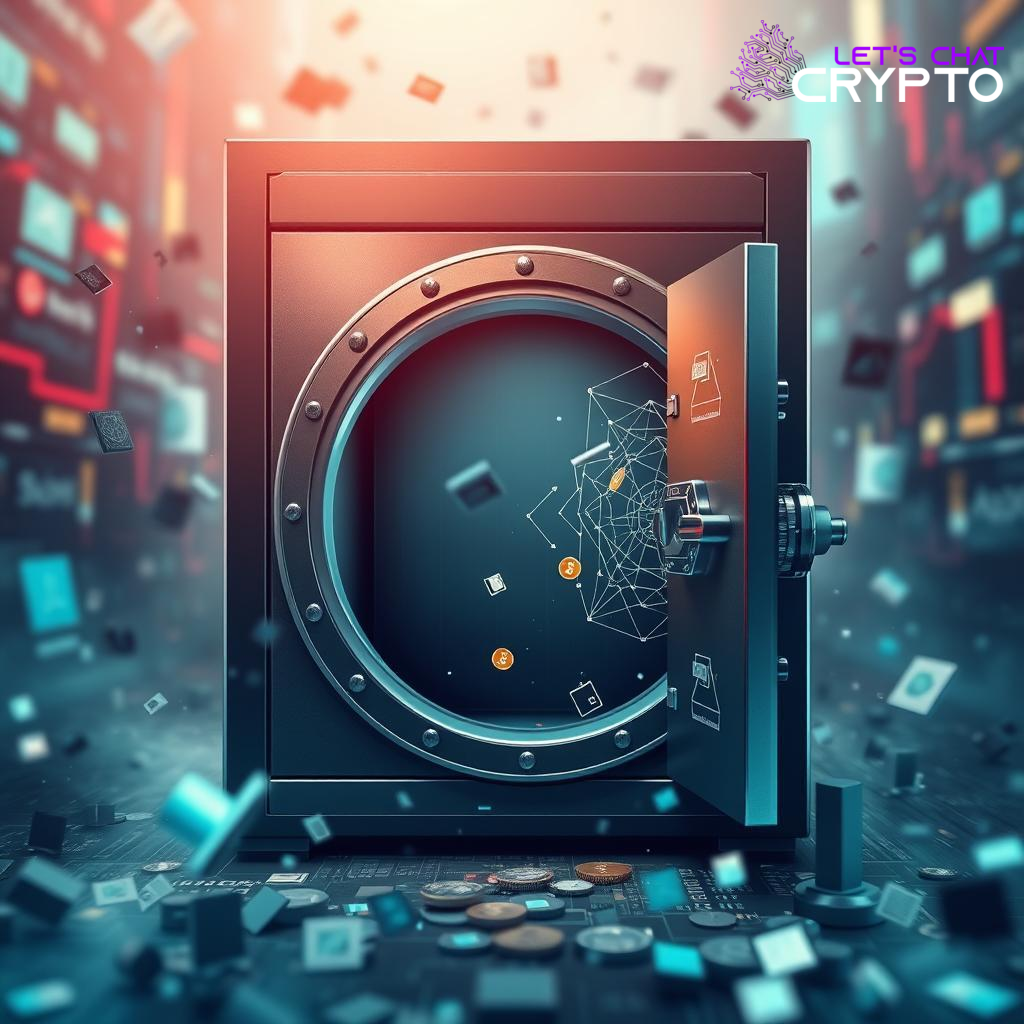
In the volatile aftermath of a significant industry collapse, the world's largest cryptocurrency exchange, Binance, found itself at the epicenter of renewed speculation concerning its financial stability. Late 2022 saw a rapid surge in rumors suggesting an impending liquidity crisis, amplified by claims of billions in user withdrawals. These concerns, spreading virally across social media platforms, served as a stark reminder of the inherent fragility within the digital asset ecosystem, pushing traders to question the safety of their holdings.
The Genesis of Fear
The cryptocurrency market had barely begun to process the repercussions of a major exchange's downfall when attention abruptly shifted to Binance. Amid an already nervous market, fueled by a pervasive loss of trust, any hint of instability in a dominant player like Binance could trigger widespread panic. The rumors were largely ignited by on-chain data analytics, which indicated substantial outflows from Binance wallets.
The $2 Billion Exodus
Reports circulated rapidly in December 2022, highlighting that Binance experienced a capital exodus estimated to be as high as $2 billion within a mere 72-hour period. This swift movement of assets, tracked by various analytics firms, fueled fears of a potential "bank run"—a scenario where a large number of clients simultaneously withdraw their funds due to concerns over an institution's solvency. The scale of these withdrawals, coupled with an already skittish market sentiment, created a critical test for the exchange's resilience and its ability to manage large-scale liquidity demands.
Binance's Defensive Stance
In response to the escalating FUD (Fear, Uncertainty, and Doubt), Binance leadership, particularly CEO Changpeng Zhao (CZ), engaged proactively to quell the anxieties. Through various public channels, Zhao consistently reassured users regarding the exchange's robust financial health and its capacity to meet all withdrawal requests. The company emphasized that such outflows, while significant, were manageable within the context of its vast reserves and operational scale.
Proof of Reserves and Public Assurance
To further allay fears, Binance released a "Proof of Reserves" report, a third-party verification intended to demonstrate that user assets were fully backed. While this initiative aimed to boost transparency and restore confidence, the report itself drew criticism for not being a comprehensive audit, specifically for not fully accounting for liabilities. Despite these critiques, Binance continued to affirm its 1:1 backing of user funds, a crucial assertion for maintaining trust during a period of intense scrutiny.
Broader Implications and Lingering Questions
The events surrounding Binance's substantial outflows underscored a critical vulnerability in the cryptocurrency market: the profound impact of social media narratives and the speed at which FUD can propagate. While Binance successfully navigated the immediate crisis, preventing a full-blown collapse, the incident undoubtedly intensified regulatory oversight and prompted deeper discussions about the need for standardized, comprehensive audits across the entire crypto exchange landscape. The episode served as a powerful reminder that even the largest players are not immune to market sentiment and the collective actions of their user base.
Summary
The December 2022 "bank run" scare at Binance, characterized by reported $2 billion outflows and widespread insolvency rumors, tested the exchange's liquidity and highlighted the crypto market's inherent sensitivities. Despite the significant withdrawals and a partially scrutinized Proof of Reserves, Binance affirmed its financial stability and weathered the storm. This incident underscored the critical role of transparency, robust reserves, and effective communication in maintaining trust within the volatile digital asset sector, while also accelerating calls for stricter regulatory frameworks and more thorough auditing standards across the industry.
Resources
Details
Author
Top articles



 }})
You can now watch HBO Max for $10
Latest articles




You can now watch HBO Max for $10
Introduction
In the volatile aftermath of a significant industry collapse, the world's largest cryptocurrency exchange, Binance, found itself at the epicenter of renewed speculation concerning its financial stability. Late 2022 saw a rapid surge in rumors suggesting an impending liquidity crisis, amplified by claims of billions in user withdrawals. These concerns, spreading virally across social media platforms, served as a stark reminder of the inherent fragility within the digital asset ecosystem, pushing traders to question the safety of their holdings.
The Genesis of Fear
The cryptocurrency market had barely begun to process the repercussions of a major exchange's downfall when attention abruptly shifted to Binance. Amid an already nervous market, fueled by a pervasive loss of trust, any hint of instability in a dominant player like Binance could trigger widespread panic. The rumors were largely ignited by on-chain data analytics, which indicated substantial outflows from Binance wallets.
The $2 Billion Exodus
Reports circulated rapidly in December 2022, highlighting that Binance experienced a capital exodus estimated to be as high as $2 billion within a mere 72-hour period. This swift movement of assets, tracked by various analytics firms, fueled fears of a potential "bank run"—a scenario where a large number of clients simultaneously withdraw their funds due to concerns over an institution's solvency. The scale of these withdrawals, coupled with an already skittish market sentiment, created a critical test for the exchange's resilience and its ability to manage large-scale liquidity demands.
Binance's Defensive Stance
In response to the escalating FUD (Fear, Uncertainty, and Doubt), Binance leadership, particularly CEO Changpeng Zhao (CZ), engaged proactively to quell the anxieties. Through various public channels, Zhao consistently reassured users regarding the exchange's robust financial health and its capacity to meet all withdrawal requests. The company emphasized that such outflows, while significant, were manageable within the context of its vast reserves and operational scale.
Proof of Reserves and Public Assurance
To further allay fears, Binance released a "Proof of Reserves" report, a third-party verification intended to demonstrate that user assets were fully backed. While this initiative aimed to boost transparency and restore confidence, the report itself drew criticism for not being a comprehensive audit, specifically for not fully accounting for liabilities. Despite these critiques, Binance continued to affirm its 1:1 backing of user funds, a crucial assertion for maintaining trust during a period of intense scrutiny.
Broader Implications and Lingering Questions
The events surrounding Binance's substantial outflows underscored a critical vulnerability in the cryptocurrency market: the profound impact of social media narratives and the speed at which FUD can propagate. While Binance successfully navigated the immediate crisis, preventing a full-blown collapse, the incident undoubtedly intensified regulatory oversight and prompted deeper discussions about the need for standardized, comprehensive audits across the entire crypto exchange landscape. The episode served as a powerful reminder that even the largest players are not immune to market sentiment and the collective actions of their user base.
Summary
The December 2022 "bank run" scare at Binance, characterized by reported $2 billion outflows and widespread insolvency rumors, tested the exchange's liquidity and highlighted the crypto market's inherent sensitivities. Despite the significant withdrawals and a partially scrutinized Proof of Reserves, Binance affirmed its financial stability and weathered the storm. This incident underscored the critical role of transparency, robust reserves, and effective communication in maintaining trust within the volatile digital asset sector, while also accelerating calls for stricter regulatory frameworks and more thorough auditing standards across the industry.
Resources
Top articles
You can now watch HBO Max for $10
Latest articles
You can now watch HBO Max for $10
Similar posts
This is a page that only logged-in people can visit. Don't you feel special? Try clicking on a button below to do some things you can't do when you're logged out.
Example modal
At your leisure, please peruse this excerpt from a whale of a tale.
Chapter 1: Loomings.
Call me Ishmael. Some years ago—never mind how long precisely—having little or no money in my purse, and nothing particular to interest me on shore, I thought I would sail about a little and see the watery part of the world. It is a way I have of driving off the spleen and regulating the circulation. Whenever I find myself growing grim about the mouth; whenever it is a damp, drizzly November in my soul; whenever I find myself involuntarily pausing before coffin warehouses, and bringing up the rear of every funeral I meet; and especially whenever my hypos get such an upper hand of me, that it requires a strong moral principle to prevent me from deliberately stepping into the street, and methodically knocking people's hats off—then, I account it high time to get to sea as soon as I can. This is my substitute for pistol and ball. With a philosophical flourish Cato throws himself upon his sword; I quietly take to the ship. There is nothing surprising in this. If they but knew it, almost all men in their degree, some time or other, cherish very nearly the same feelings towards the ocean with me.
Comment