MiCA Authorization: The Initial Hurdle as EU Crypto Custodians Face Unprecedented Security and Resilience Examination
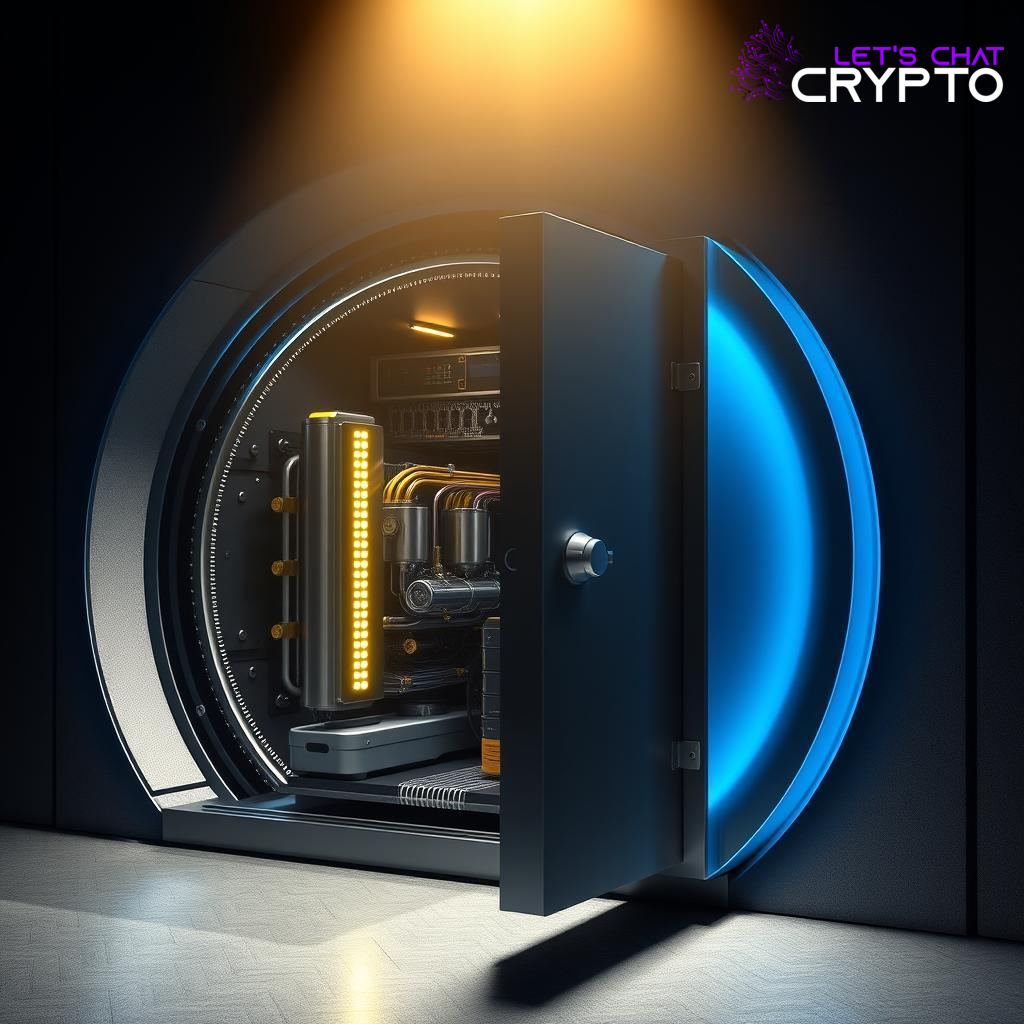
Introduction: A New Era for EU Crypto Custody
The European Union's Markets in Crypto-Assets Regulation (MiCA) marks a pivotal moment for the digital asset landscape, establishing a harmonized regulatory framework across all member states. While securing a MiCA license is a fundamental prerequisite for crypto firms aiming to operate within the EU, this initial authorization merely signals the beginning of a far more intensive examination, particularly for crypto custodians. The impending scrutiny from the European Securities and Markets Authority (ESMA) will rigorously test whether these vital service providers can genuinely meet the stringent security and operational resilience standards demanded by the new regulatory regime.
MiCA: The Gateway to European Operations
MiCA, slated for full implementation by late 2024, introduces comprehensive rules for crypto-asset service providers (CASPs), including those offering custody and administration of crypto-assets on behalf of clients. Obtaining a MiCA license grants a "passport" to operate across the entire EU, eliminating the current patchwork of national regulations. For custodians, this means adherence to specific requirements designed to protect client assets, ensure transparency, and manage systemic risks inherent in the nascent digital asset market. However, the license itself is not a guarantee of operational robustness but rather an invitation to demonstrate it.
ESMA's Critical Role in Upholding Standards
As the primary financial markets regulator for the EU, ESMA is tasked with developing detailed technical standards (Regulatory Technical Standards - RTS and Implementing Technical Standards - ITS) to elaborate on MiCA's principles. This includes critical guidelines on governance arrangements, internal control mechanisms, risk management, and, crucially, the security arrangements and operational resilience for CASPs. ESMA's consultative documents and subsequent final standards will define the practical benchmarks against which custodians will be evaluated. Their objective is to ensure consistent application of MiCA across all member states, preventing regulatory arbitrage and reinforcing investor protection.
The Gauntlet of Security and Operational Resilience
For crypto custodians, meeting ESMA's forthcoming technical standards will present a significant challenge. The review will delve deep into the core infrastructure and processes that underpin their services. Key areas of focus will undoubtedly include:
- Robust IT Systems: Demonstrating state-of-the-art cybersecurity protocols, intrusion detection, and incident response capabilities to protect digital assets from theft, loss, or unauthorized access.
- Secure Key Management: Implementing highly secure practices for the generation, storage, and access of private keys, potentially involving multi-party computation (MPC), hardware security modules (HSMs), and multi-signature schemes.
- Segregation of Client Assets: Ensuring that client crypto-assets are clearly separated from the custodian's own assets, preventing commingling and facilitating their return in the event of insolvency.
- Operational Continuity and Disaster Recovery: Establishing comprehensive business continuity plans, including robust backup and recovery procedures, to ensure uninterrupted service delivery even in the face of significant disruptions.
- Internal Controls and Governance: Implementing strong internal control frameworks, clear accountability structures, and independent audits to continuously monitor compliance and mitigate operational risks.
These requirements demand substantial investment in technology, personnel, and process refinement, pushing custodians beyond rudimentary security measures towards enterprise-grade operational excellence.
Implications for the Crypto Custody Landscape
The intensified scrutiny from ESMA under MiCA will likely have profound implications for the crypto custody sector. While it may pose significant hurdles for smaller or less mature firms, potentially leading to consolidation, it also presents an opportunity for established and well-resourced custodians to solidify their market position. By fostering a more secure and reliable environment, MiCA and ESMA's oversight are expected to enhance institutional confidence in digital assets, potentially attracting a new wave of traditional financial participants into the crypto ecosystem. Ultimately, the goal is to create a resilient and trustworthy market where investors can confidently entrust their digital assets to regulated and robust service providers.
Summary
MiCA licensing is merely the entry point for crypto custodians seeking to operate in the EU. The true test lies in meeting the rigorous security and operational resilience standards that ESMA is actively developing. This comprehensive review will demand advanced technological infrastructure, stringent key management, clear asset segregation, and robust business continuity planning. While challenging, this enhanced regulatory clarity and oversight are crucial steps towards maturing the digital asset market, boosting investor confidence, and paving the way for broader institutional adoption.
Resources
- European Securities and Markets Authority (ESMA) Official Website
- European Commission (EU Parliament and Council Texts for MiCA)
- PwC Global Crypto & Digital Assets Reports
Details
Author
Top articles




 }})
You can now watch HBO Max for $10
Latest articles



You can now watch HBO Max for $10
Introduction: A New Era for EU Crypto Custody
The European Union's Markets in Crypto-Assets Regulation (MiCA) marks a pivotal moment for the digital asset landscape, establishing a harmonized regulatory framework across all member states. While securing a MiCA license is a fundamental prerequisite for crypto firms aiming to operate within the EU, this initial authorization merely signals the beginning of a far more intensive examination, particularly for crypto custodians. The impending scrutiny from the European Securities and Markets Authority (ESMA) will rigorously test whether these vital service providers can genuinely meet the stringent security and operational resilience standards demanded by the new regulatory regime.
MiCA: The Gateway to European Operations
MiCA, slated for full implementation by late 2024, introduces comprehensive rules for crypto-asset service providers (CASPs), including those offering custody and administration of crypto-assets on behalf of clients. Obtaining a MiCA license grants a "passport" to operate across the entire EU, eliminating the current patchwork of national regulations. For custodians, this means adherence to specific requirements designed to protect client assets, ensure transparency, and manage systemic risks inherent in the nascent digital asset market. However, the license itself is not a guarantee of operational robustness but rather an invitation to demonstrate it.
ESMA's Critical Role in Upholding Standards
As the primary financial markets regulator for the EU, ESMA is tasked with developing detailed technical standards (Regulatory Technical Standards - RTS and Implementing Technical Standards - ITS) to elaborate on MiCA's principles. This includes critical guidelines on governance arrangements, internal control mechanisms, risk management, and, crucially, the security arrangements and operational resilience for CASPs. ESMA's consultative documents and subsequent final standards will define the practical benchmarks against which custodians will be evaluated. Their objective is to ensure consistent application of MiCA across all member states, preventing regulatory arbitrage and reinforcing investor protection.
The Gauntlet of Security and Operational Resilience
For crypto custodians, meeting ESMA's forthcoming technical standards will present a significant challenge. The review will delve deep into the core infrastructure and processes that underpin their services. Key areas of focus will undoubtedly include:
- Robust IT Systems: Demonstrating state-of-the-art cybersecurity protocols, intrusion detection, and incident response capabilities to protect digital assets from theft, loss, or unauthorized access.
- Secure Key Management: Implementing highly secure practices for the generation, storage, and access of private keys, potentially involving multi-party computation (MPC), hardware security modules (HSMs), and multi-signature schemes.
- Segregation of Client Assets: Ensuring that client crypto-assets are clearly separated from the custodian's own assets, preventing commingling and facilitating their return in the event of insolvency.
- Operational Continuity and Disaster Recovery: Establishing comprehensive business continuity plans, including robust backup and recovery procedures, to ensure uninterrupted service delivery even in the face of significant disruptions.
- Internal Controls and Governance: Implementing strong internal control frameworks, clear accountability structures, and independent audits to continuously monitor compliance and mitigate operational risks.
These requirements demand substantial investment in technology, personnel, and process refinement, pushing custodians beyond rudimentary security measures towards enterprise-grade operational excellence.
Implications for the Crypto Custody Landscape
The intensified scrutiny from ESMA under MiCA will likely have profound implications for the crypto custody sector. While it may pose significant hurdles for smaller or less mature firms, potentially leading to consolidation, it also presents an opportunity for established and well-resourced custodians to solidify their market position. By fostering a more secure and reliable environment, MiCA and ESMA's oversight are expected to enhance institutional confidence in digital assets, potentially attracting a new wave of traditional financial participants into the crypto ecosystem. Ultimately, the goal is to create a resilient and trustworthy market where investors can confidently entrust their digital assets to regulated and robust service providers.
Summary
MiCA licensing is merely the entry point for crypto custodians seeking to operate in the EU. The true test lies in meeting the rigorous security and operational resilience standards that ESMA is actively developing. This comprehensive review will demand advanced technological infrastructure, stringent key management, clear asset segregation, and robust business continuity planning. While challenging, this enhanced regulatory clarity and oversight are crucial steps towards maturing the digital asset market, boosting investor confidence, and paving the way for broader institutional adoption.
Resources
- European Securities and Markets Authority (ESMA) Official Website
- European Commission (EU Parliament and Council Texts for MiCA)
- PwC Global Crypto & Digital Assets Reports
Top articles
You can now watch HBO Max for $10
Latest articles
You can now watch HBO Max for $10
Similar posts




This is a page that only logged-in people can visit. Don't you feel special? Try clicking on a button below to do some things you can't do when you're logged out.
Example modal
At your leisure, please peruse this excerpt from a whale of a tale.
Chapter 1: Loomings.
Call me Ishmael. Some years ago—never mind how long precisely—having little or no money in my purse, and nothing particular to interest me on shore, I thought I would sail about a little and see the watery part of the world. It is a way I have of driving off the spleen and regulating the circulation. Whenever I find myself growing grim about the mouth; whenever it is a damp, drizzly November in my soul; whenever I find myself involuntarily pausing before coffin warehouses, and bringing up the rear of every funeral I meet; and especially whenever my hypos get such an upper hand of me, that it requires a strong moral principle to prevent me from deliberately stepping into the street, and methodically knocking people's hats off—then, I account it high time to get to sea as soon as I can. This is my substitute for pistol and ball. With a philosophical flourish Cato throws himself upon his sword; I quietly take to the ship. There is nothing surprising in this. If they but knew it, almost all men in their degree, some time or other, cherish very nearly the same feelings towards the ocean with me.
Comment